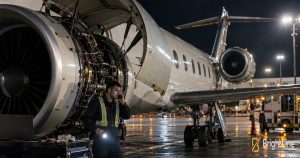

Empty Leg Marketing: Sell Empty Legs Before They Fly Empty
TL;DR · The short answer5 key points
- Empty leg marketing fails when a repositioning flight is treated as a last-minute discount instead of a product with a ready audience.
- Build route and aircraft pages and segmented client lists before any leg is scheduled, so demand exists when dispatch confirms the flight.
- Give each empty leg its own landing page: route, aircraft, operating certificate, one all-in price and one quote button.
- Price empty legs on their own terms so the full charter rate card stays intact.
- Measure booked legs, not leads, and feed every result back into your segments.
A Citation sits on the ramp in Teterboro with a repositioning leg to Miami on the schedule and no passenger attached to it. The flight is already paid for. The only open question is whether anyone knows it exists.
That gap is where empty leg marketing either works or collapses. Operators treat the leg as a discount to be dumped at the last minute, when it is actually a distribution problem dressed up as a pricing one.
This article shows you how to sell empty leg flights before the aircraft departs with nobody aboard. You’ll learn how to build the audience, the pages, and the promotion sequence that put a confirmed aircraft in front of a buyer who already wanted that route. It is part of our wider guide to private jet charter marketing.
The Empty Leg Is a Marketing Problem, Not a Discount
An empty leg is a repositioning flight the operator pays for whether or not a passenger is aboard. The aircraft has to move to reach its next charter, so the cost is committed before a seat is sold. That makes the leg a perishable asset with a hard expiry: the wheels-up time.


Operators keep treating that asset as a clearance item. They post a discounted seat on a marketplace the morning of the flight and wait. The buyer who could have filled it never saw the listing, so the operator is cutting price against nobody.
The failure is not the discount. It is the absence of a plan to put the leg in front of the right buyer while there is still time to book it.
We work only with aviation clients, which is why our four-step process fits this problem. Audit and discovery map the routes an operator actually flies. The strategic roadmap builds the pages and segments before a leg appears. Surgical execution promotes each repositioning to the matching audience the day dispatch confirms it. Optimize and scale turns the booked legs into a repeatable revenue line.
That structure changes how an operator thinks about how to market a private jet charter alongside its repositioning flights. The leg stops being a scramble and becomes a product with a pipeline behind it. The operator who wins is the one whose audience already exists when the flight does.
Why the Last-Minute Discount Model Keeps Failing
Discounting a repositioning leg the morning it flies is not empty leg marketing. It is a clearance sale on a channel the buyer never checks, and it fails on timing before price.
Before: A midsize operator confirms a repositioning leg from Scottsdale to Denver the morning of the flight. Dispatch posts it to a charter marketplace at a steep percentage off the standard charter rate and waits for the phone to ring. It does not ring, because the Phoenix-area client who flies that corridor twice a quarter is in a meeting and has no reason to be browsing a listing board. The aircraft launches with an empty cabin, and the operator books the loss as unavoidable.
After: The same operator publishes the leg days ahead and pushes it to a segment built from past Denver-bound quote requests and Phoenix home-airport clients. The message names the aircraft, the route, and a hold window, and it reaches people who already fly that corridor. The leg sells because the buyer recognized the route before the price ever entered the conversation.
The discount was never the offer. The offer is a confirmed aircraft on a route the buyer already wanted.
That reframing changes what a private jet charter marketing agency builds: audience segments and route pages that exist before dispatch confirms anything, not a discount code applied after the fact.
How to Market Empty Legs Across the Buyer Journey
Empty leg marketing fails when treated as a single post fired off the day a repositioning leg appears. Operators who fill seats run it as a staged system.

Step 1. Publish a dedicated empty leg page ranking for route and aircraft searches, such as “private jet Miami to Aspen” or “Citation X charter empty leg.” Those buyers are already qualified; a generic charter homepage won’t surface for them. Build this before a leg exists, because ranking takes time you won’t have on departure day.
Step 2. Segment email and retargeting lists by home airport, past routes, and aircraft preference. A buyer who flew Teterboro to Palm Beach last winter is the obvious first call when that corridor opens. Blast the whole list and you train everyone to ignore the alert.
Step 3. Route every serious buyer to a landing page showing the leg, aircraft, operator certificate, and one quote request. Competing calls to action stall the decision. The certificate matters because the buyer is weighing risk, not just price.
Step 4. Capture the buyer who didn’t book and tag them for the next leg on that route. A missed leg is a warm contact, not a lost one. Without this, every promotion starts from zero.
Step 5. Feed booked-leg results back into the segment so the list sharpens each cycle. Pair this with private jet charter Google Ads to catch route searchers your list doesn’t reach.
Completing the sequence turns a scramble into a pipeline: the leg on the dispatch board already has an audience waiting.
The Landing Page That Sells a Repositioning Flight
A repositioning leg posted to a generic charter page dies there. The buyer cannot tell whether the flight is real, whether the aircraft is available, or whether the operator is safe. So they leave. Empty leg marketing lives or dies on a page built for one flight, not a fleet. Here is what that page carries:
- Route and date above the fold. The buyer searching a corridor wants confirmation in the first line that this is their trip. Bury the city pair and they bounce.
- Aircraft type and cabin. A light jet and a midsize cabin serve different luggage and passengers. Name the airframe and seat count so the buyer self-qualifies before they call.
- Certificate and safety standing. Show the operating certificate and how the flight is structured under the FAA’s guidance on private versus common carriage. This is the question the buyer is too polite to ask.
- One all-in price. A single transparent number beats a teaser rate that grows at checkout. Hidden fees read as a bait switch.
- A single quote or hold action. One button. Multiple calls to action split attention on a page where the buyer is already deciding fast.
- Cancellation terms in plain language. State what happens if the leg moves or the aircraft is reassigned. Empty legs shift, and the buyer needs the rule before they commit.
These elements answer the risk question before the price question. A buyer who trusts the flight will pay for it. That discipline is what our aviation web design and conversion work builds into an aircraft charter company‘s marketing site.
How to Sell Empty Leg Flights Without Undercutting Charter
Positioning decides whether a repositioning leg protects your rate card or dismantles it. The step operators skip is the pricing frame itself.
Step 1. Decide whether the leg is a discount or a product before you price it. Framing it as a markdown trains repeat buyers to wait for the next cut. That habit is nearly impossible to reverse.
Step 2. Write the empty leg its own terms on timing, flexibility, and cancellation. A one-way repositioning flight is not a round-trip charter, so it should not inherit the same rules. Buyers accept tighter terms when stated plainly.
Step 3. Keep the full charter rate untouched on every non-repositioning flight. The empty leg gets its own price, and the rate card stays whole. Blur that line and every future quote becomes a negotiation.
Step 4. Confirm the operating rules that govern the flight before you advertise it. Part 135 operators fly under specific commuter and on-demand operating requirements, and the terms you publish must match them.
Step 5. Accept the narrower buyer and price for it. A one-way product sells to fewer people than a discounted charter. That narrower reach is the cost of protecting margin everywhere else.
Get the frame right and charter operator marketing stops being a discount war. The repositioning flight becomes a product with its own rules, and the flights that are not repositioning hold their price.
What Most Empty Leg Marketing Guides Get Wrong
Posting a repositioning leg to every marketplace is not demand generation. It is distribution into a channel where your buyer is not looking.



The standard approach says list everywhere, cut the price until it moves, and call the marketplace listing the campaign. That confuses reach with demand.
The buyer for a repositioning flight usually already sits inside your world. A past charter client who flies that corridor, a broker who moves clients between the same cities, or someone searching the exact route on Google. Reaching them takes owned channels and search presence, not another board listing.
Brokers sit in that same orbit. The Department of Transportation’s rules for air charter brokers shape how those relationships work, and a broker who already trusts your operation is a faster path to a filled seat than any public listing.
Treat this as a retention and search problem before a pricing problem. Our charter operator SEO services target qualified leads rather than raw traffic, because a page ranking for a specific city pair beats a thousand impressions on a discount aggregator. The operator who owns the search result wins the leg before the price conversation starts.
Listing-and-hoping produces a race to the bottom. Demand you built before the leg existed is the only demand you can count on.
Building the Empty Leg Pipeline Before the Flight Exists
A pipeline turns a repositioning leg into a sellable product the moment dispatch confirms it. Skipping the groundwork is why so many legs fly empty.
Step 1. Capture every quote request, past route, and aircraft preference into a segmented list. A quote that went nowhere last quarter is a warm lead for the same corridor this quarter.
Step 2. Publish route and aircraft pages that rank before any leg is scheduled. A page for a common corridor builds search presence while the aircraft is on another mission. When the repositioning appears, the page already has an audience.
Step 3. Trigger promotion to the matching segment the instant dispatch confirms the flight. A message reaching the right buyer hours after confirmation beats a listing posted the morning of departure.
Step 4. Measure booked legs, not leads, and feed the result back into the segment. A booking tells you the segment works.
Our marketing automation and CRM work connects the list to the leg.
Charter operators answer to consumer protection rules that shape how a flight can be sold and disclosed, so the pipeline has to reflect those terms from the first touch. The DOT charter flight rules set the baseline for what a buyer is owed. Complete the sequence and every repositioning leg arrives with a warm audience already waiting.
Put the Empty Leg on the Calendar Before Dispatch Does
The repositioning leg that sells is the one your audience already expected. Empty leg marketing rewards the operator whose route pages rank, whose segments exist, and whose promotion triggers fire the moment dispatch confirms a tail move.
Wait for the schedule to confirm the flight and you are back to discounting into a channel nobody checks. Build the audience first and the same leg becomes a product you announce, not a seat you dump. Audit last month’s empty legs. Count how many reached a segmented list before departure day. That gap is your next campaign opportunity.
Our private jet charter marketing puts your empty leg pages in front of buyers already searching those routes. Book a call to see how we turn your repositioning flights into booked charters.
FAQ
Empty Leg Marketing Questions Operators Ask
How much do empty legs cost?
An empty leg typically sells for a fraction of the standard charter price because the operator is recovering a repositioning cost already committed. The price moves with how close the flight is to departure, so a leg booked well in advance usually costs more than one filled in the final hours.
Who is the largest private jet broker?
No single broker dominates the market, and the largest names operate as sourcing networks rather than owned fleets. That structure matters for empty leg marketing because a broker reselling a leg adds a layer between the operator and the buyer who actually flies it.
Do you tip a private jet pilot?
Tipping a private jet pilot is optional and not expected as part of the charter fare. Crew gratuity, when offered, is usually handled separately from the operator’s invoice rather than folded into the quoted empty leg price.
What should an operator do with an empty leg that does not sell?
An unsold leg should be logged with its route, aircraft, and the audience segment it was promoted to, then reviewed for gaps. That record turns a missed flight into a targeting decision for the next repositioning rather than a write-off.