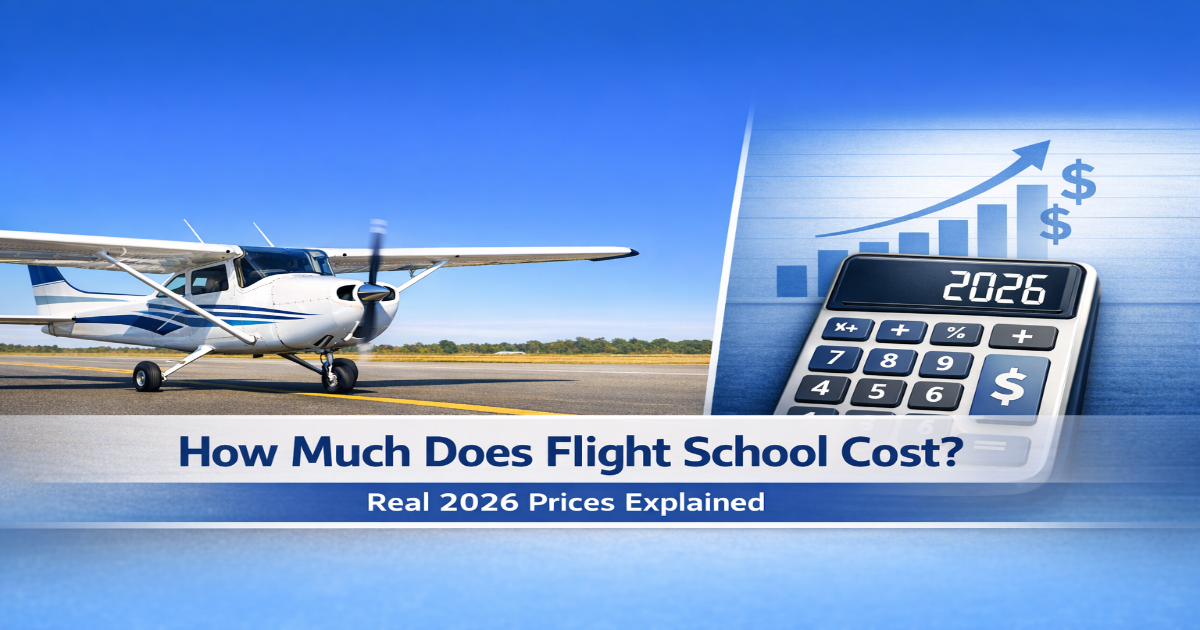
How Much Does Flight School Cost? Real 2026 Prices Explained
Flight school costs vary based on the license you want. A private pilot license starts around $10,000. Commercial training can reach $80,000 or more. In this guide, we break down real 2026 prices for every certification. You will also learn about hidden fees and financing options.
Table of Contents
Becoming a pilot starts with one big question. How much does flight school cost? The answer depends on your license type, location, and training pace.
Flight school prices range from $10,000 to over $100,000. Private pilot training costs far less than commercial or ATP programs. Hidden fees often surprise students and stretch budgets further.
This guide covers real 2026 prices for every certification level. You will see exact cost breakdowns for private, commercial, and ATP licenses. We also reveal hidden costs most schools never mention. Many flight schools now share transparent pricing to help students plan better.
How Much Does Flight School Cost for a Private Pilot License
A Private Pilot License (PPL) is the first step for most student pilots. Understanding the costs helps you plan your budget wisely.
Typical PPL expenses include:
- Flight training hours
- Ground school courses
- Written exam fees
- Checkride fees
- Medical certificate
- Training materials and books
Most students spend between $10,000 and $18,000 for their PPL in 2026. This range depends on how quickly you learn and your local flight school rates. Additionally, the FAA requires a minimum of 40 flight hours to earn this license.
However, most students need 60 to 70 hours to become test ready. Therefore, you should budget for extra training time. The aircraft rental rates in your area also affect the final price.
Location plays a big role in how much does flight school cost for a PPL. Schools in busy cities often charge more than rural training centers.
Commercial Pilot Training Expenses You Should Expect
Earning a Commercial Pilot License (CPL) allows you to fly for pay. Consequently, the training costs more than a private license. Here is a breakdown of typical 2026 expenses.
As a result, most students pay between $35,000 and $60,000 for commercial training. This includes the required instrument rating. Flight schools that focus on strong aviation content marketing often provide clear pricing on their websites.
Furthermore, your total cost depends on your starting point. Students with a PPL already have a head start. Meanwhile, zero time students should expect higher total expenses.
Factors That Change How Much Flight School Costs
Many factors affect how much does flight school cost for each student. Understanding these helps you make smarter decisions about your training.
1. Geographic Location
Flight schools in large cities charge higher rates. Rural areas often have lower aircraft rental and instructor fees. Therefore, your location greatly impacts total costs.
2. Type of Aircraft
Training in a basic Cessna 172 costs less than complex aircraft. Newer planes with glass cockpits also have higher hourly rates. Consequently, aircraft choice affects your budget significantly.
3. Instructor Availability
Schools with many instructors keep training consistent. Limited instructor availability causes delays and forgotten skills. This means you need more flight hours overall.
4. Weather Conditions
Bad weather cancels training flights regularly. Students in rainy or snowy regions often take longer to finish. As a result, their total costs increase over time.
5. Student Learning Speed
Some students learn faster than others. Your dedication and study habits matter greatly. Flight schools with strong local SEO presence often attract serious students who complete training efficiently.
Additionally, your schedule flexibility plays a big role. Flying multiple times per week speeds up your progress.
Part 61 vs Part 141 Programs and Price Differences
Choosing between Part 61 and Part 141 training affects your costs significantly. Both programs lead to the same certificates but differ in structure and price. The AOPA flight school directory helps you find both types near you.
Part 61 Training
Structure: Flexible schedule
PPL Minimum Hours: 40 hours
Typical Cost: $10,000 – $18,000
Best For: Working adults
Part 141 Training
Structure: Structured curriculum
PPL Minimum Hours: 35 hours
Typical Cost: $12,000 – $22,000
Best For: Full time students
1. Part 61 Programs
Part 61 schools offer flexible training schedules. You can train at your own pace around work or school. However, the minimum flight hours are slightly higher than Part 141.
This option works best for students with busy lives. Consequently, many working adults choose Part 61 training. Costs range from $10,000 to $18,000 for a private license.
2. Part 141 Programs
Part 141 schools follow FAA approved curriculums strictly. Therefore, students often finish with fewer total flight hours. A thorough SEO audit helps these schools attract students who want structured programs.
These programs require full time commitment usually. As a result, they suit students who can dedicate months to training. Tuition ranges from $12,000 to $22,000 for a private license.
How Much Does Flight School Cost for ATP Certification
The Airline Transport Pilot (ATP) certificate is the highest pilot rating. It opens doors to major airline careers. Understanding how much does flight school cost for this level helps you plan long term.
ATP training expenses typically include:
- Multi engine flight time
- ATP Certification Training Program (CTP)
- Written exam fees
- Checkride costs
- Simulator training hours
- Additional type ratings
Most pilots spend between $5,000 and $15,000 on ATP specific training. However, this assumes you already have 1,500 flight hours. Building those hours adds significant costs to your total investment.
Therefore, many pilots work as flight instructors first. This builds hours while earning income. Schools with strong aviation SEO management often hire their own graduates as instructors.
Additionally, regional airlines sometimes offer paid ATP training. These programs reduce your out of pocket costs significantly. In return, you commit to working for that airline after certification.
Smart Ways to Finance Your Pilot Training
Paying for flight school is a major concern for most students. Fortunately, several financing options exist to help you reach your goals. Here are the best ways to fund your pilot training.
1. Aviation Scholarships
Many organizations offer scholarships for student pilots. AOPA, EAA, and Women in Aviation provide thousands of dollars annually. Therefore, applying early increases your chances of receiving aid.
2. Flight School Payment Plans
Some schools offer monthly payment options for students. This spreads costs over time instead of paying upfront. Schools with effective web design often display these options clearly on their sites.
3. Private Aviation Loans
Banks and lenders offer loans specifically for pilot training. Interest rates vary based on your credit score. Consequently, improving your credit before applying saves money long term.
4. Part Time Training Approach
Training part time allows you to work while learning. You pay as you go instead of borrowing large amounts. However, this method takes longer to complete your certificate.
5. Airline Sponsored Programs
Several airlines now pay for pilot training entirely. In exchange, you commit to working for them after graduation. Flight schools using smart conversion funnels often partner with these airline programs.
Additionally, military service offers free flight training for qualified candidates. Veterans can also use GI Bill benefits at many approved flight schools. These options significantly reduce how much does flight school cost for eligible students.
Your Next Steps to Affording Flight School
Understanding how much does flight school cost helps you plan your aviation journey wisely. Prices range from $10,000 for a private license to over $100,000 for full airline career training. Your location, school choice, and training pace all affect the final number.
Fortunately, many financing options make pilot training affordable. Scholarships, loans, and airline programs reduce your out of pocket expenses. Therefore, money should not stop you from chasing your dream.
Start by researching schools in your area and comparing prices. With proper planning, you can become a certified pilot without breaking the bank.
Ready to Grow Your Flight School?
Let Brightline help you attract more student pilots with proven digital marketing strategies.
Contact Us TodayFAQ About How Much Does Flight School Cost
How much does flight school cost for a beginner with no experience?
For beginners, flight school typically costs between $10,000 and $18,000 for a Private Pilot License. This includes flight hours, ground school, exams, and training materials. However, your total depends on location and how quickly you learn.
Is flight school worth the money in 2026?
Yes, flight school is worth the investment in 2026. The pilot shortage continues to grow worldwide. Therefore, trained pilots enjoy strong job security and competitive salaries. Regional airline pilots earn $60,000 to $90,000 starting out.
How much does flight school cost to become an airline pilot?
Becoming an airline pilot costs between $80,000 and $150,000 total. This covers private, instrument, commercial, and ATP training. Additionally, you need to build 1,500 flight hours before flying for major airlines.
Can I pay for flight school monthly?
Many flight schools offer monthly payment plans for students. This allows you to pay as you train instead of paying upfront. Consequently, more people can afford pilot training without large savings.
Why does flight training cost so much?
Flight training costs include expensive aircraft rental, fuel, maintenance, and instructor wages. Furthermore, insurance and regulatory requirements add to school operating costs. These factors determine how much does flight school cost overall.
How long does it take to finish flight school?
A Private Pilot License takes 3 to 6 months for most students. Full career training from zero to airline pilot takes 18 to 24 months. Therefore, your timeline depends on training intensity and availability.
Are there scholarships that cover how much flight school costs?
Yes, many scholarships help cover flight school expenses. Organizations like AOPA, EAA, and Women in Aviation award thousands yearly. As a result, applying for multiple scholarships can reduce your total training costs significantly.
