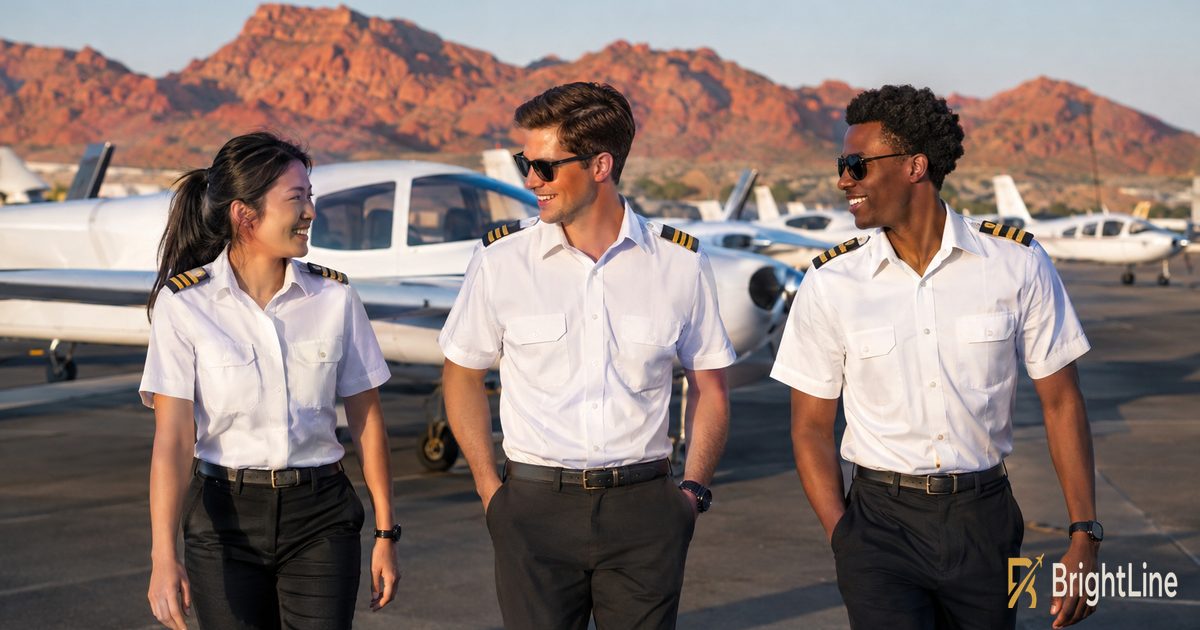
Pilot Training Programs in the USA: Which Path Fits International Students
TL;DR · The short answer5 key points
- Pilot training programs in the USA only work for you if the school is SEVP-certified and can issue your I-20; check that before anything else.
- There are four main paths: vocational Part 141 programs (M-1 visa), university aviation degrees (F-1 visa), airline pathway programs and Part 61 schools.
- Most international students fit the first two. Airline cadet programs usually need US work authorization, and Part 61 schools generally can’t sponsor a visa.
- Budget roughly $80,000 to $110,000 from zero to a commercial license with instructor ratings, plus living costs.
- You apply for TSA flight training approval yourself and can’t start flying until TSA approves you.
A deposit invoice sits in your inbox with a due date, and the brochure on your desk shows a fleet that looks immaculate. Neither tells you which visa you’ll travel on. That gap is where international applicants lose money on pilot training programs in the USA.
Brochures sell the dream of the cockpit. They rarely answer the question that decides everything: can this school issue the paperwork your visa requires? A school with a beautiful hangar and no SEVP certification cannot sponsor you, no matter how good the flying looks.
This article sets out the program paths open to international students and a way to choose between them using three filters: visa category, budget and timeline.
The Four Program Paths, and Which Ones Are Open to You
Every pilot training program in the USA falls into one of four types. Only two are realistic for most international students.
| Program path | Visa | Typical length to commercial | Open to international students? |
|---|---|---|---|
| Vocational Part 141 flight academy | M-1 | 12 to 24 months | Yes, the most common route |
| University aviation degree | F-1 | 4 years (degree plus ratings) | Yes, slower and costlier, but adds a degree |
| Airline cadet or pathway program | Usually none sponsored | Varies | Rarely; most require the right to work in the US |
| Part 61 flight school | None | Varies | Generally no visa sponsorship |
Airline pathway programs look attractive because they promise an interview or a job at the end. Most are built for people who can already work in the US, so check the eligibility page before you spend time on an application.
The Visa Category Decides Your Program First
SEVP certification is the federal approval a school must hold before it can enroll F or M students from outside the United States. Without it, the school can’t issue the Form I-20 your visa depends on. That single fact filters pilot training programs faster than any ranking.
Applicants sort schools by fleet size, pass rates and photos. The filter that matters comes first: a school with no SEVP certification cannot issue an I-20, and you cannot fix that with a bigger deposit.
F-1 status attaches to a college or university program, so flight training runs alongside a degree and a longer enrollment. M-1 status attaches to a vocational flight program, which is shorter and more direct. The category you pick changes your cost, your program length and your work options. Confirm a school’s standing through the SEVP-certified school search before anything else, and see our guide to M-1 vs F-1 visas for the differences.
Sort the visa and flight school question this way and the shortlist shrinks in an afternoon. A school that cannot sponsor your status is not a cheaper option. It is not an option at all.
Part 141 or Part 61: The Trade-Off That Shapes Cost
Two FAA rule sets govern flight training, and they produce very different totals for the same certificates. The hourly rate matters less than how many hours you’ll actually fly to reach the checkride.
Part 141 schools hold FAA approval for a structured syllabus with stage checks and lower minimum hours. The FAA’s pilot school guidance notes that approved schools often offer more training aids, dedicated facilities and scheduling flexibility. Many colleges build Part 141 training into their degrees, which is where F-1 sponsorship usually lives.
Part 61 operates under the general instructor rules instead of an approved syllabus. It’s flexible, often cheaper per billed hour and easy to start on short notice, but there are no structured stage checks and no visa sponsorship for international students.
The lower hourly rate on a Part 61 quote is often the most expensive number in the brochure. Students at unstructured programs routinely fly extra hours because progress depends on self-discipline and instructor availability. Budget the total cost to certificate, not the sticker rate.
For international students, Part 141 wins in nearly every case. Compare Part 141 enrollment requirements across schools before you compare anything else.
What Pilot Training Programs in the USA Really Cost
Quotes from three schools for the same certificates can differ by tens of thousands of dollars, and the gap rarely comes from hourly rates. It comes from how many hours each school budgets and what it bundles in.

| Cost line | Estimated range (USD) | What drives the spread |
|---|---|---|
| Private pilot certificate | $10,000 to $18,000 | Extra hours beyond the FAA minimum |
| Instrument rating | $8,000 to $15,000 | Simulator time versus aircraft time |
| Commercial certificate (incl. hour building) | $25,000 to $45,000 | Hour-building method and aircraft type |
| Multi-engine rating | $4,000 to $8,000 | Twin-engine aircraft rental rates |
| Flight instructor ratings | $6,000 to $12,000 | Checkride retakes and prep time |
| Living, insurance, visa and SEVIS fees | $12,000 to $25,000 per year | Region, housing type and visa costs |
Added up, flight training alone runs roughly $55,000 to $100,000 to a commercial license with instructor ratings, before living costs. Treat the table as a budgeting tool, not a quote, and build your own flight school cost breakdown with each school’s real hourly rate and hour estimate.
Budget to the high end of every line. A school that quotes the FAA minimum hours as its total is quoting a best case.
The TSA Security Check That Stops Deposits Cold
A foreign applicant wires a deposit, books a start date, then discovers the clock has not started. TSA’s Flight Training Security Program runs on its own timeline, before instruction. Skip a step and the money sits idle.
Step 1. Confirm the school is registered with TSA’s Flight Training Security Program before you send anything. Ask for it in writing.
Step 2. Submit your own application on the TSA flight training website and pay the fee. The school then confirms your training details in the same system.
Step 3. Have your fingerprints taken at an approved enrollment center and wait for the Security Threat Assessment. Don’t book travel around an assumed approval date.
Step 4. Start training only after TSA approves you. Under the 2024 Flight Training Security Program rule, an approved applicant gets a Certificate of Eligibility valid for five years for a one-time fee, instead of applying for every course.
Step 5. Watch how the school handles this. A school that offers to let you fly before approval is breaking the rules and putting your enrollment at risk.
Our step-by-step guide to the TSA background check for foreign flight students covers each form.
How Long Each Path Takes From Zero to Airline
Four phases separate a first lesson from an airline cockpit, and each stalls for its own reason. Treating the pilot training timeline as one number is how applicants run out of runway.
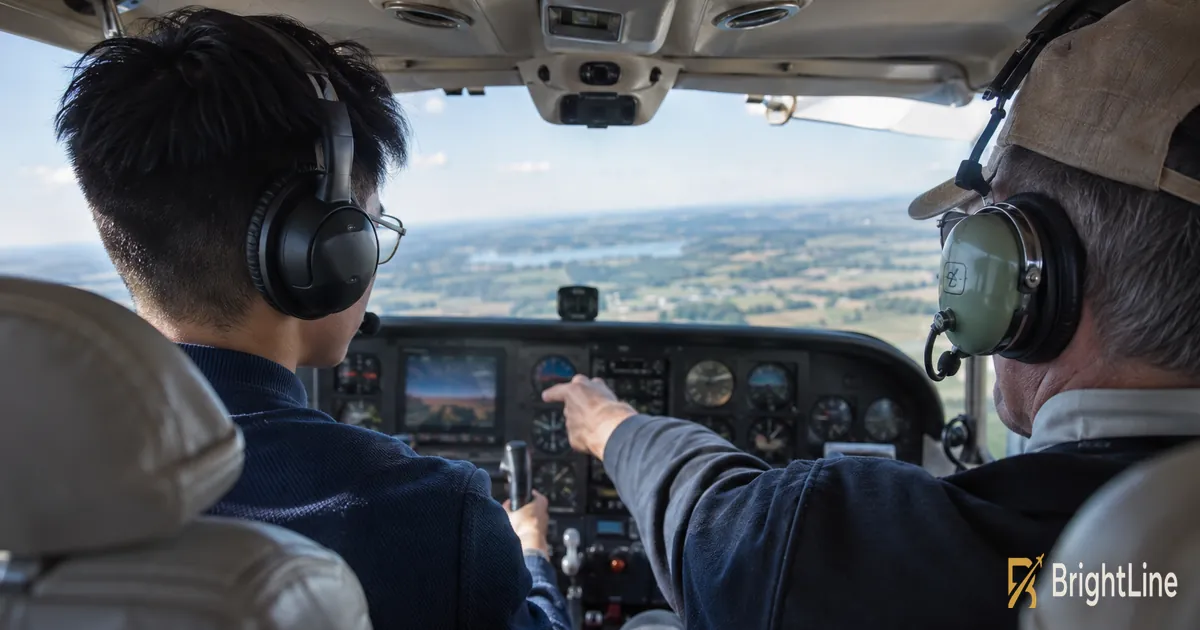
Zero to private certificate: the weather phase
Weather does the most damage here. A student flying most days in Florida usually finishes well ahead of one flying twice a week through a northern winter. A school that cannot guarantee aircraft access will stretch this phase quietly.
Instrument and commercial: the aircraft availability phase
This stage depends on how reliably you can book an aircraft. A school with ten aircraft and forty students moves slower than one with six aircraft and fifteen. Ask for the student-to-aircraft ratio before comparing completion dates.
Flight instructor ratings: the checkride queue phase
Examiner availability in busy regions can add weeks to each rating, and those weeks compound across instrument, commercial and instructor checkrides.
Hour building and airline hiring: the part you cannot control
Airlines need 1,500 hours, and hiring runs in cycles nobody at a flight school can forecast. Program length is the part you control. An M-1 visa is granted for your program length up to one year at a time, so a delayed checkride can mean an extension request. Plan the schedule with that limit in mind.
Where Most International Guides Get School Choice Wrong
Reputation rankings and fleet photos tell you nothing about whether a school can legally enroll you. Guides that rank schools by prestige skip the two filters that rule international applicants in or out: SEVP certification and Flight Training Security Program registration.
- Visa sponsorship history. A school that has rarely issued an I-20 for a flight program may fumble yours. Ask how many international students it enrolled last year, not just whether it accepts them.
- International student support staff. Someone must own your SEVIS record, arrival and housing. When that person is a part-time administrator, problems sit unresolved for weeks.
- Aircraft and instructor availability. A large fleet means nothing if scheduling puts you behind other students. Ask how many aircraft and instructors serve your program track.
- Realistic total cost to certificate. Request a written estimate with the hours the school actually budgets, then run every quote through a proper flight school cost comparison.
Every item is a question you can ask before a deposit, and every answer can be put in writing. The FAA’s pilot training resources cover certification standards, but they won’t tell you which school answers your emails.
Building a Shortlist You Can Actually Enroll In
Three schools is the right number to shortlist, not ten. Every extra school multiplies the paperwork you have to verify.

Start with the two disqualifiers. Confirm SEVP certification through the DHS school search, then confirm TSA Flight Training Security Program registration with the school directly. A school that clears both has earned a place on the list.
Next, match the visa to the program in writing. If the school offers a Part 141 vocational track, ask which visa it issues for that track and how long the program runs. Ask schools in every state the same questions, whether you’re comparing Florida flight schools with options in Arizona or Texas. The FAA student pilot certificate rules are the same in every state.
Compare total cost to certificate, never hourly rate. A school that will not put a total in writing is telling you something. Then check international student support: a named advisor, a documented timeline and a track record with students from your country.
Pick the Path Before You Pay the Deposit
The strongest pilot training programs in the USA can still turn you away at the visa window. What separates a real option from an expensive dead end is paperwork a school either holds or does not. Ranking never enters that equation.
Pay a deposit to a school without SEVP certification and the money buys nothing you can use. The same applies to a school outside the TSA Flight Training Security Program. Before any wire transfer, check the school’s SEVP status in the federal school search, then ask the admissions office to confirm its TSA registration in writing.
FAQ
Pilot Training Programs in the USA: Common Questions
How much does pilot training cost in the USA?
A private pilot license costs about $10,000 to $18,000. Going from zero to a commercial license with instrument, multi-engine and instructor ratings usually costs $55,000 to $100,000 in flight training, plus $12,000 to $25,000 a year for living costs if you’re an international student.
What are the best pilot training schools in the USA for international students?
The best schools for international students are SEVP-certified Part 141 schools registered with TSA’s Flight Training Security Program, with a track record of enrolling students from abroad. Florida, Arizona and Texas have many of them because of good flying weather.
Can international students join airline cadet programs in the USA?
Rarely. Most airline cadet and pathway programs require the legal right to work in the US, so international students usually train at an M-1 vocational academy or through an F-1 university degree instead. Check each program’s eligibility page before applying.
Is becoming a pilot in 2026 worth it?
For many people, yes. Airline pilots in the US earn a median salary of over $200,000 a year according to the Bureau of Labor Statistics, against training costs of roughly $80,000 to $110,000 including living costs. International students should also plan how they’ll build hours and get work authorization after training.
Can I start flight training before my TSA approval?
No. TSA’s Flight Training Security Program requires an approved Security Threat Assessment before instruction begins, and a school that lets you fly first is putting your enrollment at risk.