
AOG Marketing: How to Be the First Call When an Aircraft Is Grounded
TL;DR · The short answer5 key points
- A grounded-aircraft buyer is not shopping. They are confirming a supplier they already half-trust, so the work happens before the grounding.
- Win the search on part numbers, tail-specific fit and capability phrases, not broad aviation keywords.
- Put stock, approvals and traceability in the first screen, and keep a contact path that works at 2 a.m.
- Keep your Google Business Profile and directory listings accurate, because AI assistants and Maps pull from them.
- Measure qualified AOG inquiries, time to first human response and close rate, not form fills.
A part number sits in one browser tab. A phone sits silent in the other. Somewhere across the field, an aircraft is grounded and a director of maintenance is deciding which supplier gets the call, and that decision is already half made before anyone dials.
AOG marketing is the work of being in that tab before the grounding happens. The mistake suppliers make is treating the moment as a sales opportunity when it is really a confirmation exercise.
This article gives you a decision framework for becoming the name the buyer confirms. You’ll see how visibility on part-number and capability queries decides who gets found, how response design decides who gets hired, and how to measure whether the spend produces qualified grounded-aircraft inquiries instead of vanity traffic. It is part of our wider guide to aircraft maintenance digital marketing.
AOG Marketing Starts Before the Phone Rings
AOG marketing is the discipline of being findable, credible, and reachable in the gap between a grounding event and the first call a maintenance lead makes. It covers what a supplier publishes, how fast that supplier answers, and whether the buyer can verify capability without speaking to anyone.
Suppliers misread this as crisis advertising. They buy urgency words, splash red banners across the homepage, and assume the grounded buyer will compare options. That buyer is not shopping. They are verifying a name they already half-trust.
General aviation marketing assumes a long runway. Flight schools nurture prospects for months, and charter operators sell on itinerary and comfort. AOG demand has no runway. The buyer arrives with a part number and a deadline, and trust built from scratch in that window is not possible.
Buyers need to see that a supplier understands the FAA advisory circulars that govern maintenance and parts before they hand over a work order. A page that gestures at compliance without naming it reads as risk, not reassurance.
Three assets decide who gets the call. Search visibility on part numbers and tail-specific queries puts a supplier in the tab early. Proof of capability, stated plainly, converts that visibility into trust. A response path that works at any hour closes it. Miss any one and the buyer dials the next name.
Why Generic B2B SEO Fails AOG Buyers
The search box on a grounded aircraft does not accept category keywords. It accepts a part number, a tail number, or a phrase like “APU exchange, AOG, ships today.” A strategy built to rank a software company for “project management tool” has no answer for that query.

Generic agencies optimize for broad aviation terms and polished landing pages. The AOG buyer needs the opposite: a page that confirms stock, traceability, and turnaround in the first screen. The mismatch is structural, not cosmetic.
A director of maintenance scans for a part number match, a stock indicator, and an approval tag, all inside a few seconds. A hero image and a mission statement do not survive that scan. The tab closes.
Tail-specific queries make the gap wider. The FAA aircraft registry inquiry lets a buyer tie a tail number to a make and model in seconds. Suppliers who never built pages around that path are invisible at the exact moment it matters.
We see this in almost every audit: most aviation content marketing fails because teams copy generic B2B SEO templates built for SaaS, not for short, specific AOG and MRO queries. Our aviation-only focus exists because the query shape is different, and the page that answers it looks different too.
A bigger ad budget will not fix this. If the page a buyer lands on cannot verify capability, the click was wasted before it was ever paid for.
The Four Buyers Behind Every Grounded Aircraft
A grounded aircraft pulls four different people into the same search, each hunting for something else. Treat them as one audience and your page answers nobody. The director of maintenance, the purchasing lead, the operations manager and the parts broker can all land on your site within the same hour, and each leaves for a different reason.

The Director of Maintenance Owns the Clock
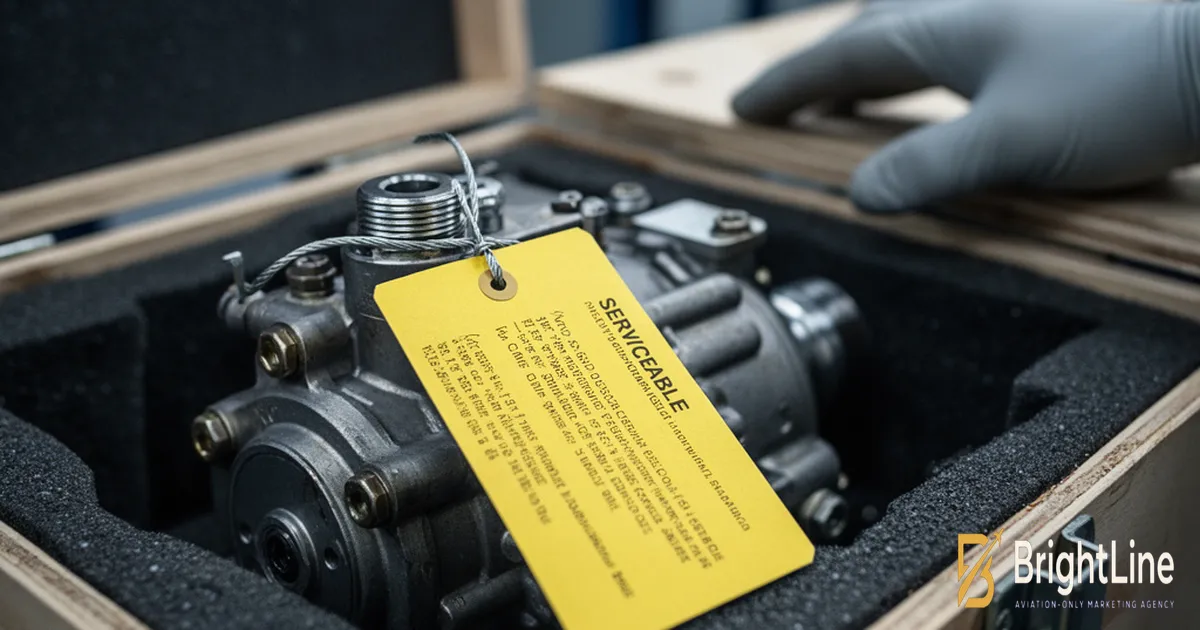
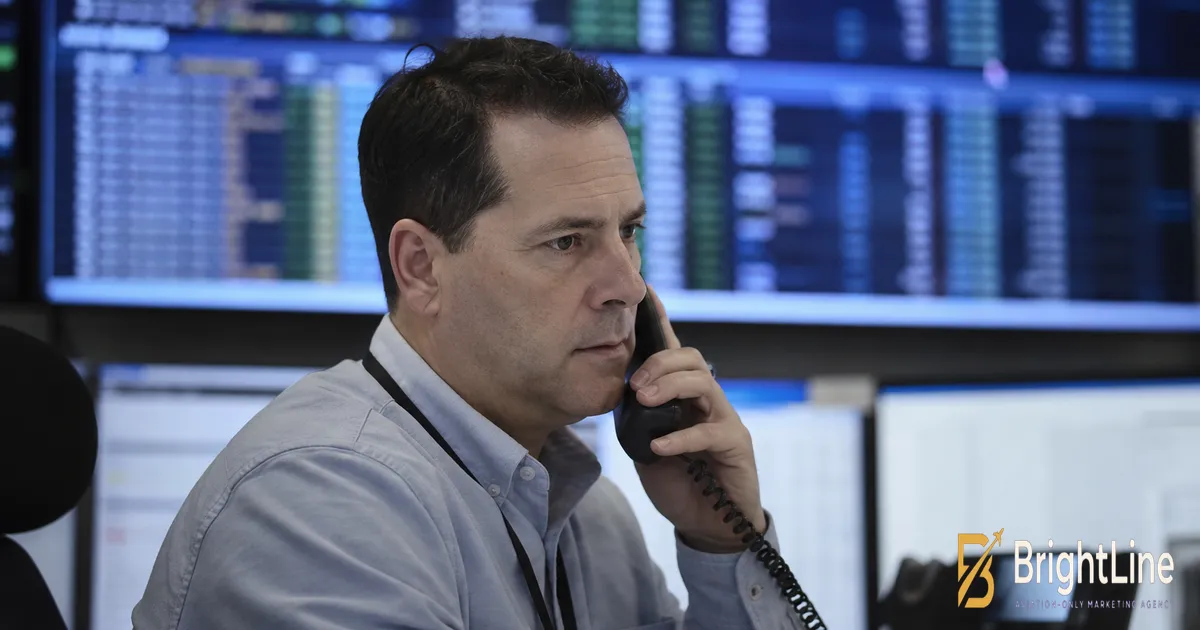
The director of maintenance role puts one person on the hook for airworthiness and uptime at once. They search by part number or tail-specific fit, then verify stock and traceability before dialing. A page that leads with brand story instead of availability gets closed.
The Purchasing Lead Owns the Paperwork
Procurement searches by vendor approval status and certification, not by part. They verify that you can produce an 8130-3 and that your shop is already on their approved list. Missing approval context is the fastest disqualifier, because it turns a quick buy into a compliance project.
The Operations Manager Owns the Schedule
Fleet and ops managers search by downstream impact: how fast can this be resolved and what does the delay cost the route. They verify your stated turnaround and your escalation path. A supplier who cannot name a callback window loses to one who can.
The Broker Sourcing the Item
Parts brokers search by availability across multiple suppliers and verify condition and documentation. They disqualify anyone whose stock status reads stale or unconfirmed. Good AOG support marketing speaks to all four on one page without a wall of text. Lead with what buyers verify first, then layer the proof each role needs.
How AOG Providers Get Customers in the First Minute
Winning the grounded-aircraft call is a sequence, not a single page. Skipping a step breaks the chain, and the buyer moves to the next tab without telling you why. This is how AOG providers get customers in the first minute: by earning each step before the next one matters.
Step 1. Own the part-number and capability queries so you appear in the search itself. A buyer typing a specific part number and “AOG” is not browsing, they are confirming you exist. Skip this and you are invisible when the clock starts.
Step 2. Put stock status, approval context, and traceability above the fold. The page has to answer the verification question before the buyer scrolls. When it reads like a brochure instead, the tab closes and the call goes elsewhere.
Step 3. Make the contact path a phone number and a form that both work outside business hours. A grounded aircraft does not wait for your office to open. A form that lands in a morning inbox is a lost inquiry dressed as a lead.
Step 4. Route the inquiry to a human who can quote without a handoff. The first responder has to know stock and pricing, not just take a message. Every transfer adds a delay the buyer reads as risk.
We run this as a four-step process starting with audit and discovery, because the gaps are usually in the pages, not the ads. Fix the sequence and the first minute stops being a gamble.
Google Business Profile and AI Answers: The Search Before the Search
Not every grounded-aircraft search starts on Google’s blue links. A maintenance lead at an unfamiliar field types “AOG parts near me” into Maps, or asks an AI assistant which shops near the airport handle a specific component. Both answers are built from the same sources: your Google Business Profile, your directory listings, and the pages that name your capabilities in plain language.
Start with the profile. Set the primary category to match the work you actually do, list each AOG service separately, state your real hours including after-hours coverage, and keep the phone number identical to the one on your site. A profile that says “closed” at midnight undercuts every 24/7 claim on your homepage.
Then make your capability pages easy for AI assistants to quote. A short, direct answer under each question heading, a table of part families and approvals, and your repair station certificate number stated as text give the assistant something it can cite. If an AI tool cannot find a plain statement of what you fix, it recommends someone whose page says it. Paid search is a separate channel with its own rules; our AOG Google Ads management guide covers that side.
24/7 AOG Service Marketing: The Response Gap
Two suppliers can hold identical inventory, approvals, and pricing. The one that answers at 2 a.m. wins the aircraft. This comparison exposes where 24/7 AOG service marketing lives: not in the claim, but in the infrastructure behind it.


Supplier one advertises round-the-clock availability on every page. The claim is true in spirit and false in practice. Inquiries route to a contact form that lands in an inbox someone opens at 8 a.m., and the buyer who submitted it at midnight is already calling a competitor.
Supplier two publishes a real after-hours number, a stated callback window, and an escalation path to a named duty manager. That structure costs money and discipline to run. It also converts, because the buyer sees a system, not a slogan.
Downtime is the only cost the buyer is actually optimizing. A grounded aircraft burns revenue by the hour, so a cheaper part from a supplier who answers tomorrow is the expensive choice.
The claim and the operation have to match. A missed callback becomes a review the supplier cannot delete, and that review surfaces on the next search.
Supplier two wins whenever the aircraft is down and the clock is running. Supplier one only wins on planned orders with slack in the schedule. Audit your own after-hours path before you spend another dollar advertising it, and check whether your reports that never tie pages to inquiries are hiding the gap.
What Most AOG Marketing Guides Get Wrong
Almost every guide frames this as a demand-generation problem. It is not. The buyer is already searching, already grounded, already holding a part number. Your job is being found and believed, not being advertised to.
- Chasing broad aviation keywords. Ranking for “aircraft parts supplier” puts you in front of browsers, not buyers. The queries that convert name a part number, a tail number, or a capability phrase.
- Capability statements with no approval context. Claiming you stock a component proves nothing. The buyer needs your FAA repair station number, your traceability chain, and the operators who already buy from you.
- The website as a brochure. A verification tool answers three questions in the first screen: do you have it, is it traceable, and how fast can it ship.
- Form fills as the success metric. A hundred inquiries from flight schools and hobbyists is noise. Count only the ones tied to a grounded aircraft and a real part.
- Handing the account to a generalist. An agency that learns what AOG means on your retainer is spending your budget on its own education.
None of these errors respond to more spend. Each is a structural gap in what your pages say and who they reach. Fix the pages before the budget. Audit what ranks for your part numbers this week, then decide whether the problem is money or architecture.
How to Vet an AOG Marketing Partner and Prove ROI
Vetting an AOG marketing partner comes down to one question: can this team tell a part number query from a category keyword? Skip that test and you buy a retainer that reports impressions while competitors take the grounded-aircraft calls.
Step 1. Ask for three aviation clients and the exact queries their pages rank for. A generalist shows traffic graphs. A specialist shows part-number and capability terms.
Step 2. Request a live page audit against the queries that matter. This exposes whether the partner understands page-level proof or just sells polished landing pages.
Step 3. Test the after-hours response design they propose. Submit an inquiry at night and time the reply, because a marketing claim your operations cannot back becomes a review you cannot delete.
Step 4. Demand reporting tied to qualified AOG inquiries, not form fills. Ask how they separate a genuine grounded-aircraft request from a tire-kicker, and watch whether the answer is specific.
Step 5. Compare a specialist versus generalist agency on what the retainer actually touches. A flat fee that never reaches your part-number pages is the most expensive line item you carry.
The KPIs that prove the spend works are narrow: qualified AOG inquiries, time from inquiry to first response, share of part-number and capability queries ranking, and close rate on grounded-aircraft work. We report monthly on traffic, rankings, and qualified leads, and that is the standard to hold any partner to. Run this before signing, and you enter with a baseline you can measure against.
Build the Tab Before the Aircraft Goes Down
Speed alone rarely decides who wins the call that night. The winner is the supplier whose page was already open, already trusted, and already bookmarked by the person holding the part number, and who then answered. That position is earned in the quiet weeks, long before anyone needs it.
A grounding event compresses every decision into minutes, and the buyer has no patience for a supplier they have to evaluate from scratch. Get the tab built now and the call arrives warm. Skip it and you spend the next grounding explaining who you are while a competitor quotes.
Start with an audit. Pull the part numbers and capability phrases your buyers actually search, then check which pages rank for them. Open your own site as a buyer would and read the first screen. Then submit an after-hours inquiry and time the reply.
BrightLine Digital’s aircraft maintenance digital marketing helps AOG and MRO providers show up on part-number and capability searches, in Maps and in AI answers before an aircraft is grounded. Book a call to see where your visibility stands today.
FAQ
AOG Marketing Questions Buyers and Suppliers Ask
What does AOG mean in aviation marketing?
AOG stands for Aircraft on Ground, the industry signal that an aircraft cannot fly until a part or repair is resolved. In AOG marketing, the term describes the search behavior of a buyer hunting a specific part under time pressure, which is why the queries look like part numbers rather than product categories.
How is AOG marketing different from general aviation marketing?
General aviation marketing assumes a buyer comparing options over weeks, while AOG work targets a buyer confirming a supplier they already half-trust. The distinguishing detail is that an AOG searcher often types a tail number or an exact part number, so a page built around a broad service category never surfaces.
How quickly should an AOG supplier respond to an inquiry?
An AOG inquiry deserves a live human answer on the first attempt, because the buyer is measuring downtime rather than price. The detail suppliers miss is that a form landing in an inbox checked at the start of business hours reads as a refusal, even when the part is sitting on the shelf.
What should an AOG supplier measure to know marketing is working?
Track qualified AOG inquiries, the gap between inquiry and first human response, and how many part-number and capability queries rank. The metric that reveals the most is close rate on grounded-aircraft work, since it shows whether the visibility converts into revenue rather than traffic.