
Aircraft Parts Google Ads: Win RFQs From Part Searches
TL;DR · The short answer5 key points
- Aircraft parts Google Ads work when campaigns are built around part-number intent, not broad aviation keywords.
- Split AOG, part-number and approval queries (8130-3, PMA, TSO) into their own campaigns with their own budgets and ad schedules.
- Send part-number clicks to a part-specific page that confirms the part, its condition, its paperwork and stock above the fold.
- Use Google Shopping for priced parts with clean feeds; keep quote-only parts in search.
- Measure qualified RFQs (part-page forms, tracked calls, chats ending in a part number, booked orders), not clicks.
A buyer types a part number into Google at 6 a.m. with an aircraft down and a maintenance window closing. That search is not research. It is a purchase decision already half made, and it is the click that aircraft parts Google Ads either captures or wastes.
Plenty of campaigns bid on “aviation parts” and “aircraft components” and then send that buyer to a homepage with a rotating banner. The buyer scans for the part number, does not find it, and hits back. The competitor who shows the exact part, its condition, and its approval paperwork gets the RFQ.
This article shows how to build aircraft parts Google Ads around part-number intent, construct landing pages that survive the back button, and measure qualified RFQs instead of clicks. It is part of our wider guide to aviation supplier marketing.
The Buyer Already Has the Part Number
Part-number intent is a search where the buyer already knows the exact item and is comparing suppliers on availability, traceability, and response time, not on brand story. That distinction is the whole game in aircraft parts Google Ads, because the two buyers need completely different campaigns.
Distributors misread this constantly. They build one campaign around broad aviation keywords, write ad copy about decades of service, and point every click at a homepage. The buyer who typed a specific string into Google lands on a page that never confirms the item exists. They hit back before the hero image loads.
What the buyer is actually verifying fits in one screen: do you have it, is it airworthy, will a human answer today. A campaign built for part-number intent answers those three questions in the ad and again on the page.
The gap shows up in the search terms report. Queries with a part number in them usually convert far better than the broad terms, and they are often buried in a shared ad group with a fraction of the budget. Pull those queries into their own campaign and the economics change quickly.
Everything downstream follows from this one fact. The keyword list, the landing page, and the conversion tracking all inherit the same logic or contradict it. A specialist setup, the kind we run through our Google Ads and paid search service, treats aviation-only focus as the starting requirement rather than a nice label. Get this wrong and parts buyers click away at the exact moment they were ready to send an RFQ.
Keywords That Signal a Grounded Aircraft
Bidding on aviation terms is easy. Reading which terms mean an aircraft is grounded is the skill. Each of the four query types below behaves differently in auction, in budget, and in what the buyer expects to see after the click.



Exact part strings and NSN queries
A buyer typing a full part number or an NSN-style string has already done the research. They expect a matching page, not a category. If the ad lands on a search box, the buyer assumes you do not stock it and moves on.
AOG and urgent modifiers
An AOG query is a response-time search, not a price search. The buyer is testing whether anyone will answer. AOG Google Ads management treats these terms as a separate campaign with its own budget and its own ad schedule, because a click that reaches voicemail is money burned.
Approval and traceability terms
Queries that include 8130-3, PMA, or TSO are the buyer filtering for documentation before they ever call. These searchers tend to convert well because they have already narrowed the field. Ad copy that names the approval type answers the question in the headline.
The negative keyword list that protects the budget
Student pilots, model aircraft hobbyists, and flight sim enthusiasts search aviation terms constantly. Without a negative list built around those audiences, a commercial parts budget funds clicks that will never produce an RFQ. Aviation parts PPC only works when each intent gets its own campaign, budget, and landing page.
Why the Landing Page Loses the RFQ
Two page types compete for the same aircraft parts Google Ads click: a category page listing dozens of items behind one quote button, and a single part page built around one part number.
A category page is cheap to produce. That efficiency collapses when a buyer lands on it from a part-number search, because the page answers a question they did not ask.
The part-specific page confirms the exact item, states its condition, shows the approval documentation, and reports stock status without a phone call.

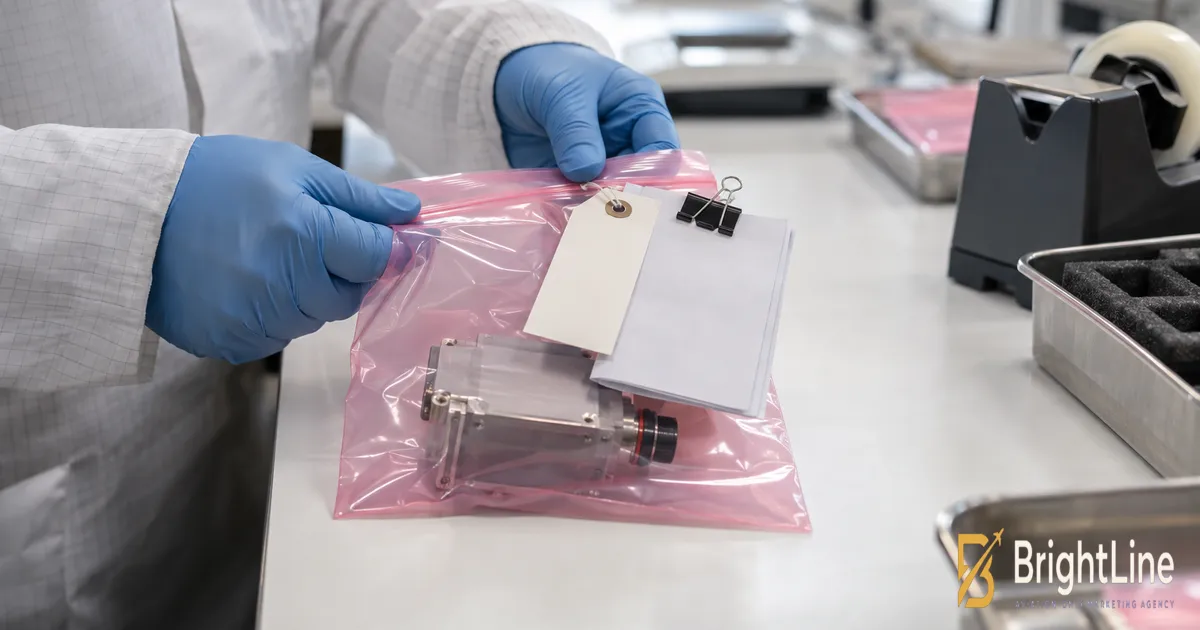
What the buyer verifies in the first screen is narrow: does the part number match, is the traceability documented, is it in stock, and is there a phone number a human answers. The FAA parts eligibility circular sets out what counts as an eligible, properly identified replacement part, and buyers who know it will judge your page against it in seconds.
Part-specific pages only pay off when the traffic arriving is already part-number intent. Send part-number clicks to a category page and the buyer leaves.
The page has to speak the same language as the ad that produced the click. We build these pages through our aviation web design and conversion service around the same part-number logic the campaigns use, which is the discipline marketing for aviation parts suppliers usually skips.
Running AOG Campaigns Inside One Account
Urgent demand and standard availability demand need separate plumbing inside one account. Merge them and the AOG searches, which carry the highest value per click, get outbid by cheap volume from routine part queries.

Step 1. Split campaigns by intent before anything else. AOG queries, part-number queries, and approval-filter queries each get their own campaign and budget. Blended campaigns hide which intent is actually converting.
Step 2. Set ad schedules and bid adjustments around your real answer hours. An AOG click at 2 a.m. that reaches voicemail is a wasted click. Match delivery to the hours a human picks up, and raise bids during the window your team is fastest.
Step 3. Build ad groups around part families. Grouping by family lets ad copy name the actual part number and approval type in the headline. The buyer sees the string they typed reflected back, which is how you become the first call when an aircraft is grounded.
Step 4. Route AOG conversions to a call or live chat, never a form. A form that sits in an inbox until morning loses the RFQ to whoever answered the phone.
Get all four right and the account stops competing with itself. Urgent searches get funded, routine searches stay efficient, and every click lands on a channel your team can answer.
Google Shopping for Aircraft Parts Buyers
Product listings sit in a blind spot for aviation suppliers. Distributors treat Shopping as a consumer channel and pour every dollar into text ads, then wonder why the buyer with a part number never sees their inventory. That assumption can cost them some of the cheapest qualified clicks in the account.
The format was built for this buyer. A feed carrying part numbers, condition, and live availability puts the item on screen before a text ad renders. The buyer scans a grid, spots the exact string they typed, and clicks.
Feed hygiene decides whether this works. Part numbers must be clean and consistent, availability must reflect real stock, and condition attributes must be accurate or Merchant Center will disapprove the products fast. A sloppy feed is worse than no feed.
Where the format breaks down is quote-only inventory. Parts requiring approval verification before a price can be shown do not belong in a Shopping feed. Keep those in search, where ad copy names the approval type and routes the buyer to a quote form.
Shopping complements aviation paid search marketing rather than replacing it. Search captures the buyer who types a full query. Shopping catches the one who scans. Run both, and the same part-number logic feeds each channel. The distributor who fixes the feed first owns the shelf space competitors have not claimed.
Measuring RFQs Beyond the Click
Click-through rate measures how well an ad gets attention. It says nothing about whether a parts distributor made money. The only figure that tells you an aircraft parts Google Ads account is working is qualified RFQs, and most accounts never track them.
- Quote form completions by part page. A form submission is only useful when it ties back to the specific part number page that produced it. Otherwise you cannot tell which inventory page earns its keep.
- Phone calls matched to campaigns. Call tracking assigns each inbound call to the keyword and ad that triggered it. Without it, the AOG buyer who dials instead of typing disappears.
- Chat sessions ending in a part number. A chat that closes with a part number and a quantity is an RFQ. A chat that closes with a question about shipping is not.
- CRM records showing orders. The final link connects the RFQ to a booked order. Skip it and you optimize toward inquiries that never convert.
These four signals expose which campaigns produce revenue and which produce noise. An account measured only on clicks drifts toward cheap, low-intent traffic and starves the expensive AOG searches. We report traffic, rankings, and qualified leads every month. If your agency cannot show you RFQ source data, you are likely working with an MRO marketing agency wasting your budget on vanity metrics.
What Most Aircraft Parts Google Ads Get Wrong
The standard approach to aircraft parts Google Ads was written for a different business. Bid broad on aviation keywords, lead with company history, push every click to a contact form. That works when you sell a category. It collapses when you sell one part number to a buyer who already knows the part.
Broad match on terms like “aircraft parts” pulls in flight sim hobbyists, model builders, and students pricing a trainer. Those clicks cost real money and produce zero RFQs. The buyer with a grounded aircraft never typed the broad term.
Company-history ad copy answers a question nobody asked. The buyer wants to know whether you stock the item and whether it carries an 8130-3. Your founding year is noise. The FAA marking and identification rules make that part number a legal identifier, not a marketing label.
A contact page forces the buyer to retype what they already gave Google. That friction is where the RFQ dies. Invert the structure: narrow keywords, ad copy that names the part and the approval, and a landing page that confirms the match above the fold.
The same inversion applies to organic traffic, which is why SEO for MRO companies and paid search share one logic. Get the part number wrong and the buyer is gone before the page loads.
Build the Campaign Around the Part Number
The part number is the whole strategy. Every dollar in aircraft parts Google Ads should be traceable to a query that names a specific item, a specific approval, or a specific grounded aircraft. Campaign structure, landing page, and reporting all hang off that one fact.
Act on it this week and the picture sharpens fast. Pull the search terms report, filter for queries containing part numbers, and check where those clicks actually land. If the page does not confirm the part, the approval, and the stock, the buyer is gone before the quote form loads.
Open the search terms report today. Find the part-number queries. Fix the page they hit first. That single correction moves budget toward the clicks that produce RFQs and away from the clicks that never will.
Our aviation supplier marketing team builds aircraft parts Google Ads around part-number intent, so buyers with a part number in hand land on pages that earn the RFQ. Book a call to audit your current campaigns and see where qualified RFQs are leaking.
FAQ
Aircraft Parts Google Ads Questions Distributors Ask
Should aircraft parts Google Ads send traffic to a homepage or a part-specific page?
Send the click to a part-specific page, because a homepage forces the buyer to search a second time for an item they already named in the search bar. The page must show the exact part number, its condition, and its approval documentation above the fold, or the buyer returns to results and clicks a competitor.
How do you keep hobbyist and model aircraft searches out of a commercial parts budget?
Add a negative keyword list that blocks hobbyist language before the campaign spends anything, covering terms like “RC,” “model kit,” “diecast,” and “flight simulator.” Review the search terms report weekly for the first month, because new hobbyist phrasing appears constantly and only the report shows what actually triggered your ads.
Does Google Shopping work for aircraft parts, or is search enough?
Shopping works for parts with a published price and clean availability data, and it fails for quote-only items that require approval verification before a figure can be shown. Run Shopping alongside search rather than instead of it, since the feed catches buyers scanning inventory while text ads catch buyers ready to call.
What should a parts distributor track to know the campaign is working?
Track qualified RFQs, meaning quote form completions tied to a specific part page, tracked phone calls, and chat sessions that end with a part number and quantity. Cost per click tells you what you paid for attention, while cost per qualified RFQ tells you whether the account is making money.