Can a Sponsor Pay for my Flight Training? Loans vs. Sponsors Guide
TL;DR
- If you wonder can a sponsor pay for my flight training, true sponsors fund costs upfront in exchange for service while loans leave all financial risk on you.
- US airline cadet programs provide structured employment pathways and conditional job offers rather than direct tuition payments.
- Tuition reimbursement models repay costs after graduation, requiring students to secure initial funding independently.
- Alternative options like 529 plans, grants, and specialized employer sponsorships carry strict eligibility criteria.
- Review funding contracts carefully before signing to confirm whether funds represent true sponsorship or personal debt.
Sponsorship money for flight training exists, but the label gets stretched to cover things that are not sponsorship. Ask can a sponsor pay for my flight training and the answer splits in two: a small set of programs genuinely carry your cost, and a much larger set push it back onto you.
That second group is where students get hurt. A tuition reimbursement check that arrives after you already paid is not sponsorship. It is a loan wearing a different name, and the paperwork rarely says so.
This article separates the programs that pay from the programs that only defer. Here you’ll find how to read the terms before you sign, which US paths actually fund training, and what can a sponsor pay for my flight training really means in practice.
Sponsorship vs. a Loan: The Line That Matters
Whether a sponsor can pay for your flight training comes down to one question: who holds the risk if the career stalls? Sponsorship and loans both move money toward your training. Only one of them stops charging you when the flying stops.
Sponsorship means a third party carries the cost, and you repay it in service, commitment, or a signed employment contract. A regional carrier that funds your hours in exchange for three years on its flight deck is a sponsor. The repayment is your time, not your cash.
A loan works the opposite way. A lender hands you the money, you carry the full balance, and you repay it in cash with interest regardless of what happens next. Fail a checkride, lose your medical, walk away from aviation entirely, the payment is still due on the first of the month.
That difference completely reshapes the risk profile. A sponsored trainee who washes out of a type rating may owe nothing beyond the embarrassment. A borrower in the same seat still owes every dollar, plus interest that kept compounding while the training stopped.
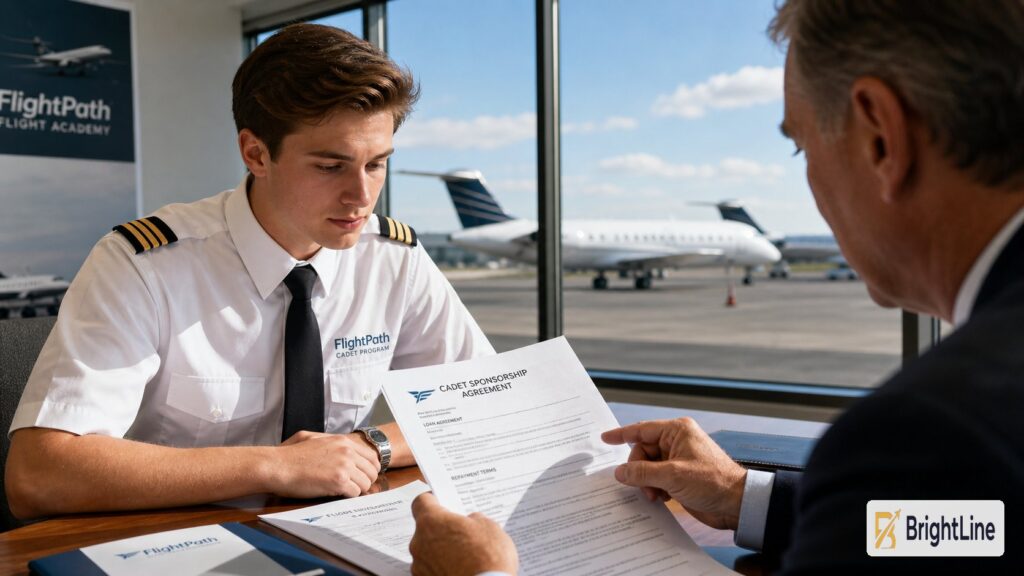
The middle ground is where most confusion lives. Airlines call it sponsorship, but the structure is often tuition reimbursement paid later. You fund training yourself, then the airline reimburses after you complete it and commit to flying for that carrier.
Reimbursement is not sponsorship. It is a loan you take out on your own credit, repaid by an employer only if you finish and stay. Miss the commitment window and the reimbursement can vanish.
Read the contract language before you sign anything. If the money arrives before training, it is sponsorship. If it arrives after you have already paid, it is reimbursement dressed in sponsor clothing.
What US Airlines Actually Pay For
Can a sponsor pay for my flight training at a major US airline? Not in the way most students imagine. The check does not arrive before training. It arrives after, if it arrives at all.
US airlines do not sponsor training in the direct sense. A student joins a cadet program, receives a conditional job offer, and still funds the training personally. Expect to pay around $100,000 for flight training before any airline money touches the equation.
What airlines actually run are pipeline programs. A conditional job offer, mentorship, and sometimes a stipend or signing bonus. The tuition stays on the student’s side of the ledger. Airlines want trained pilots arriving at the right time, not tuition debt sitting on their balance sheet.
The math favors the airline, not the student. Carriers can fill cadet classes without carrying tuition risk, so they do. A regional facing a hiring squeeze might fund training outright, but that is the exception. Cargo operators in tight markets occasionally do the same.
Compare that to what flight training costs on the open market. A student weighing a cadet program against a loan needs to see the real number, not the marketing version. The cadet pathway shortens the timeline to a first officer seat. It does not shorten the debt.
Some operators do write real checks. Regional carriers and cargo outfits facing acute pilot shortages have funded training directly, usually tied to a service commitment. Those programs exist, but they are narrow, competitive, and rarely open to students with zero hours.
The distinction matters because it changes who absorbs the risk. A sponsored trainee who washes out may owe nothing. A borrower who washes out still owes every dollar, plus interest, with no cockpit waiting.
United Airlines runs the Aviate program, which offers a conditional job offer and mentorship but no tuition check. Students still fund their own flight hours through the pipeline.
Delta’s Propel program works the same way. A student earns a pathway to a first officer seat, not a paid training slot. The conditional offer is real. The funding is not.
The Delta Cadet Program and Its Peers
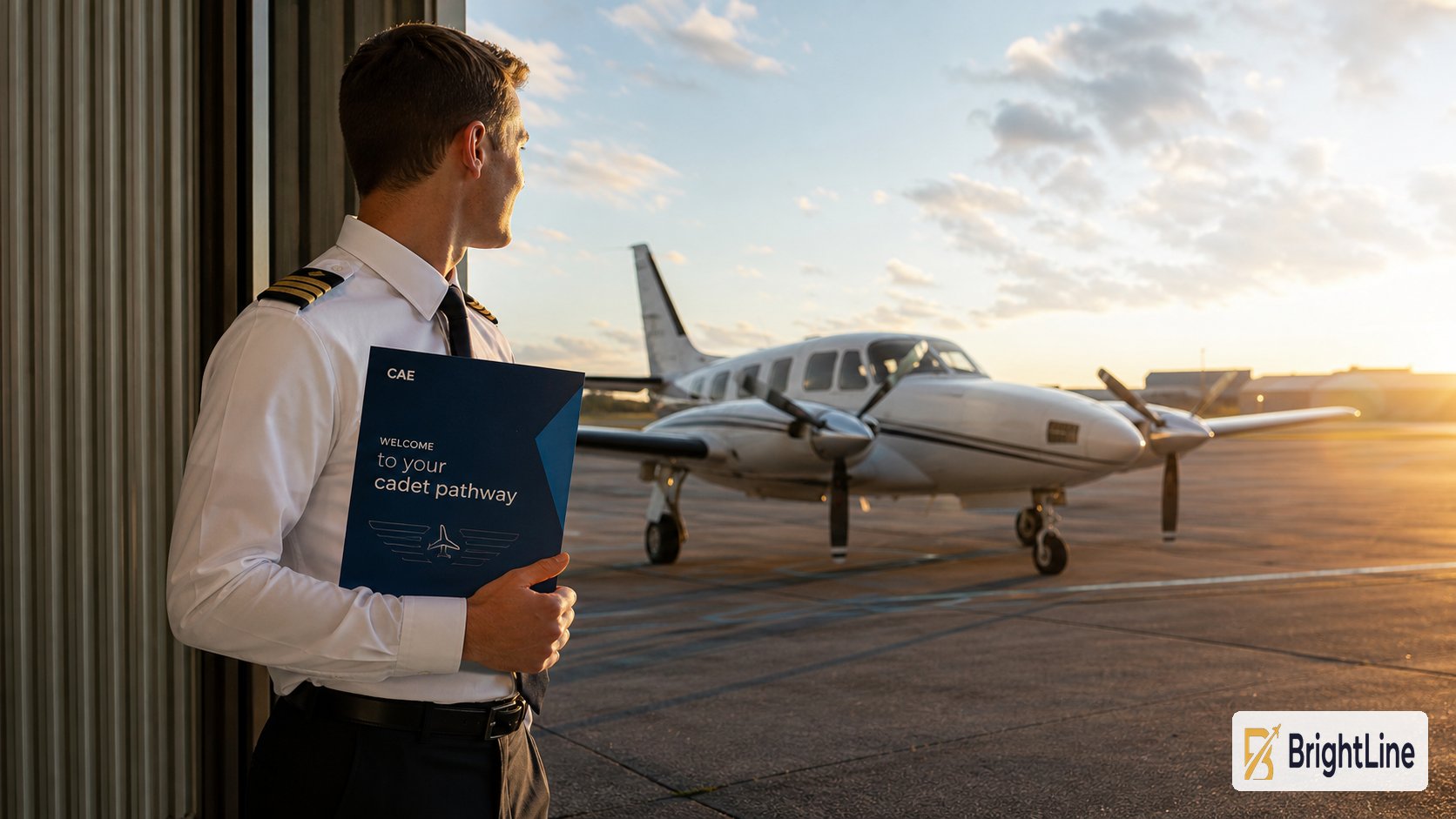
Cadet programs are the closest thing to airline sponsorship most US students will ever touch, and that gap between the label and the money is where careers stall. Several major airlines have developed programs designed to sponsor pilot training, yet what they hand over is a pathway, not a check.
- Delta Air Lines Cadet Program. The flagship of the category. It offers a conditional job offer, mentorship, and a defined path to a pilot career, but the student still funds every hour of flight time.
- United Aviate. Built around partner flight schools and university programs. Entry gets you a conditional offer and a structured route, not tuition relief, so the borrowing happens on your side of the ledger.
- American Cadet Academy. Ties students to a regional pipeline early. The value is the guaranteed interview slot, and the cost of training stays with the trainee.
- Regional carrier pathways. Envoy, Piedmont, and similar operators run cadet programs that promise a first-officer seat. Some attach a signing bonus paid after hire, which is reimbursement, not sponsorship.
- What none of them cover. Up-front tuition, living costs during training, or the interest on a loan you take to get there. A conditional offer is not a funding source.
Read the list again and the pattern is obvious. Every program trades a future job for your present money, and the airline carries none of your risk if you fail a checkride.
Treat a cadet program as a career shortcut, not a way to pay for flight training. Students who confuse the two borrow believing the airline already has them covered.
The trap is timing. A cadet program accepts you before you hold a commercial certificate, then expects you to fund the ratings that get you there. That conditional offer sits in a drawer while you sign a loan for the rest.
Ask one question before you sign anything. Does the airline pay a dollar toward your training, or does it pay you later? If later, you are financing the airline’s pipeline with your own credit.
Employer Sponsorship Beyond the Airlines
Employers outside the cockpit fund training when the certificate serves their operation directly, not when it serves your career ambitions. The money is real, but it arrives attached to a job, a rating, or a service term. Here is where it actually shows up.
- Cargo and charter operators. A Part 135 operator facing a pilot shortage may cover a type rating in exchange for a signed two-year commitment.
- Agricultural aviation outfits. Aerial application companies sometimes fund tailwheel and low-level training for pilots who stay through spray season.
- Law enforcement and border agencies. Agencies with air units fund rotary or fixed-wing training for sworn officers who commit to a multi-year service term.
- The military. Warrant officer and commissioned flight programs cover training fully in exchange for a service obligation measured in years, not dollars.
- Corporate flight departments. A flight department hiring a first officer may reimburse training costs on a schedule tied to staying on payroll.
- Civil Air Patrol. The Air Force Auxiliary offers a lower-cost route for young students building hours, and a final way to decrease your flight school costs is to join the Air Force Auxiliary’s Civil Air Patrol.
None of these employers fund training out of generosity. Each one has a specific operational gap, and the funding closes it.
An employer pays for the rating it needs, not the career you want. A charter operator funding a type rating is buying a pilot who can fly its aircraft next month, not investing in your long-term trajectory.
Before you borrow, ask the employers already in your orbit whether they fund training, and get the terms in writing. That question belongs in your flight school application process planning, not after you sign a loan agreement.
| Funding Route | Who Carries the Risk | Repayment Type | If Training Stops | Typical Cost Range |
|---|---|---|---|---|
| Private flight training loan | You | Cash plus interest | Full balance still owed | Varies by lender and credit |
| Scholarships and grants | The awarding body | None | Usually no clawback | Partial awards, rarely full tuition |
| 529 plan | The account holder | Withdrawal from saved funds | Unused funds stay in the account | Capped by account balance |
| Full sponsorship | The sponsoring operator | Years of service | Often triggers repayment | Covered in full, terms vary |
The 529 question deserves its own answer because families assume it works like college tuition. It doesn’t, at least not universally. Qualified flight training at an eligible institution can sometimes be covered, while standalone Part 61 lessons at a local FBO usually cannot.
That gap catches people who open a 529 early and assume the money is waiting for them. Check the school’s eligibility status before you count on the account. An aviation school education still requires a significant payment up front, and career-change students entering aviation feel that most.
Loans win on access and lose on exposure. You get funded regardless of checkride outcomes, and you owe every dollar if you wash out at hour forty. Scholarships and 529 withdrawals invert that: no debt, but limited coverage and eligibility hoops.
Full sponsorship is the only route where failure doesn’t follow you home. It’s also the rarest, which is why most readers comparing funding flight training options end up weighing loans against savings. Pick the loan only when you’ve confirmed no scholarship, no 529 eligibility, and no employer will touch the cost.
When a Sponsor Pays and When It Does Not
Sponsored training means an employer carries the cost and you repay it in years of service. That works beautifully if the operator is going where you wanted to fly anyway. It becomes a trap the moment your first choice was somewhere else. The commitment is binding. Walk away early and you may owe the money back, sometimes in a lump sum. Read the clawback clause before you sign, not after.
The cost sits entirely with you. Interest compounds whether you fly or not. Some trainees cover it with savings, and some obtain a career loan, but the financial burden of flight training stops others from reaching their career goals at all.
Fully sponsored programs are rare enough that you should plan as if you will not get one. The aviation marketing agency cost of promoting them tells you why schools advertise sponsorship heavily. Few seats, loud headlines.
Pick the sponsored path when the operator is your genuine first choice and the service commitment matches your timeline. Pick self-funded when optionality matters more than the interest. Know which one you are signing before the ink dries.
The counter-argument runs like this: a regional carrier paying for your type rating is free money. It is not. That operator owns your schedule, your base, and your upgrade timeline for the length of the contract.
Ask one question before you sign anything. If the sponsorship vanished tomorrow, would you still want to fly for this operator? A yes makes the deal clean. A no means you are renting your career, not building it.
Which Funding Path Fits Your Situation
Matching your profile to a funding route before you sign anything decides whether training builds a career or buries it. Most people skip it and default to whatever loan a flight school hands them. That default costs them something they never knew they had.
Step 1. Career-changers with savings and no employer tie should price loans against pay-as-you-go. A loan front-loads cost and interest, while pay-as-you-go stretches the timeline but keeps you debt-free if you stop. Run both numbers against your actual savings before committing to a school.
Step 2. Young students with time on their side should chase scholarships and cadet programs first, before borrowing. These take months to land and most applicants quit early, which is why the ones who persist get funded. Start applications before you need the money.
Step 3. Anyone inside an aviation business should ask about employer sponsorship before signing a loan. Cargo operators, charter outfits, and maintenance shops sometimes fund a rating they need on staff. Ask your manager directly whether the company has a training budget, because the answer is often yes and rarely advertised.
Step 4. International students must confirm visa rules before assuming any US funding route applies. A loan or sponsorship that works for a domestic student may not clear immigration requirements. Verify with the school’s admissions office and a qualified immigration professional before building a plan around it.
Step 5. Compare the actual terms side by side once you have your options. Whether a sponsor can pay for your flight training comes down to what the contract says about repayment. Get the funding terms in writing before you commit to anything.
Flight schools competing for these students increasingly lean on clear, honest cost communication, because prospects who can compare funding options actually enroll. Aviation marketing agencies like BrightLine Digital help schools present those options and admissions pathways in a way students can genuinely weigh. Strong flight school marketing turns a confusing cost question into a reason to choose one program over another.
Working through these steps in order unlocks a decision you can defend. You will know which path carries the least risk for your situation, and you will have the paperwork to prove it.
Decide Before You Sign Anything
Sign the wrong structure and you inherit debt that outlives the career it was meant to build. A grant disappears if training stalls. A reimbursement means you front the cost and wait. A loan follows you even if you never fly a revenue mile. Get the funding terms in writing before you commit to any program. Confirm the money type. Confirm who carries the loss if you wash out. Then sign, or walk.
FAQ
Sponsorship and Funding Questions Pilots Ask
Can a sponsor pay for my flight training?
Yes, but only a narrow set of programs pay before training starts, and those come with a signed service commitment. The rest of what gets called sponsorship is reimbursement, which means you fund the entire cost yourself first and get paid back only after you hold the rating.
Can you use a 529 plan for flight training?
A 529 plan can cover flight training when the school is an eligible institution and the program leads to a recognized credential. Standalone Part 61 lessons at a local FBO usually fall outside that definition, so families should confirm the school’s eligibility status before withdrawing funds.
Does the Delta Air Lines Cadet Program pay for flight training?
Delta’s cadet pathway provides a conditional job offer, mentorship, and a defined route to the right seat, not tuition. Cadets still fund their own hours, which is why the program functions as a career shortcut rather than a funding source.
Does an airline sponsorship require a contract?
Any program that actually pays for training attaches a binding commitment, typically a set number of years flying for that operator. Breaking that commitment usually triggers repayment of the funded amount, so the contract terms matter as much as the money.
Can international students access US sponsorship programs?
Rarely, because most airline cadet programs require existing US work authorization before the conditional offer is issued. An international applicant needs to confirm the F-1 visa for flight training rules first, since training authorization and employment authorization are separate approvals.