
Pilot Training in USA for UAE Students: 2026 Explainer Guide
TL;DR
- Pilot training in USA for UAE students begins with selecting between an M-1 vocational visa and an F-1 academic visa before committing to a flight program.
- Total expenses extend past base flight hour quotes to cover TSA fees, medical exams, examiner fees, housing, and post-graduation GCAA conversion.
- Select flight academies that issue logbooks and training records formatted to meet GCAA validation standards in the UAE.
- Initiate GCAA conversion procedures prior to completing final FAA checkrides to prevent hiring delays with Gulf airlines like Emirates or flydubai.
- Partner with flight schools offering dedicated international admissions teams that manage SEVIS compliance seamlessly across Dubai time zones.
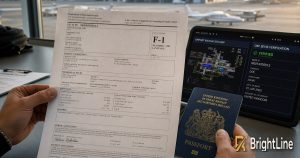
A Dubai family sits across from a flight school recruiter, deposit ready, brochure open, and nobody has asked which visa the student will travel on. That question decides everything else.
Pilot training in USA for students from the UAE is a visa decision, a cost decision, and a conversion decision, in that order. Families who start with the brochure start in the wrong place. The brochure shows aircraft and sunshine. It rarely shows the M-1 versus F-1 trade-off, the true dirham cost, or the GCAA validation waiting at the end.
This article walks through all three. You’ll learn which visa route fits your timeline, what US training costs a UAE family, and how an FAA certificate becomes a GCAA license.
What Pilot Training in the USA Means for UAE Students
Pilot training in the USA for UAE students is a structured pathway where a UAE resident enrolls at a US Part 141 or Part 61 flight school, trains under FAA rules, and earns certificates that must later be validated by the UAE General Civil Aviation Authority. The definition matters because it contains two aviation authorities, not one.
The FAA system became the reference standard for Gulf students for practical reasons. US schools fly year-round in Arizona, Florida, and Texas, and their hour-building routes feed airline pathway programs that Gulf carriers recruit from directly. The training ladder runs private pilot, instrument rating, commercial certificate, then multi-engine and flight instructor ratings. Each rung is a separate checkride with its own written exam.
What trips up families is treating the commercial certificate as the finish line. It is not. The GCAA decides whether that FAA certificate counts toward UAE employment, and that decision happens after graduation, not during training. Students who learn this late often discover their logbook format or school records do not match what the GCAA expects to review. Understanding international pilot training pathways changes what you screen for before booking. A school that documents training to GCAA-recognizable standards saves months of remediation later.
Three decisions follow, in order. Visa category comes first because it sets your legal timeline. School choice comes second because it determines whether your records convert cleanly. Conversion timing comes third, and it should start before you graduate. Get the sequence right and flight training in the USA produces a UAE-employable pilot.
Emirates and Etihad both run cadet programs, and neither treats a foreign certificate as plug-and-play. The airline still verifies your training records against its own entry standard before a simulator slot opens.
That verification is where the timeline resides. Ask your school upfront whether it issues logbooks and training records in a format the GCAA recognizes. Get the answer in writing before you pay a deposit.
M-1 or F-1: The Visa Choice That Sets Your Timeline
The visa category you pick before you ever board a plane decides how long you can legally stay in training. Families skip this step because the flight school brochure makes it look like paperwork. It is not paperwork. It is the clock your entire program runs on.
Step 1. Decide whether you want ratings only or a degree alongside them. The M-1 visa for flight school is the vocational route, built for students whose only goal is FAA certificates. The F-1 is the academic route, and it suits students who want a university degree stacked on top of their commercial rating.
Step 2. Confirm the school can issue the right document for your category. A Part 141 school issues an I-20 for F-1 students and an M-1 form for vocational students. If the school only supports one category, your choice is already made for you.
Step 3. Pay the SEVIS fee before you touch the DS-160. The SEVIS payment generates a receipt number the DS-160 form requires. Reverse that order and the form stalls at the first page.
Step 4. Assemble your consulate file before booking the Abu Dhabi or Dubai interview. Bring the school acceptance letter, proof of funds covering tuition and living costs, and a clear explanation of why you will return to the UAE. Officers at Gulf posts see flight training applications constantly and know exactly what a weak funding story looks like.
Step 5. Match your visa duration to your realistic training timeline. An M-1 is tied to a fixed program length, and a commercial-to-multi-engine pathway routinely runs past the window a recruiter quoted. Running out of status mid-training forces a departure, a reapplication, and a lost intake.
Schools with real international admissions support walk UAE applicants through this sequence instead of leaving them to guess. Aviation marketing agencies like BrightLine Digital build the admissions funnels and content that let flight schools guide Gulf applicants through exactly this decision.
Getting the category right unlocks a training timeline that does not collapse halfway through. Get it wrong and the certificate you paid for sits behind an immigration problem you cannot fly around.

What US Flight Training Really Costs a UAE Family
A school quote for pilot training in USA programs covers flight hours and instruction, then stops. Everything a UAE family actually pays sits outside that number: visa fees, medical certification, checkride fees, housing, and the GCAA conversion waiting at the end. The gap between the quote and the invoice is where budgets break.
| Cost Line | Typical Range | Often Quoted? |
|---|---|---|
| Private pilot license | Starts around $10,000 | Yes |
| Commercial training | Can reach $80,000 or more | Yes |
| TSA and visa fees | Separate from tuition | Rarely |
| Medical and checkride fees | Per certificate, per attempt | No |
| Housing in training cities | Monthly, multi-year | No |
| GCAA conversion | Post-graduation | No |
The commercial pilot license cost figure is the one families anchor on. It is also the least useful number in the plan.
Payment mechanics matter as much as the totals. UAE families typically fund training through international wire transfers, and many schools negotiate installment schedules directly rather than through a third party. UAE-based education financing rarely applies to a US vocational program, so the deposit usually comes from family capital.
Currency movement is the quiet variable. A dirham-pegged budget holds steady against the dollar, but a multi-year program still exposes every wire transfer to timing risk. Locking a payment schedule early removes more risk than shopping for a cheaper hourly rate. Budget the conversion cost from day one, not from graduation day. Families who price the full pipeline before the first deposit are the ones who finish it.
Emirates sends cadets to flight schools in Florida and Arizona on sponsored tracks. The sponsorship covers tuition, not the hidden line items. A family funding a self-sponsored track pays every one of those gaps alone.
Budget the GCAA conversion before you book a single flight hour. If the FAA certificate cannot be converted on the timeline you need, the entire spend is stranded. Ask the school which GCAA pathway its graduates actually complete.
Choosing a US Flight School From Abu Dhabi or Dubai
School selection for pilot training in USA programs is a visa-support decision before it is a training decision. A school that cannot issue an I-20 or M-1 form cleanly will cost a UAE student an entire intake year, no matter how good its aircraft look.
- Part 141 versus Part 61. Part 141 schools follow an FAA-approved syllabus with structured stage checks, which suits students who need predictable timelines. Part 61 offers flexibility but demands self-discipline, and the wrong fit stretches training by months.
- International student support. A dedicated admissions office that understands SEVIS compliance and consulate expectations removes the paperwork risk that derails Gulf applicants. Ask who handles international files and how quickly they respond.
- Fleet availability and maintenance. Aircraft grounded for parts or inspections stall your progress and your budget. A school with a documented maintenance schedule and spare airframes keeps students flying on schedule.
- Climate and flying conditions. Year-round VFR weather matters when you are paying for flight hours. This is why many UAE families look at flight schools in Florida and Arizona over northern states with heavy winter downtime.
- Airline pathway agreements. A school with direct pipeline arrangements to regional or national carriers gives graduates a defined next step. Without one, you finish with a certificate and no structured route into a cockpit.
Communication across time zones separates schools that serve Gulf students well from those that do not. An eight-hour gap between Dubai and the US means a school that answers emails within a working day is signaling how it will treat you once you enroll.
A school’s admissions process is a preview of its operations. Aviation-focused agencies like BrightLine Digital build that admissions experience for flight schools targeting Gulf markets, because a clean funnel reflects a clean operation. Judge the school by how it handles your first inquiry.
Converting Your FAA License to a GCAA One
Pilot training in the USA for students from the UAE produces an FAA certificate, and that certificate is not the credential a UAE operator hires against. Conversion is where the money you spent either becomes employable or sits in a drawer. Four separate mechanisms decide which one is chosen.
What the GCAA Actually Requires From an FAA Holder
The GCAA does not rubber-stamp a foreign certificate. It validates it against its own licensing framework, which means your FAA commercial license is an input, not an output. The authority reviews your logbook, your training records, and your medical status before issuing anything.
Exams and Medical Checks That Apply
Air law, procedures, and a GCAA medical assessment sit between you and a UAE license. A Class 1 medical issued in the US does not automatically transfer, and the UAE medical has its own validity windows. Skipping this step until after graduation is how students lose a hiring cycle.
Reciprocity Depends on the System You Trained Under
Conversion speed is not uniform across foreign licenses. Pilots converting from FAA or TCCA systems may take two to three months to reach GCAA standard. EASA holders typically clear the same process in two to three weeks.
How Long the FAA to GACA Conversion Takes in Practice
The FAA route is the slower conversion path, and that gap is structural, not administrative. Plan the FAA to GACA conversion as a months-long project that runs parallel to your final ratings, not after them. Students who start the paperwork before their last checkride arrive in the UAE ready to interview. Treating conversion as an afterthought is what turns a US training investment into a repeat of training you already paid for. Build it into the timeline from the first deposit.
Emirates and Etihad both recruit against a GCAA license, not an FAA one. A candidate holding only the FAA certificate cannot be rostered onto a UAE-registered aircraft. That single line in the hiring criteria is why conversion timing matters more than conversion cost does.
Start the GCAA paperwork while your FAA checkride is still ahead of you. Waiting until you land in Dubai adds months to a process that already runs longer than the EASA route.
The Misconception That Costs UAE Students a Year
An FAA certificate does not make you a pilot in the UAE. It makes you a pilot in the United States, and that distinction costs students an entire intake year when they learn it at the wrong moment. Anyone planning to become a pilot in the USA should understand this before the first deposit clears.
The confusion has a real mechanism behind it. An FAA commercial license is recognized internationally for the privileges it grants, which is true and also misleading. Recognition is not the same as authorization. UAE operators hire against a GCAA license, and no US certificate substitutes for it. The GCAA licensing pathway runs on its own rules entirely.
Students who discover this late hit a predictable wall. They finish training, fly home on a high, and start applying to Emirates or flydubai with an FAA certificate in hand. The application stalls. Conversion exams need scheduling. Medical checks need redoing. Meanwhile the hiring window they trained for closes, and the next cohort fills the seats.
The second layer of the misconception is more expensive. Any US flight school produces a convertible certificate, families assume. That is false. Program structure, record-keeping discipline, and logbook quality all determine how smoothly the GCAA conversion moves. A Part 61 school with sloppy endorsements can turn a straightforward validation into months of clarification requests.
Consider two students who trained at different Florida schools for the same commercial license. One arrives home with a clean logbook, structured training records, and a school that responds to GCAA queries. The other has gaps in dual-received time and a school that stopped answering emails after graduation. Same certificate. Wildly different conversion timelines.
The US training decision is a two-country decision from day one. Choose the school that understands what the GCAA will ask for, and the conversion becomes a formality. Choose wrong, and you spend a year explaining why your paperwork does not match your ratings.
Building a Timeline That Survives Both Systems
Step 1. Confirm the visa category before paying any deposit. The M-1 or F-1 choice determines how long you can legally stay in training status. Pay first and you inherit whatever timeline the school assumed, not the one you needed.
Step 2. Secure the I-20 or M-1 form, then complete the DS-160 and SEVIS steps in that order. Each document feeds the next, so a skipped sequence stalls the file at the consulate. Schools with organized international admissions issue these cleanly and fast.
Step 3. Book the Abu Dhabi or Dubai consulate interview with real lead time. Peak season slots in the Gulf fill weeks out, and a rushed booking collides with your school’s start date. Build the buffer before you commit to a cohort.
Step 4. Arrive in the US with medical certification already arranged. A first-class medical lapse grounds you mid-syllabus, and no flight hour recovers that lost month. Handle it before departure, not after arrival.
Step 5. Complete FAA ratings with GCAA conversion requirements written into your logbook from day one. Record-keeping quality decides how smoothly the UAE validation goes later. Students chasing a UAE pilot career treat the logbook as evidence, not paperwork.
Step 6. Start GCAA validation before graduation, not after. Beginning the conversion while still enrolled keeps your FAA currency and UAE eligibility moving together. Waiting until you land back home adds dead time to your job search.
Schools that present this timeline clearly to Gulf applicants cut sequencing errors sharply. Aviation marketing and admissions specialists like BrightLine Digital build that clarity into flight school funnels, which matters when a UAE family is choosing between accelerated pilot training programs across time zones.
Finish the sequence and you hold two things at once: an FAA certificate and a GCAA path already in motion. That combination is what puts a UAE-trained pilot in front of an airline recruiter instead of in a conversion queue.
Where UAE Students Should Start Before Booking Anything
Confirm the visa route and the school’s international admissions capability before a single dirham leaves the UAE. A recruiter who cannot answer a question about I-20 issuance across a Dubai time zone will not answer it faster once you’re enrolled.
Ask for the admissions contact before the price sheet. That one request separates schools built for Gulf applicants from schools built for whoever walks in the door. Start with the visa question. Then the school’s admissions record. Then the deposit. The order is the whole strategy.
FAQ
Pilot Training in the USA for UAE Students: Common Questions
Can UAE students do pilot training in the USA on an M-1 visa?
Yes, and the M-1 is the visa category built specifically for vocational flight training, which is why it fits most UAE students pursuing pilot training in the USA. The M-1 requires a school-issued Form I-20 endorsed for vocational study, and the student must show proof of funds covering the full program before the consulate interview.
How much does pilot training in the USA cost for a student from the UAE?
Tuition varies by certificate level, with private pilot training starting near $10,000 and commercial training reaching $80,000 or more before living costs. UAE families should also budget for TSA clearance fees, medical certification, checkride examiner fees, and housing in the training city, none of which appear in a standard school quote.
Is an FAA pilot license valid in the UAE?
An FAA certificate is recognized internationally for the privileges it grants, but it does not authorize employment with UAE operators, which requires a GCAA license. A student holding only an FAA commercial certificate cannot legally fly for Emirates, flydubai, or any UAE charter operator without completing GCAA validation first.
How long does it take to convert an FAA license to a GCAA license?
The GCAA conversion process for FAA-trained pilots typically runs longer than the route available to EASA license holders because it involves additional documentation review and examination steps. Pilots training under the FAA or TCCA systems should plan for a conversion window measured in months rather than weeks, and should start the paperwork before graduation rather than after.