
M-1 Visa Interview Tips for Pilots: 5 Answers That Get Approved
TL;DR
- Reviewing essential M-1 visa interview tips for pilots ensures your vocal responses align directly with your DS-160, I-20, and SEVIS records.
- Articulate specific operational reasons for selecting your Part 141 flight school rather than reciting generic school rankings or weather benefits.
- Demonstrate a transparent financial paper trail connecting your sponsor’s bank statements and income directly to the program cost estimates.
- Establish non-immigrant intent by naming a specific home-country airline cadet pipeline, employer, or family business awaiting your return.
- Structure concise opening sentences for unexpected questions to maintain composure and avoid volunteering unnecessary, unrequested details.
The officer flips past your photo page, looks up from the DS-160, and asks the question you rehearsed. Your answer lasts eleven seconds. That answer decides the next four years of your flying career.
M-1 visa interview tips for pilots usually focus on memorizing responses. That advice fails because the officer is not grading your memory. The officer is scoring whether your file and your story agree.
This article names the five questions that matter, the answer that clears each one, and the answer that sinks it. You will learn why a named school beats a ranked list, and how to sound like a pilot instead of a script. Every year, applicants with strong flight hours and clean paperwork get refused anyway.
Treat the interview as five separate questions, each scored on its own. Prepare for the one you think is hardest, and you’ll likely miss the two that actually decide your case.
What the Officer Is Actually Scoring
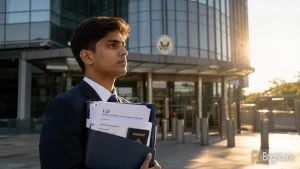
The decision is mostly made before you sit down. The officer has your DS-160, your I-20, and your SEVIS record on screen, and the interview exists to confirm or break a read that already formed.
One legal test drives the whole conversation. To qualify for M-1 classification, a student must intend to depart from the United States after their temporary period of stay, and the eligibility requirements for F and M students treat that intent as a condition, not a preference. Every answer either reinforces it or chips at it.
Pilots face a harder version of this test than tourists do. Flight training is vocational, which means the officer assumes the skills you gain are skills the US job market pays for. A tourist explaining a two-week itinerary has an easy story. You are explaining why a commercial license earned in Florida gets used somewhere else.
That is why the standard M-1 interview questions about school choice, funding, and post-training plans are not really separate questions. They are three angles on the same doubt. An officer who believes your return plan stops probing the details. An officer who does not will keep pulling.
Applicants who treat the interview as a performance of memorized lines misread the room. The officer is not scoring your English or your confidence. The officer is scoring whether your file and your mouth tell the same story about where you go when training ends.
Watch what happens when the officer asks why you chose that specific school. A weak answer names the weather or a friend already there. A strong answer connects the school’s fleet, its Part 141 approval, and your home country’s hiring pipeline in one breath.
That connection is the whole game. Vague enthusiasm reads as a cover story. Specific operational detail reads as a plan. The officer is testing whether your training has a destination, not whether you love flying.
Answer 1: Why This School, Not Another
The school question is where strong M-1 visa interview tips for pilots stop being generic. Officers hear the same answer all week: a ranked list of flight schools with no reason attached. That tells them you searched, not that you decided. Specificity is the whole game. Name the school, then name the reasons that only apply to it.
- Part 141 certificate. A school holding Part 141 approval runs a structured syllabus the FAA has audited. That structure shortens your timeline, and the officer knows it.
- Fleet and instructor ratio. A school with enough aircraft and instructors per student keeps you flying instead of waiting. Say the ratio out loud if you know it.
- International student history. A program that has processed SEVIS records for years has a paper trail the officer can trust. First-time international programs raise questions you do not want.
- Total program cost. Quote the figure you reviewed before applying. An applicant who knows the number has clearly read the file.
- Why this school over the one down the road. The comparison is the answer. “It was closest” is not a reason.
After extensive research, a flight school stood out because of its facilities, instructors, and record of producing working pilots. That is the shape of a credible answer: one school, named reasons, no hedging.
Every item is something you can defend with a document. When you are choosing a Part 141 school, you are also choosing the answer you will give at the window.
One objection surfaces here. Some applicants think naming a backup school makes them look flexible. It does the opposite. The officer reads a second choice as doubt about the first.
Bring one school to the window. Keep the alternates in your head, not in your answer. If the officer asks what happens when the program fills, say you would wait for the next cohort. That reply signals commitment, and commitment is the thing being scored.
Answer 2: Who Is Paying and How
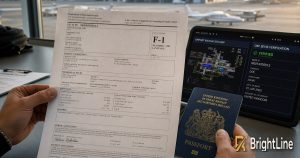
The financial question is not about your bank balance. It is about whether the money has a paper trail the officer can follow in under a minute. A large number with no documented source reads worse than a modest number with a clean one. Bring the documents that answer the question before it is asked, including your proof of finances and school acceptance letter.
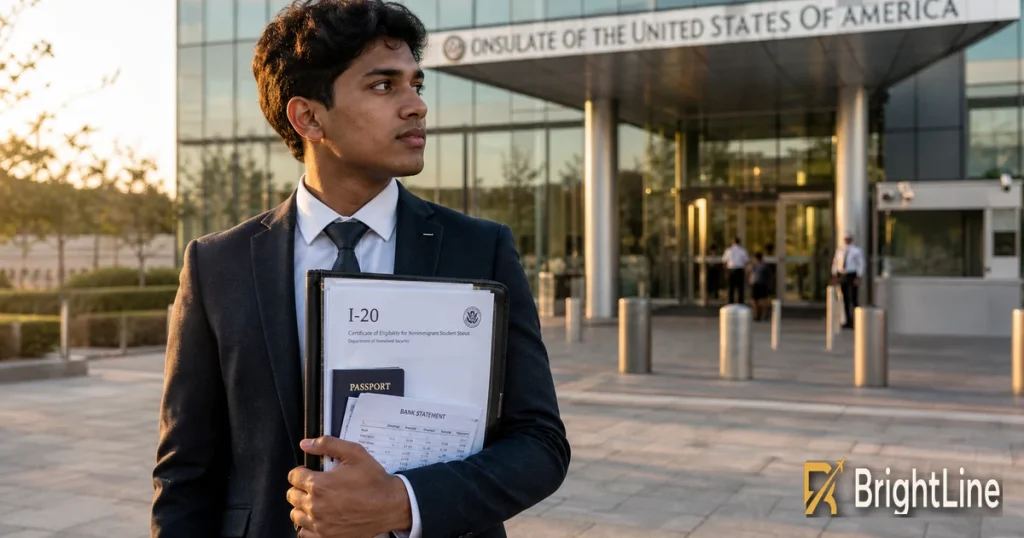
- School cost estimate. The I-20 program figures establish the exact amount the officer is measuring your funds against.
- Bank statements in the sponsor’s name. Statements must cover the full program duration, not the current balance alone.
- Affidavit of support. A signed affidavit formally links the sponsor’s funds to your training and names the obligation.
- Sponsor income proof. Pay stubs, tax returns, or business ownership records verify the money came from somewhere real.
- Large deposit explanation. A short written note explaining any recent lump sum prevents the officer from assuming it was borrowed.
- Originals and copies. The officer may ask to see the source document behind any number you state.
The pattern across these documents matters more than any single one. A parent with a stable salary is easier to verify than a distant relative with cash. The officer is not measuring wealth. They are measuring whether the story holds together.
Build a flight school cost breakdown before the interview and match every figure to a document. If a number appears on your I-20, a paper trail should exist behind it. BrightLine Digital builds admissions packaging that keeps those figures and documents aligned from the start.
Cash in a savings account raises a quieter problem. Officers see sponsored applicants whose funds appeared weeks before the interview, and the timing reads as staged rather than earned. A sponsor who has held the same balance for two years tells a stronger story than one who moved money last month.
If the money genuinely arrived recently, say so plainly and explain why. A property sale, a bonus, or a business payout all have documents behind them. Hand those over before the officer asks, and the deposit stops looking borrowed.
Answer 3: What You Will Do After Training
Two versions of the post-training answer exist, and only one survives the interview. The weak version describes a career in the United States. The strong version describes a job waiting at home. This comparison matters more than any other answer you give, because it tests the one legal standard the officer is scoring against.
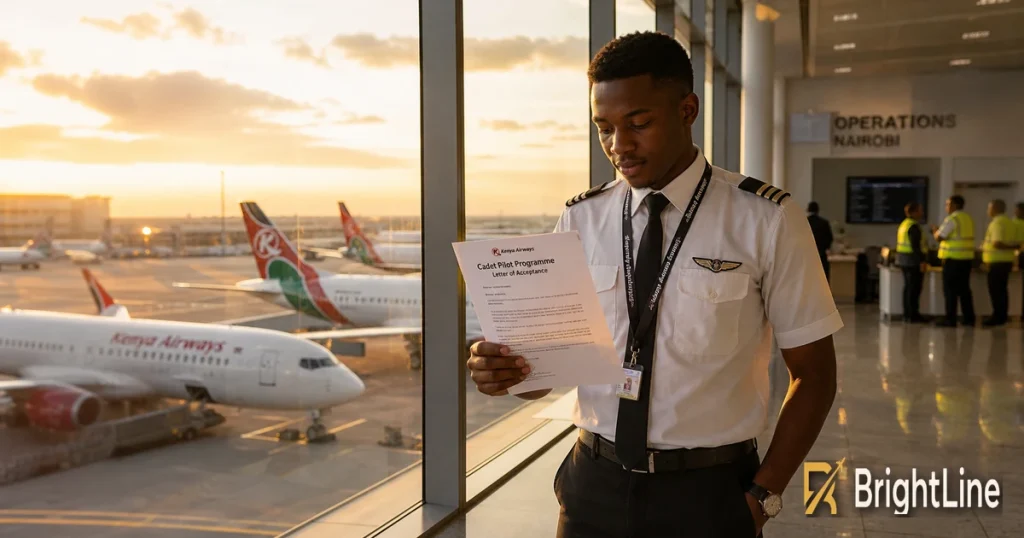
The weak answer sounds like this: build instructor hours, get hired by a regional carrier, then pursue a green card. It feels honest, and that is exactly the problem. Instructing hours and regional hiring are US career steps, and a green card path is a permanent immigration plan. An officer hears a flight plan with no return leg, and the M-1 versus F-1 visa distinction stops mattering because both require the same intent to depart.
The strong answer names a specific employer in your home country. Not ” work for an airline in Nigeria,” but ” return to Air Peace as a first officer, and they have a cadet pipeline for pilots with US training.” Name the operator, the role, and a realistic timeline. Applicants from countries with growing aviation sectors have an easier story to tell, because the demand is real and verifiable.
A family business works just as well, provided you name it. “My father operates a charter company in Nairobi and I will join as a line pilot” gives the officer a concrete destination. The officer is not asking whether you want to stay. The officer is asking whether your plan makes sense without staying.
Practice this answer out loud with a friend or family member, and research the aviation field in your home country before the interview. Interview preparation guidance for international flight students treats that rehearsal as standard practice, not optional polish. The answer that names an airline beats the answer that names a country. If your plan only works if you stay, the officer will hear it in your first sentence.
Answer 4: Your Ties to Home, Stated Plainly
The ties question gets answered badly because applicants treat it as one emotional appeal instead of four separate factual claims. Officers weigh family, property, employment, and financial obligations as distinct categories, and a strong answer covers each. Good M-1 visa interview tips for pilots treat this section as documentation, not sentiment. Vague longing for home proves nothing. Named, verifiable anchors prove everything.
Family: Name Them, Do Not Describe Missing Them
A single sentence naming your spouse, children, or dependent parents outperforms a paragraph about how much you will miss them. The officer wants a countable fact, not a feeling. “My wife and two children live in Nairobi” beats any elaboration.
Property: What Is Legally in Your Name
Land, a home, or a vehicle titled in your name is a tie the officer can verify. A family house you will inherit is not the same claim, and officers know the difference. If the deed or title exists, bring a copy.
Employment: The Job Waiting or the Leave Granted
A current job, a formal leave of absence, or a signed offer waiting on your return all work. A verbal promise from a cousin does not. Ask your employer for a letter on company letterhead before the interview.
Financial Obligations: The Loans and Responsibilities Pulling You Back
A student loan, a business interest, or a family financial responsibility creates a documented reason to return. Returning to a home airline with a signed offer is the strongest version of this claim. Paperwork behind the obligation matters more than the amount.
Every Tie Must Be True and Documentable
Coming prepared and organized not only boosts your chances of approval, it also reflects the professionalism and discipline expected of future pilots. The officer can ask for a document behind any claim you make. A fabricated tie ends the interview faster than a weak one.
Answer 5: The Question You Did Not Expect
The unscripted question is the one place your preparation can betray you. Rehearsed applicants handle it worst, because they reach for a memorized block that does not fit the question asked. Strong M-1 visa interview tips for pilots treat this moment as a method, not a script.
A denied relative, a gap year, a prior refusal, a change of major. These questions exist to test composure under pressure, which is the same skill a checkride measures. The officer wants to watch you think, not hear you recite. Use a three-part structure. Answer the literal question in one sentence. Add the context that explains it in a second. Then return to the training plan in a third.
Applicants who have been through competitive selection rounds know this rhythm already. Exposure to cadet pilot program selection phases builds the same instinct the embassy interview rewards. You learn to hear the question, answer it, and stop talking.
Volunteering extra information is the failure mode here. If the officer asks about a prior refusal, answer that refusal and nothing else. Do not mention the cousin who overstayed, the semester you dropped, or the school you almost attended. Every unrequested detail becomes a new question you have to survive.
Contradiction is the second trap. Anything you say now must match your DS-160 answers and consistency across the whole file. If the form lists your sponsor as your father and you mention an uncle paying, the officer notices. One mismatch casts doubt on every other answer you gave. Rehearsal that anticipates every possible question produces stiff, defensive answers. Rehearsal that builds a method for the unknown produces composure. The officer can tell the difference in the first sentence.
What Does Not Make the List of Approved Answers
Certain answers fail before the officer finishes hearing them, and the failure has nothing to do with English or nerves. The pattern shows up in the phrasing itself, and officers recognize it instantly.
- Memorized forum scripts. Reciting a paragraph from an applicant forum reads as rehearsal, not conviction. The officer has heard that exact sentence this week, and recognition kills credibility fast.
- Long answers that bury the point. The officer scores your first sentence, not your third. An answer that takes a minute to reach the school name has already lost the room.
- Working in the US to fund training. Any mention of a job, side income, or employment to cover costs contradicts the visa terms outright. This single phrase can end the interview regardless of how strong the rest of your file looks.
- Vague school names or a plan to decide later. Saying you will pick a flight school once you arrive signals the file was never read. The officer reads that as weak commitment, undermining the entire purpose of the trip.
- Overdressing or underdressing. A tuxedo or a tank top pulls attention toward the outfit. Business casual removes the distraction entirely.
- Contradicting the DS-160. A detail that shifts between your form and your spoken answer reads as concealment. Even a small inconsistency about dates or sponsors can trigger deeper questioning.
These failures share one root cause: the applicant prepared words instead of a decision. Flight schools with strong international pipelines coach applicants on exactly these traps before the interview slot is booked, and BrightLine Digital builds the admissions packaging that gets those applicants to the window prepared rather than panicked.
The process of recovering from a visa denial starts with recognizing which of these six patterns showed up in your last interview. Name it honestly, then rebuild that answer from the decision underneath it.
Book the Slot, Then Rehearse the Five Answers
The interview rewards a settled decision, not a polished performance. Strong M-1 visa interview tips for pilots all point the same direction: the officer is checking whether your file and your mouth tell one story.
Write your five answers in full sentences first. Then read them aloud to someone who will interrupt you mid-thought, because the officer will. Cut each answer down to its first sentence, the one that carries the decision.
What changes if you do this now: you walk in with a rehearsed structure instead of a memorized script. What changes if you skip it: you find out at the window that your school name, your sponsor, and your return plan do not line up.
That same discipline carries into ground school, where checkride prep works the same way. Flight schools working with BrightLine Digital on admissions packaging see fewer interview-stage surprises because the paperwork and the story get built together, not patched afterward. Book the slot. Then rehearse until the first sentence is the whole answer.
FAQ
M-1 Visa Interview Questions Pilots Ask Before the Embassy
How can I prepare effectively for a pilot interview?
Prepare by writing full answers to the five core questions, then cutting each one to a single opening sentence you can deliver without thinking. Strong M-1 visa interview tips for pilots all point to the same drill: rehearse out loud with someone who will interrupt you mid-answer, because the officer will.
Is an M-1 visa interview difficult?
The interview is not difficult in the way a checkride is difficult, because the officer is not testing knowledge you either have or lack. It feels hard because the questions are short and the answers are scored on consistency with your file, so a confident delivery of a wrong story fails faster than a nervous delivery of a true one.
How do I pass an M-1 visa interview?
Pass by proving you intend to leave the United States after training, which is the single eligibility test behind every question the officer asks. The strongest evidence is a specific job, airline, or family business waiting in your home country, named clearly enough that the officer can picture your life after the visa expires.
Which month is best for an M-1 visa interview?
Book your slot as early as your I-20 start date allows, because consular queues in high-demand countries fill weeks or months ahead during the peak student season. The practical move is to schedule the moment your SEVIS record and fee are confirmed, not after you finish gathering documents.
What documents should I bring to the M-1 visa interview?
Bring your passport, I-20, SEVIS fee receipt, DS-160 confirmation page, school acceptance letter, and financial proof covering the full program cost. Carry originals plus one photocopy of everything, because the officer can ask to see the source document behind any figure you quote during the interview.