
Answer Engine Optimization for Aviation Teams Is Not SEO With Wings
TL;DR
- Answer engine optimization for aviation requires checkable evidence rather than traditional keyword density to win AI citations.
- AI overviews synthesize direct answers for directors of maintenance and charter managers, eliminating traditional website browsing.
- Quotable content specifies exact Part 145 approvals, turnarounds, airframe specs, and pricing ranges in the first two sentences.
- Citations are earned when engines extract verified claims backed by recognized credentials, specific ratings, and entity clarity.
- Success is measured by AI answer citations and pre-qualified incoming inquiries rather than traditional page impression ranks.
A director of maintenance is standing in a hangar with an AOG aircraft and a phone in one hand. The engine on the other end of that search does not rank pages. It extracts a claim, checks whether the claim holds up, and cites whoever made it clearly enough to quote. Bolting answer engine optimization for aviation onto a keyword-first SEO program produces pages that rank and never get cited. The mistake is treating AEO as an SEO add-on. Aviation buyers ask operational questions, and the engines reward evidence, not keyword density.
This article gives you a framework for earning citations when the buyer is a director of maintenance or a charter manager comparing operators. You’ll learn what makes a claim quotable and how to build answer-ready pages. Answer engine optimization for aviation is earned by evidence, not by keywords.
Why SEO With Wings Crashes in AI Answers
Bolt an FAQ block onto a keyword-targeted page and you have not built answer engine optimization for aviation. You have built a page that ranks and never gets quoted. The engine reads it, finds nothing checkable, and cites someone else.
Aviation teams take a keyword-first approach, find the phrase a buyer might type, and build a page around it. Then they add a Q&A section at the bottom and call it done.
That fails because an answer engine does not rank a page. It extracts a claim, then looks for evidence before it will put your name on the answer. A page optimized for a keyword hands the engine nothing to quote with confidence.
Consider an MRO page that says “we offer fast, reliable component repair.” The engine cannot verify “fast” or “reliable.” It needs the turnaround window, the part families covered, the approvals held. Strip those out and the page is invisible to extraction, no matter where it ranks. The SEO foundation still matters. It is the floor, not the strategy. Crawlability, clean structure, and entity clarity get you into the candidate pool. Evidence gets you cited.
Generic B2B SEO playbooks make this worse. They produce content written for a marketing manager, not a maintenance director. Aviation buyers dismiss it on sight, and so do the engines.
BrightLine Digital works aviation only, and its aviation content strategy service builds pages around operational specifics rather than keyword coverage. FAA safety management guidance rewards the same discipline: state the requirement plainly, then show the evidence that satisfies it. A page with the right keyword and no checkable claim is a dead end in an answer engine.
What Answer Engine Optimization Means in Aviation
Answer engine optimization for aviation is the practice of structuring aviation content so AI engines can extract, trust, and cite it when a buyer asks an operational question. That includes the evidence around a claim, not just the claim itself. It excludes keyword density, meta tag tuning, and anything else built to win a ranking rather than a quote. Getting AEO for aviation businesses right starts with that distinction.
Teams misread the job as a formatting exercise. They add question headings, tidy their schema, and assume the engine will do the rest. An engine reads a page the way a skeptical mechanic reads a logbook entry: it looks for the sign-off, not the summary.
Aviation is a harder citation environment than generic B2B because the questions carry operational weight. A charter manager asking about crew duty limits or a parts supplier asking about a replacement interval needs an answer that traces back to a published source. Pages that catalog advisory material, like this index of FAA advisory circulars, earn citations because the claim sits next to its authority.
Retrieval works in stages. The engine interprets the question, pulls candidate pages, then quotes the passage it can verify without ambiguity. A flight school that states its approval status in full gets quoted. A school that writes “fully certified” gets skipped.
A citation is earned by evidence, not by repetition. Rebuild one page around a single operational question and watch whether the engine lifts your wording. That test tells you more than any ranking report does.
The Buyer Who Never Opens a Browser Tab
Two buying journeys now run in parallel across aviation, and the gap between them decides who gets the inquiry. The old path sent a buyer through ten operator or supplier websites. The new path sends one question to an AI engine and returns a shortlist. The shortlist is the whole game.
The old journey rewarded persistence. A director of maintenance with an AOG aircraft opened tabs, compared capability statements, and called the operators that looked credible. The buyer did the filtering, and the filtering was slow.
The AI-mediated journey collapses that work into a single exchange. One question about AOG support in a specific region returns two or three named options, and the buyer acts on that shortlist. Zero-click behavior is not a traffic problem for aviation teams. It is a shortlist problem, and the cost lands before your website is ever seen. Research on AI Overview visibility shows how unevenly brands appear in these synthesized answers.
An international student pilot runs the same pattern with higher stakes. They ask which US flight schools accept a specific visa profile and handle housing, and the engine names a handful. Schools outside that handful never get the application, no matter how good their fleet looks. Getting named here is the practical core of aviation AI overview optimization. The shortlist wins when your pages state checkable facts an engine can lift and quote. Winning teams write answers.
Evidence Beats Keywords in Every AI Citation
An answer engine quotes the page that makes a claim it can verify, not the page that repeats a phrase most often. The engine hunts extractable proof, not keyword coverage.
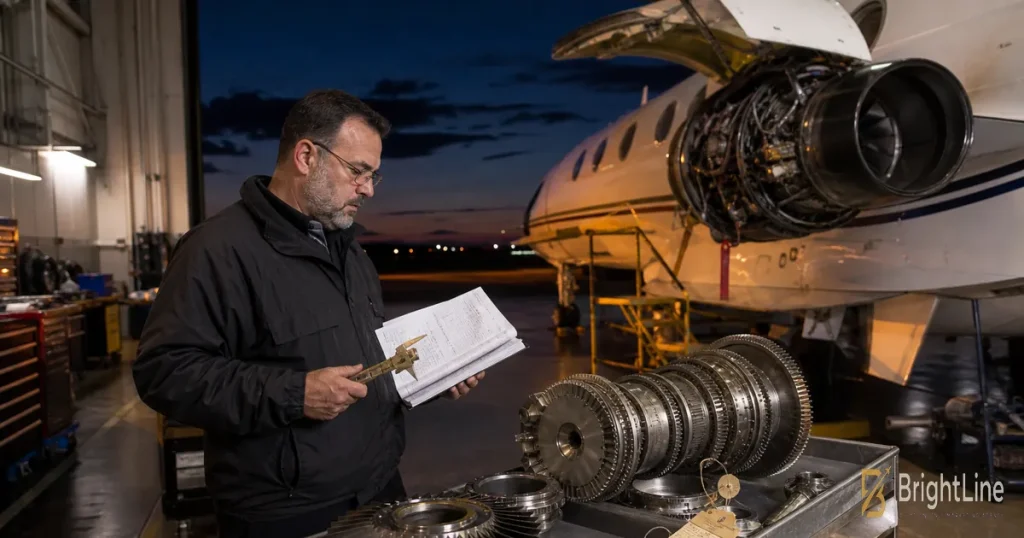
- Named capabilities with specs. A page that states a specific rating, part number, or airframe authorization gives the engine a discrete fact it can lift and attribute. “Full-service maintenance” gives it nothing to quote.
- Turnaround stated plainly. An AOG director wants a number. A page that names its response window in plain language becomes the source the answer pulls from.
- Credentials in full. Part 145 repair station status, FAA approvals, and type ratings belong on the page spelled out. Abbreviations and vague certification claims leave the engine unable to confirm what you hold.
- Pricing and lead-time ranges. Buyers expect a range before they call, and engines reward pages that provide one. Withholding it pushes the answer toward a competitor who published it.
- Consistent entity language. Calling your operation three different names confuses the engine about who is making the claim. One name, used everywhere, keeps the citation attached to you.
The pattern is not about volume. Every quotable item is a checkable fact, and adjectives are the opposite of checkable. A page dense with “reliable” hands the engine an empty hand. BrightLine Digital’s aviation SEO services track which claims earn citations through monthly reporting on traffic, rankings, and qualified leads, turning evidence into a feedback loop instead of a guess.
How to Structure a Page an Engine Will Quote
Extraction happens before a human reads your page. The engine pulls a claim, checks it against surrounding evidence, and decides whether to quote you. Build the page in the order that survives that test.
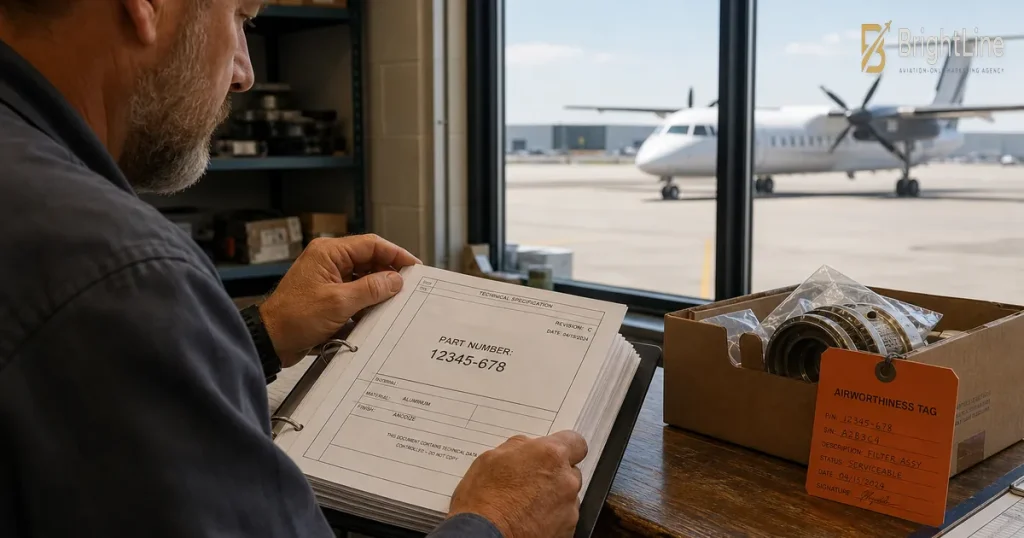
Step 1. Answer the buyer’s question in the first two sentences. Lead with the operational answer, not company history or a mission statement. An engine scanning for a quotable response finds your direct answer immediately and skips the warm-up paragraph entirely.
Step 2. Isolate the specific claim in a short standalone block. Pull the capability, turnaround, or approval into a tight paragraph that survives being lifted out of context. A sentence that depends on three prior paragraphs for meaning is a sentence the engine cannot safely quote.
Step 3. Attach the evidence that makes the claim checkable. Follow the claim with the credential, rating, or approval that backs it. An unsupported claim reads as marketing; a claim with a named certificate behind it reads as fact.
Step 4. Hold your terminology steady across the page. Call the same component, service, or approval by the same name everywhere. Swapping synonyms confuses entity recognition and can make the engine misread what you actually offer.
Step 5. Signal clearly who is making the claim. Give the page a named author, a role, and an organization identity the engine can verify. An unattributed claim carries less weight than one tied to a recognized operator.
Sequence matters because a strong claim buried under context never gets extracted. Build the answer first, the evidence second, and the identity last. That order is what turns a page into a source of information.
Answer Engine Optimization for Aviation Teams That Ship
Citation wins go to the operation that assigns a name to the work, not the one with the largest content budget. A regional MRO with one marketing coordinator can out-cite a national chain if that coordinator owns the pages and rebuilds them on a schedule. Start with a standing list of buyer questions. Ten is enough. The director of maintenance asking about AOG turnaround on a specific airframe. The charter manager comparing response times.
Assign a named owner for answer-ready pages. Not a committee, not a vendor handoff with no internal counterpart. Someone who can confirm the part number, the rating, the approval, and the lead time before anything publishes.
Run a review cycle that checks what the engines actually cite. Ask the buyer questions on a fixed schedule and log which operation gets named. Pages drift out of citation when specs change and nobody updates the claim.
Treat answer engine optimization for aviation as an operations discipline, not a campaign. Campaigns end. Operations compound, because each rebuilt page feeds the next audit and the next roadmap. BrightLine Digital’s four-step process, audit and discovery, strategic roadmap, surgical execution, optimize and scale, keeps that rhythm from stalling after the first sprint.
The same discipline feeds aviation B2B lead generation, since a cited answer arrives pre-qualified. The buyer already trusts the claim before the inquiry lands. Teams that skip ownership watch citations decay quietly while the dashboard still shows green.
Measure Citations, Not Sessions, to Prove It Works
A dashboard full of green arrows can hide that your operation disappeared from the answers buyers actually read. Three measurements expose that gap: the questions you win, share of voice against competitors, and whether new inquiries arrive already quoting you.
The Question You Win Matters More Than the Page You Rank
Rankings track pages. Buyers track answers. A maintenance director asking which shops hold a specific repair approval never sees your keyword position. That director sees two or three named operations, and your ranking report stays silent about whether you made the list.
Share of Voice Against Named Competitors
Ask the engines your core buyer questions and log who gets named beside you. A charter manager comparing operators will hear the same handful of names repeatedly. That repetition is the real competitive picture. Track your share of those mentions like a bid win rate.
When the Inquiry Arrives Already Convinced
Listen for the tell in the first call. A prospect who says the engine pointed them your way has already done the comparison before dialing. Those inquiries convert differently than cold form fills.
Run the Audit on a Fixed Schedule
Pick the buyer questions, ask them on the same engines at the same interval, and record the exact wording of every answer. A spreadsheet beats memory. BrightLine Digital reports traffic, rankings, and qualified leads monthly. That is the standard worth demanding from any aviation SEO agency results you rely on.
Stop Repackaging SEO and Start Earning the Citation
Keyword-first thinking built the aviation web. It cannot defend it. The teams that understand answer engine optimization for aviation have stopped asking how to rank and started asking what claim an engine can lift and verify.
That shift changes the work, not just the vocabulary. A charter operator whose page states fleet size, cabin configuration, and operating approvals in plain terms gives an engine something to quote. A page built around “premier private aviation solutions” gives it nothing. Pick the buyer questions your operation must win. Rebuild the pages that answer them, claim first, evidence attached. Then watch which answers name you back.
FAQ
Answer Engine Optimization Questions Aviation Teams Ask
How to do answer engine optimization?
Do answer engine optimization by rebuilding pages around the exact questions buyers ask, then backing each claim with checkable evidence an engine can lift. The work starts with a written list of those questions, because a page written before the question is named tends to answer the wrong thing.
What is AEO answer engine optimization?
AEO is the practice of structuring content so AI engines can extract a clear claim and cite the source that made it. The distinction from classic SEO matters here: a ranking puts a page on a list, while a citation puts a named operation inside the answer itself.
What’s the best AI visibility company for answer engine optimization?
The right partner is one that already knows your sector’s vocabulary and can prove which buyer questions return your operation in the answer. Aviation teams should ask a prospective agency to show citation tracking on real operator queries, not just traffic charts.
Is there a free course on answer engine optimization?
Free courses exist, but most teach generic marketing theory rather than the evidence standards aviation buyers and engines both demand. A course can explain the concept, yet the citation work still depends on your own maintenance capabilities, approvals, and lead times.
What is the difference between traditional SEO and answer engine optimization for aviation?
Traditional SEO targets search engine ranking algorithms through keywords and backlinks to drive web traffic. Answer engine optimization for aviation focuses on providing structured, checkable operational data like airframe approvals and turnaround times that AI engines can directly extract and cite in answer summaries.