
Aviation AI Automation Agency: What It Does and When to Hire One
TL;DR · The short answer5 key points
- An aviation AI automation agency builds workflows that remove stalled handoffs, not chatbots bolted onto a website.
- The biggest time leaks sit between people and systems: quote follow-up, first article reports, MRB routing, cert matching and after-hours inquiries.
- Ask where the data lives before you watch a demo. ITAR and CMMC boundaries are the product.
- Integration with the systems you already run drives cost, so start with a scoped pilot that names one workflow and one success measure.
- Hire once you can name the broken workflow and the process is documented.
A quote sits in the shared inbox for four days while the customer books with someone else. That silence is what sends most aviation operators looking for an aviation AI automation agency, and it is the right instinct arrived at for the wrong reason.
The label covers wildly different scopes. Some firms build genuine workflow automation inside your systems. Others bolt a chatbot onto your website and call it done. A few have never opened an AS9100 manual.
This article gives you a working definition, the workflows that actually get automated in flight schools, MROs, and charter operations, and the signals that tell you it is time to hire an aviation AI automation agency rather than wait another quarter.
What an Aviation AI Automation Agency Actually Builds
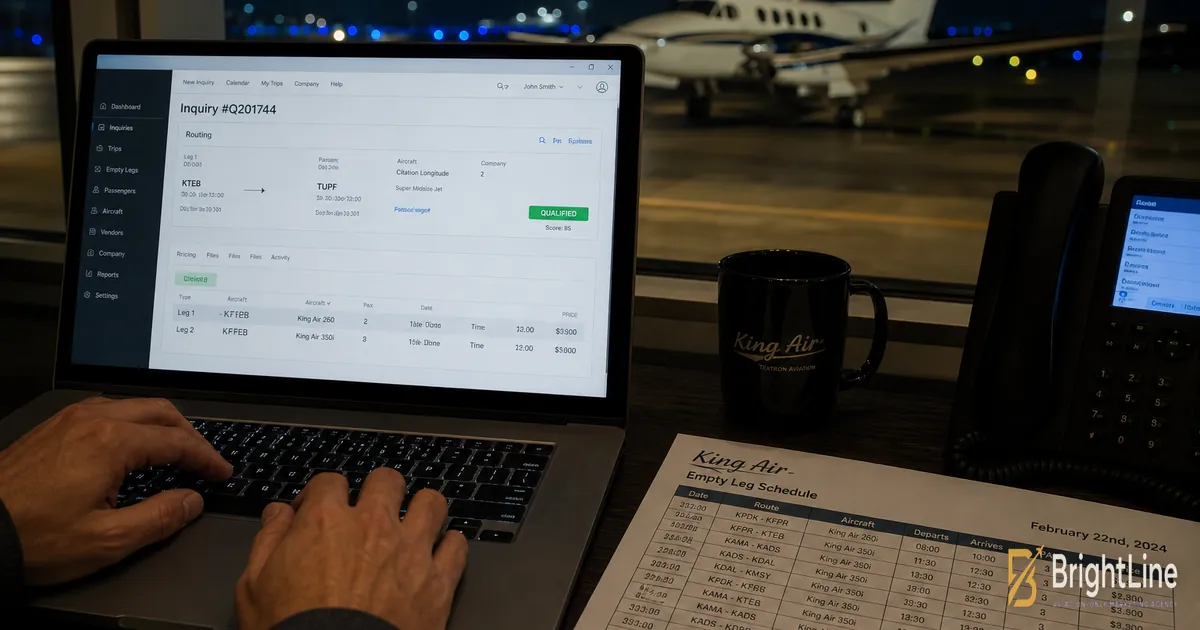
An aviation AI automation agency designs, builds, and maintains AI agents and workflow automation inside an aviation business, working within the compliance frameworks that business already operates under. A firm selling aviation business automation without that grounding spends discovery learning what a discrepancy tag is.
Generalist automation shops build impressive demos and then stall on the vocabulary. They don’t know the difference between a Part 141 training record and a Part 135 duty log, so the workflow they design maps to neither. Charter pricing models break them next: empty-leg rates, repositioning fees, and quote structures that shift by aircraft type. MRO quality documentation finishes the job, because a workflow touching a certificate of conformance has to respect the paper trail behind it.
Builds fall into three categories. Front-desk and lead-response agents catch inquiries, qualify them, and route the serious ones to a person who can quote. Back-office document and record workflows handle the drafting, matching, and filing that quality and supply chain staff do by hand. Voice and chat agents absorb inbound calls that arrive while the front desk is with a walk-in customer.
None of that is a chatbot. The deliverable is a workflow that removes a handoff where work currently stalls. A chat window bolted onto a website solves nothing if the quote still dies in a shared inbox. Judge the build by the handoff it eliminates, not the interface it presents.
Where Aviation Operations Lose Time Before AI
Automation only pays off where the time leak is real, and aviation operators leak time in places a generic agency never looks. The leak is rarely the task people complain about. It is the handoff nobody owns.



- Quote follow-up dying in a shared inbox. A charter request lands, gets read, and waits for whoever knows the aircraft availability. By the time the quote goes out, the customer has already booked elsewhere.
- First article report drafting. An inspector finishes the dimensional checks, then retypes the same measurements into a report template. The data already exists in the inspection file.
- Nonconformance and MRB routing. A discrepancy tag gets written, then sits while someone works out which engineer, supplier, and customer need to see it. Routing eats more time than the disposition.
- Supplier certification matching. A certificate of conformance arrives as a scanned PDF and gets checked by eye against the purchase order. One mismatched revision number stalls the whole receiving line.
- After-hours inquiry triage. A flight school’s web form fills up overnight with discovery flights and transfer questions. Nobody answers until the front desk opens, and the eager ones have moved on.
Every leak sits at a handoff between two people or two systems. That is why aviation CRM automation earns its keep before any agent does. A credible agency audits these handoffs before proposing a single build.
The Compliance Question Every Buyer Should Ask First
The demo is the least useful thing an aviation AI automation agency will show you. Ask instead where the data physically lives, and watch how fast the room gets uncomfortable.
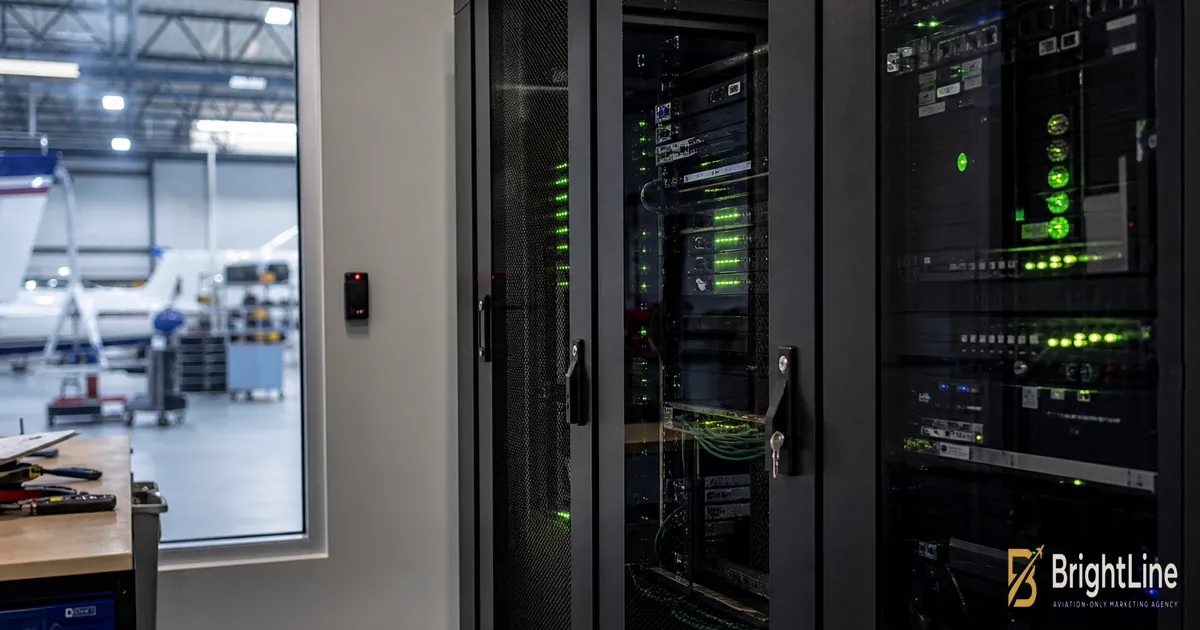
Aviation buyers are not shopping for speed. They are buying a system that will not generate a finding on their next AS9100 surveillance audit. A workflow that touches ITAR-controlled technical data cannot route through a vendor’s shared cloud tenant. If the agent reads drawings, work instructions, or export-controlled specs, the data boundary is the product.
CMMC adds a second layer for defense-adjacent MROs and parts suppliers. The automation has to sit inside the operator’s own environment, or inside an enclave the operator controls, with access logging that survives an assessor’s questions. A generalist shop will call this an IT problem and hand it to your managed service provider.
Regulators are building their own frame. The FAA published a roadmap for AI safety assurance that treats assurance as a lifecycle concern, not a launch checkbox. A serious agency can place its automation relative to that frame without claiming to certify anything. An agency that cannot describe its data boundary in plain language is not ready for aviation work. Ask for the sentence in writing, then ask who audits it.
How Aviation AI Automation Agencies Scope and Price the Work
Three engagement shapes dominate the market, and they differ less in technology than in how much of your operation gets touched. The shape you pick determines whether you buy a fix or a subscription to unfinished work.
| Engagement shape | What’s included | Typical timeline | Fits this operator |
|---|---|---|---|
| Scoped pilot | One workflow, one integration, a defined success measure | Weeks, not months | A shop testing the water on a single leak |
| Department build | Multiple linked workflows across quality or supply chain | A full quarter of build and tuning | An MRO with documented processes already in place |
| Retained partnership | Ongoing maintenance, monitoring, and workflow expansion | Continuous, month over month | A charter or flight school running several agents at once |
The cheapest quote is usually the trap. It automates a task nobody was bottlenecked on, so the invoice looks small and the operation barely moves. Integration with the systems you already run is the real cost driver, not the model or the agent count.
Demand a fixed scope before signing. A pilot that names its workflow and its success measure is worth more than a broad build that names neither. The same test applies when you weigh an aviation specialist against a generalist agency: ask what their last build integrated with.
The Misconception That AI Replaces Your Team
Operators hear “automation” and picture a leaner org chart. The opposite is closer to the truth: the workflows worth building remove the record-chasing that drives good quality and supply chain people out the door.
Walk a receiving inspection desk at an MRO. The inspector’s judgment on a suspect part is the value. The hours spent hunting a certificate of conformance across a shared drive, then retyping the same serial into a spreadsheet, are pure drag. Automation absorbs the drag and leaves the inspector inspecting.
Replacement is the wrong design target, and the published guidance says so. FAA-sponsored human factors research on integrating AI and machine learning into FAA systems keeps the human as the decision authority, with automation handling the surrounding load. The human factors integration guidance frames the goal as a working partnership, not a handover. That matches how a serious aviation AI automation agency scopes a build.
Consider what a quality manager does with a nonconformance. They weigh severity, supplier history, and airworthiness risk. No agent makes that call. What an agent can do is route the record to the right reviewer with the material cert already attached, so the manager decides instead of searching. The same logic applies to what aviation CRM software does for a front desk: it surfaces the context, and the person handles the relationship.
An agency that leads its pitch with headcount reduction has misread who buys this work. The buyer is a quality director or DOM guarding throughput and audit posture, not a CFO hunting cuts.
When to Hire an Aviation AI Automation Agency
Hiring an aviation AI automation agency makes sense the moment you can name the workflow that keeps breaking, not the moment you decide AI sounds useful. The signals below are operational, not technological.
- Quotes leave late or never. A shared inbox swallows a charter request and the customer books elsewhere before anyone replies.
- Quality records live in spreadsheets. First article reports and discrepancy logs sit in shared drives nobody can audit cleanly.
- Cert tracking depends on memory. One person holds the supplier certificate renewals in their head, and they take vacation.
- After-hours inquiries go dark. Inbound requests land overnight with no triage path until the front desk opens.
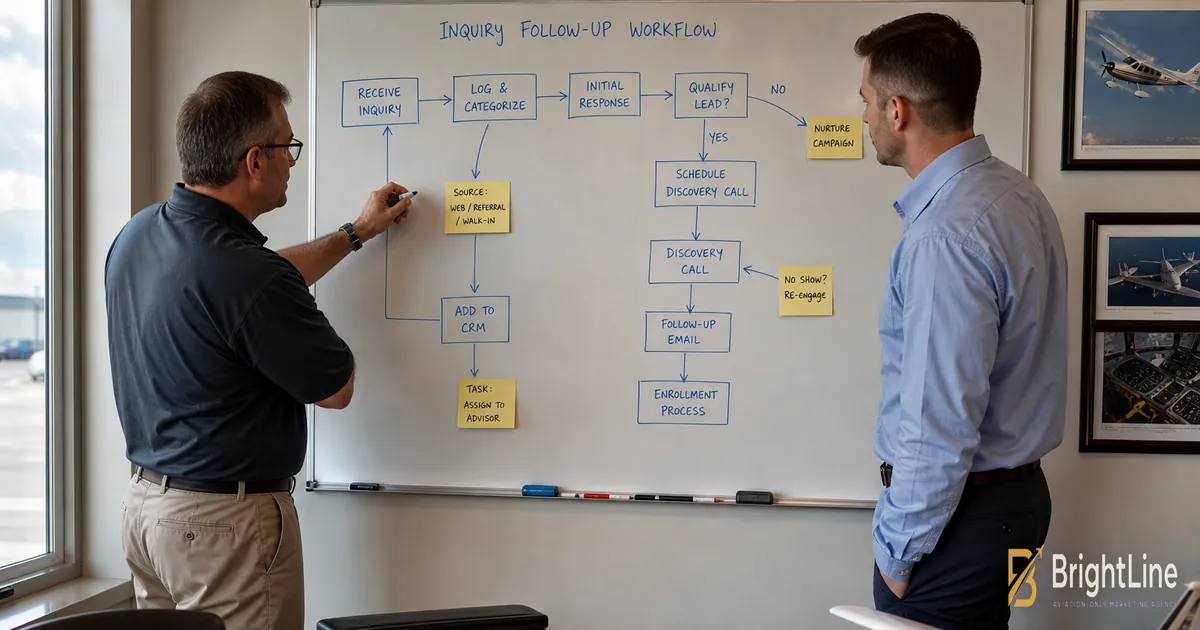
- Your team already mapped the fix. Someone has sketched the workflow on a whiteboard, which means the process is ready to automate.
The counter-signal matters just as much. If the process is not documented yet, automation only encodes the chaos faster and makes it harder to unwind later. An aviation-only marketing partner like BrightLine Digital runs audit and discovery first, precisely to surface these signals before a single agent gets built.
How to Vet an Aviation AI Automation Agency
Vetting an aviation AI automation agency comes down to four questions, the same discipline behind how you pick a flight school marketing agency in four checks. Run them in order and weak shops eliminate themselves.
Step 1. Ask for the audit before the demo. A serious firm walks your operation and names the handoffs where work stalls before it pitches a single agent. A shop that leads with product screenshots is selling software, not a fix.
Step 2. Ask where the data lives. The answer should describe which systems the workflow touches and where records sit. Vague answers about “the cloud” reveal a team that has never worked near a controlled-data environment.
Step 3. Ask who maintains the workflow after launch. Workflows break when a form changes or a supplier updates a certificate format. The agency should name the person and the process, not promise “ongoing support.”
Step 4. Ask for a reference in your own segment. A flight school reference tells an MRO nothing. Push for an operator with the same compliance posture, and listen for whether the reference talks about outcomes or features.
These questions map to the risk-management discipline in the NIST AI framework overview, which treats governance and monitoring as part of the build. An agency that jumps straight to building skips the step that decides everything.
Decide on the Workflow, Not the Technology
The agency that wins your business should be the one that names your broken handoff before you finish describing it. Model choice is a detail the vendor lives with. Workflow judgment is the thing you live with.
Operators who buy on the demo get a clever agent pointed at a process nobody was bottlenecked on. Operators who buy on the audit get a stalled quote queue that finally moves. The difference shows up in the first month, not the contract signing.
Write down the three handoffs where work stalls in your operation. Take that list into the first conversation with any aviation AI automation agency. Watch whether they interrogate the list or talk over it.
BrightLine Digital builds aviation business automation that closes the gaps where quotes sit unanswered and customers walk away. Book a call to map the workflows worth automating first.
FAQ
Aviation AI Automation Agency Questions, Answered
What is the best AI for aviation?
There is no single best AI for aviation, because the right choice depends on whether you’re automating quote follow-up, certification tracking, or document review. The detail most buyers miss is that the model matters far less than the workflow around it, and a well-scoped aviation AI automation agency will pick the tool after mapping the process, not before.
Is an AI automation agency worth it?
It’s worth it when the agency targets a workflow you can name and measure, and a waste when it sells you a general-purpose chatbot with no aviation grounding. The signal that separates the two is the audit: a firm that insists on discovery before quoting is pricing the work, while one that quotes from a demo is pricing the software.
What are some AI automation agencies?
The market splits into generalist automation shops, AI agent developers, and aviation-only partners, and the third category is the smallest by far. BrightLine Digital is one of the few built exclusively around aviation businesses, which means its discovery phase starts with Part 141 and Part 135 vocabulary instead of a glossary.
When should an aviation operator hire an AI automation agency?
Hire one once you can point to a specific handoff where work stalls, such as quotes dying in a shared inbox or certificate matching done by memory. The counterintuitive part is that a documented process is the prerequisite, since automating an undocumented one just makes the chaos run faster.