The Flight School Process: From Zero Hours to Your First License
TL;DR
- The flight school process is a system of connected decisions, not a linear checklist, choices in week one shape every hour after it.
- Start with the FAA medical certificate before touring schools, it is the one requirement scheduled by someone else’s calendar, not yours.
- Ground school is where serious students separate from stallers, treat it as the foundation of every future flight lesson.
- Flight training builds skill in stacked phases, dual instruction, solo, cross-country, check-ride prep, and skipping ahead costs money.
- The check-ride is a judgment test, not an instruction session, preparation removes the surprise that causes most disapprovals.
You’ve read the brochures, watched the YouTube videos, and maybe even driven past a local airport with a sudden interest in what happens inside those hangars. Then you search for how to become a pilot, and you’re met with a wall of steps that all look equally important.
The standard advice treats it like a checklist: pick a school, pass a test, log hours, done. The real sequence is messier. Each phase carries trade-offs that shape every decision after it, and the choices you make in week one determine whether you finish in months or years.
This article walks through the entire flight school process as a system, not a list. You’ll learn where students get stuck, which decisions actually matter, and how to enter training with a plan that survives contact with reality.
The Flight School Process Starts Before You Fly
The flight school process rewards preparation long before you touch the throttle. Most aspiring pilots skip the research phase entirely and book a lesson at the closest airport, then discover months later they chose a training path that fights their schedule, budget, and learning style.
Step 1. Decide between Part 61 and Part 141 training before comparing schools. Part 61 offers flexibility with no set curriculum pace, while Part 141 follows a structured syllabus approved through the FAA’s Part 141 certification process. This single choice determines how rigid your schedule becomes and how a school measures your progress.
Step 2. Research each school’s fleet, instructor turnover, and weather cancellation patterns. A school with well-maintained aircraft and stable instructors keeps your training consistent, which directly affects how quickly you build proficiency.
Step 3. Compare the total training cost across schools, not just the hourly rate. Ask about examiner fees, fuel surcharges, and ground instruction charges, since these add up fast and vary widely between schools. The flight school cost conversation is where most beginners get blindsided.
Step 4. Schedule a discovery flight at your top two schools. This is the standard first step for a reason: it lets you evaluate the instructor’s teaching style, the aircraft’s condition, and the school’s culture before committing money or time.
Step 5. Verify the school’s Part 141 status if you want a structured path. Schools holding this certification follow an FAA-approved syllabus, which appeals to students who prefer clear milestones over open-ended progression.
Step 6. Talk to current students, not just the sales staff. Students will tell you about maintenance delays, instructor availability, and check-ride preparation in ways the front desk never will.
Completing this groundwork means your first actual lesson starts with momentum instead of guesswork. The school you choose shapes every hour you log afterward. Choosing poorly means switching mid-training, losing currency, and starting over with a new instructor’s preferences.
FAA Requirements: What You Need Before Training
The flight school process gates on a handful of federal requirements, and most of them are easier to meet than future pilots assume. The medical certificate is the one that filters people out, so start there first.
- Minimum age. You can begin logging flight hours before you reach the age required for a private pilot certificate.
- English proficiency. You must read, speak, write, and understand English well enough to communicate with air traffic control and read aviation documents.
- Medical certificate. A designated aviation medical examiner issues this after a physical exam that checks vision, hearing, and overall health.
- Student pilot certificate. This document identifies you as a legal trainee and is required before your first solo flight.
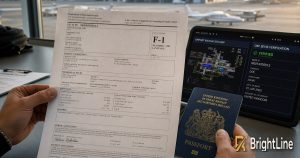
- Identity verification. You need government-issued identification and proof of U.S. citizenship or a background check for non-citizens.
- Knowledge test endorsement. Your instructor must sign you off before you can take the FAA written exam.
The medical certificate is the first real hurdle because it involves a third party you cannot schedule around. A deferral or denial can stall training for months, so getting it done before spending money on lessons is the smart sequence.
You can begin training before holding a student pilot certificate, but you cannot solo without one. Most schools handle the application with you, so ask about their process during your first visit.
Schedule the medical exam before you tour schools. The examiner’s calendar, not your motivation, sets the pace here. A first-class medical is unnecessary for private pilot training, so do not overbuy. A third-class certificate covers the requirement and costs less.
Citizenship documentation trips up more applicants than the physical ever does. A passport or birth certificate settles it in minutes. Without those, the fingerprint-based background check adds weeks to the timeline. Gather those documents now, not after enrollment.
Ground School: The Classroom Side of Flying
Ground school is where the flight school process separates serious students from those who stall out. The romantic image of flying is all stick-and-rudder work, but the academic side determines whether you ever get near an airplane. Most students underestimate the workload here, and that miscalculation costs them time and money later.
What Ground School Actually Covers
The curriculum is broader than most beginners expect. You will study aerodynamics, weather theory, navigation, FAA regulations, aircraft systems, and radio communications. Each subject feeds directly into a skill you will use in the cockpit.
The depth surprises people. Weather alone involves reading METARs, understanding air masses, and interpreting forecasts well enough to make a go/no-go decision. Ground school is where you learn why the airplane behaves the way it does, not just how to push the controls.
Self-Study vs. In-Person Classes
Both paths work, but they demand different things from you. Self-study with a program like the private pilot course materials gives you flexibility and lets you move at your own pace. The trade-off is that you must stay disciplined without a scheduled class forcing you to show up.
In-person classes add structure and an instructor who can explain a confusing concept on the spot. The cost is higher and the schedule is fixed. Students who struggle with self-discipline almost always do better in a classroom setting.
Passing the FAA Knowledge Test
The written exam is a hurdle that requires deliberate preparation. Memorizing answers from practice tests will get you through, but it will not make you a safer pilot. Work through the material until you understand the reasoning behind each correct answer.
Most students fail because they rush the process. The knowledge test rewards consistent study over cramming, and the students who pass on the first attempt treat it like a serious exam rather than an afterthought. Schedule the test when you are scoring consistently well on practice exams.
Ground school is not a box to check. It is the foundation that makes every hour of flight training more productive, and the students who take it seriously finish their training faster than those who treat it as an inconvenience.
Flight Training: Building Hours and Skills
The flight school process turns theory into muscle memory through a deliberate sequence of flight lessons. Each phase unlocks the next, and skipping ahead is how students end up repeating expensive maneuvers they were never ready to attempt.
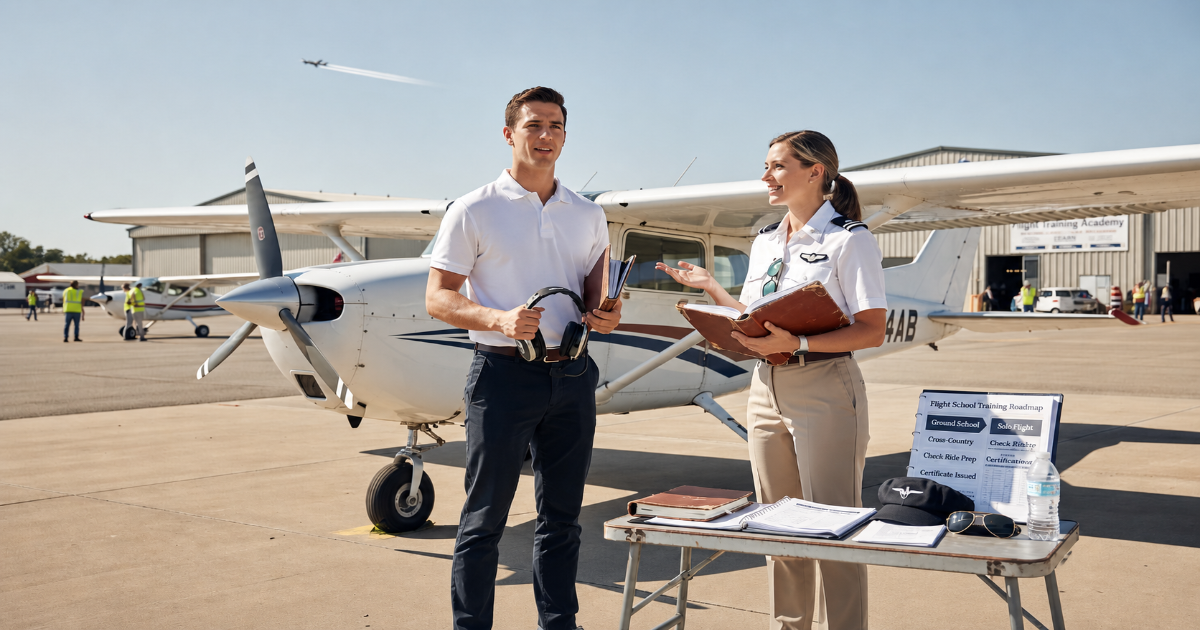
Step 1. Fly with a certified flight instructor for dual instruction. This is where you learn the physical feel of the controls, from straight-and-level flight to stalls and emergency procedures. The instructor’s job is to build your instincts before you ever sit in the left seat alone.
Step 2. Pass the pre-solo written test and earn your instructor’s endorsement. This exam covers the regulations and procedures you will need to operate an aircraft without anyone beside you. Failing it means more ground review, not more flight time, which is a distinction many students miss.
Step 3. Complete your solo flight. This is the first time you are the only pilot on board, and it changes how you think about every decision you make in the air. The confidence gained here carries directly into the next phase of the flight training process, where the stakes climb steadily.
Step 4. Build cross-country experience by planning and flying longer routes between airports. These flights demand navigation, weather evaluation, and fuel management skills that pattern work never teaches. They are also where students discover how much mental energy a real flight consumes.
Step 5. Log the required hours and master the maneuvers your examiner will test. The check-ride is a performance, not a conversation, and it only happens after your instructor signs you off as ready. That endorsement is the culmination of every lesson you have flown.
Each step stacks on the last. A weak solo means shaky cross-country flights, and shaky cross-country flights mean a check-ride that gets postponed. The student who treats each phase as a foundation rather than a hurdle finishes faster. That is the entire game.
The Check-Ride: Your Final Exam in the Air
The check-ride is where the flight school process stops being about instruction and becomes about judgment. Your instructor has been a safety net, a second pair of eyes, and a voice of reassurance. On check-ride day, that net disappears.
The examiner is not there to teach. A designated pilot examiner is evaluating whether you meet the FAA’s practical test standards, not whether you are having a good lesson. They have seen confident students freeze on simple maneuvers and nervous students fly flawlessly. Your job is to demonstrate proficiency, not perfection.
The oral exam comes first. Expect scenario-based questions that force you to apply regulations, weather theory, and aircraft systems to real situations. The examiner wants to see how you think, not just what you memorized. Memorized answers are easy to spot and easy to fail.
The practical flight portion is a different kind of pressure. You will fly maneuvers you have practiced dozens of times, but now every input is being scored. The examiner will likely introduce a simulated emergency mid-flight. That moment separates pilots who understand their aircraft from those who merely operate it.
Anxiety before the check-ride is normal, but preparation is the antidote. The students who pass consistently treat the oral exam as a conversation and the flight as a demonstration. They arrive with their logbook organized, their aircraft documents in order, and their knowledge fresh. Preparation removes the surprise, and the surprise is what causes failures.
The check-ride ends with a debrief, whether you pass or not. A disapproval is not the end of your training. It is a specific list of items to correct, and you can retest once you have addressed them. The pilots who succeed are rarely the ones who passed on the first attempt. They are the ones who treated the feedback as a roadmap.
How Long Does the Flight School Process Take?
The honest answer is that the timeline depends entirely on how you structure your training. Full-time accelerated programs compress everything into a focused stretch, while part-time training stretches the same milestones across months of evenings and weekends.
Step 1. Decide between a full-time accelerated program and part-time training before you commit to a school. This single decision shapes every other variable in your schedule, from how often you fly to how much you retain between lessons.
Step 2. Build your schedule around consistency rather than intensity. Flying twice a week for a year produces better results than cramming five flights into a single week and then taking a month off.
Step 3. Factor in weather patterns at your specific airport. A school in the Pacific Northwest will lose more days to rain and low ceilings than one in Arizona, and those cancellations ripple through your entire timeline.
Step 4. Ask about instructor availability before enrolling. A school with a waitlist for instructors will stall your progress no matter how motivated you are.
Step 5. Plan for the reality that life interrupts training. Work deadlines, family obligations, and travel will all compete with your lesson schedule, and the students who finish are the ones who build slack into their plan.
Accelerated programs work for people who can dedicate themselves fully to training. Part-time paths suit those who need to keep earning while they learn. Neither approach is objectively faster because the fastest path is the one you can sustain. A student who flies consistently for a year will finish long before one who tries to compress everything into a month and then disappears for six weeks. Completing this phase means you understand the trade-offs before they cost you time and money. That understanding is what turns a training plan into a license.
What Most Guides Get Wrong About the Process
Every flight school process guide presents the same tidy sequence: research, enroll, ground school, fly, pass, done. That linear framing is the first thing that misleads you. Real training runs as a cycle of preparation, execution, and review, where each phase loops back to sharpen the last.
Students who understand the system treat every lesson as data. A rough landing is not a setback; it is a signal that redirects the next session’s focus. That feedback loop, not the checklist, is what builds competence.
The Checklist Mentality Fails at the First Weather Delay
Linear plans assume conditions stay static. Weather, aircraft availability, and instructor schedules all shift without warning. A student locked into a rigid sequence stalls when the plan breaks, while one who sees the cycle simply reorders the next loop. Flexibility is a feature of the system, not a flaw in your planning.
Review Is Where Training Actually Happens
Most guides stop at execution: fly the maneuver, log the hour, move on. The pilots who progress fastest spend deliberate time debriefing after every flight. That review phase converts expensive flight time into durable skill, and skipping it forces you to buy the same lesson twice. The debrief is where the flight school process quietly separates efficient students from those who bleed money.
Flight Schools Struggle to Explain This System
Here is the uncomfortable truth: many flight schools are excellent at teaching flying and poor at communicating their own process to prospective students. Their websites list programs and prices, but rarely explain how the phases interconnect or why the order matters. That gap leaves beginners guessing about what comes next.
Students who arrive with the right mental model make better decisions from day one. Schools that communicate the system attract those students.
Your Next Step in the Flight School Process
The flight school process rewards people who treat it as a system of connected decisions, not a checklist to burn through. Every phase you now understand, from medical certification to check-ride preparation, feeds the next one.
Acting on this knowledge now changes how you experience every stage. A student who books a discovery flight this month and starts the FAA medical paperwork in parallel enters training with momentum instead of friction. That head start is the difference between finishing and stalling. Schedule the discovery flight. Start the medical process. Then commit to the sequence with full awareness of what each step demands. The system works when you work it in order.
FAQ
Flight School Process: Your Questions Answered
Is pilot school hard to pass?
Pilot training is demanding, but it is not academically impossible for someone who prepares consistently. The students who struggle are rarely the ones who lack aptitude; they are the ones who underestimate the ground school workload and fall behind on studying before the FAA knowledge test arrives.
How long does it take to become a pilot?
The timeline depends entirely on whether you train full-time or part-time, with full-time programs finishing much faster than weekend-only schedules. Weather and instructor availability stretch the calendar more than most beginners expect, so a realistic plan builds in buffer time for canceled lessons.
Can you start flight training before getting a student pilot certificate?
Yes, you can begin taking lessons before your student pilot certificate is issued, but you cannot fly solo without it. The medical certificate is the prerequisite that takes the longest to process, so starting that paperwork early prevents waiting weeks mid-training.
What is the hardest part of the flight school process?
The check-ride is the most demanding hurdle because it combines an oral exam with a practical flight test conducted by an examiner who is not your instructor. Preparation means rehearsing the oral questions out loud and flying maneuvers to a stricter standard than your regular lessons required.
Should I choose Part 61 or Part 141 training?
Part 61 gives you flexibility with no set pace, while Part 141 follows a structured FAA-approved syllabus with clearer milestones. Choose Part 141 if you prefer structure and reduced hour minimums, and Part 61 if your schedule is irregular or you need to progress at your own pace.