Aviation Customer Service Automation vs. Live Agents: Which Cuts Delays?
TL;DR · The short answer5 key points
- Don’t choose between automation and live agents. Route each delay task to whichever handles it best.
- Automation wins the rules-driven volume: rebooking within policy, refund status, baggage tracing, schedule changes and waiver checks.
- Live agents keep accessibility requests, unaccompanied minors, multi-leg international reroutes, compensation disputes and angry passengers.
- Most automation failures are data failures: a waiver that never reached the rules engine, or a chat handoff that arrives at the agent with no context.
- Pull the contact log from your last disruption, tag every inquiry by type, and let that log set your automation split.
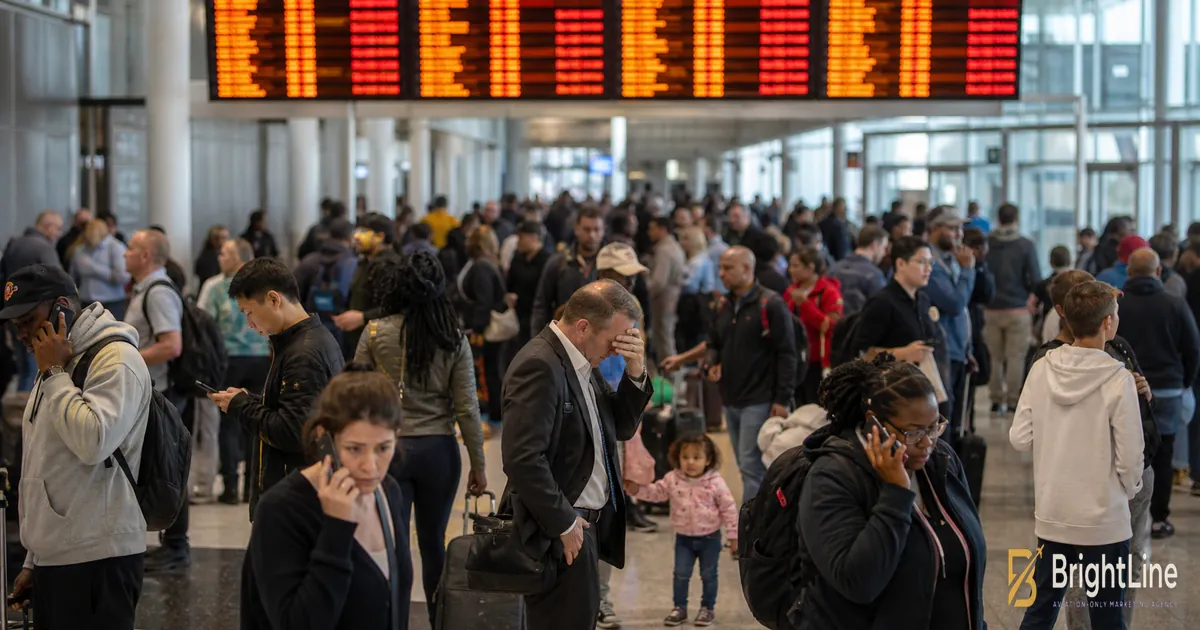
The board flips to delayed and the gate area turns into a call center. Every passenger reaches for a phone at once, and the queue that forms in those first minutes decides whether your operation looks competent or chaotic. Aviation customer service automation is the first thing that queue touches, and the thing most operators deploy without deciding what it should own.
The usual mistake is treating this as a binary vote. Teams either automate the front door and let exceptions rot in a bot loop, or staff up and watch hold times climb while agents answer questions a rules engine could clear. Neither is a strategy.
This article gives you a task-by-task framework. You’ll see which delay-recovery jobs automation handles better than any agent, which ones a live person must keep, and how to route each inquiry by disruption type, passenger segment and regulatory exposure.
The Criteria That Decide Who Handles a Delay
Average handle time is the wrong scoreboard. A delay is a time-boxed event, and the metric that matters is how many passengers get resolved before the disruption window closes.
A live agent who spends eleven minutes untangling one rebooking may deliver a better conversation than a bot that clears the same case in ninety seconds. But if the bot resolves forty passengers in the time the agent handles four, the bot wins the window. Speed to first response is the first criterion, measured at peak volume.
Accuracy of the resolution comes second. A fast answer that misstates refund eligibility creates a second contact and a complaint. The DOT air travel consumer complaint process is where those misstatements end up, and each one costs more to unwind than the original delay.
Regulatory exposure sits third, and it breaks ties. Accessibility requests and compensation claims carry legal weight a rules engine cannot absorb without oversight. Emotional load follows: an irate passenger at a gate needs acknowledgment before any resolution lands.
Cost per contact closes the list. Cheap contacts that generate repeat contacts are not cheap. A bot that handles a baggage trace in seconds and then routes the same passenger back into the queue has moved the cost downstream.
None of these criteria produce a single winner. They produce a task map. The question is never which option is better, but which task belongs to which option. Get that allocation wrong and the disruption window closes with passengers still holding phones.
Where Automation Cuts Delay Recovery Time
Rebooking within policy, refund eligibility, baggage tracing status and schedule-change notifications flood your queue the moment a delay posts. Automation handles all four better than a live agent, and the gap is widest at peak volume. Throughput and consistency decide this comparison, not warmth.
Automation wins because it applies one set of business rules to every passenger at once. A waiver goes live, and the rules engine rebooks every eligible traveler against it in the same pass. No agent fatigue, no drift between shifts, no passenger getting a different answer than the one beside them. The DOT airline customer service dashboard publishes what each major US airline commits to during disruptions it controls, which makes consistency a public expectation, and a bot holds it better than a tired desk at midnight.
A live agent owns anything that requires judgment. A refund that straddles a fare class exception, a bag that vanished between two carriers, a schedule change that breaks a wedding party traveling on separate records. Those calls need a person reading the whole file. Automation stalls on them, and a stalled bot burns the passenger’s patience faster than a hold queue.
The strongest setups pair the two rather than picking a side. Automation clears the rules-driven core so agents reach the judgment cases while the disruption window is still open. That routing logic is the real work of aviation business automation, and it is where most operators underinvest. Queue clearing, not headcount, is what shortens the delay.
The Tasks Live Agents Still Own in a Disruption
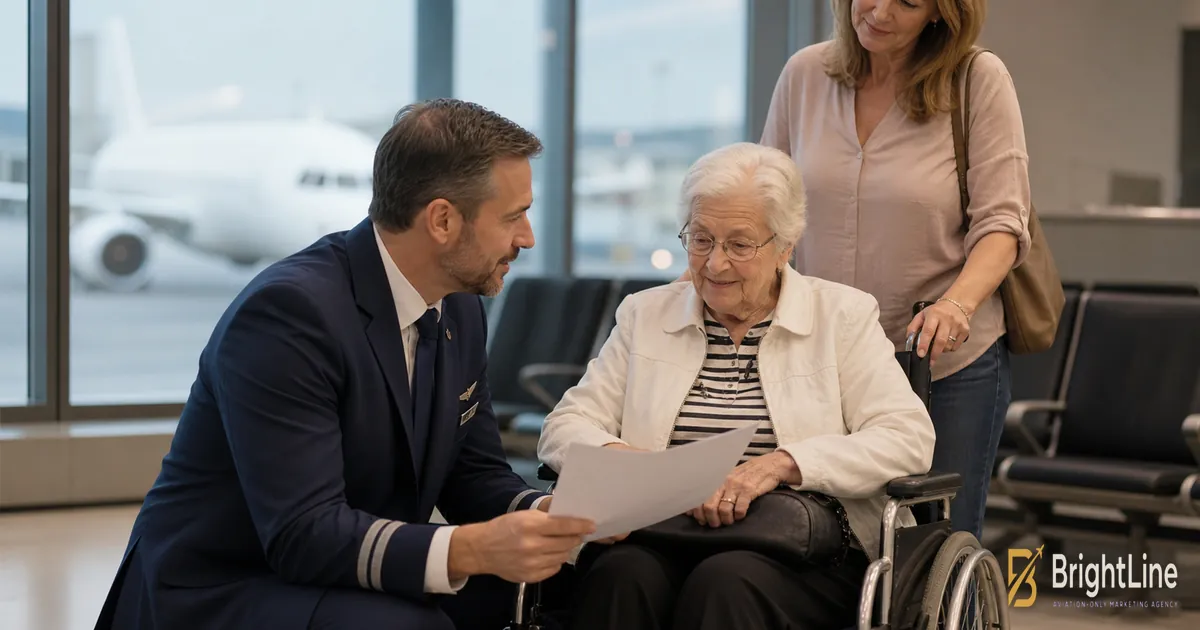

Some delay conversations break the moment a bot touches them. A wheelchair request mishandled under pressure is a compliance event, and no automated flow should carry that risk alone.
- Medical and accessibility requests. A passenger who needs a wheelchair, oxygen or a service animal requires a trained judgment call. The federal disability rules for air travel (14 CFR Part 382) make the carrier liable, so the decision stays with a person.
- Unaccompanied minors. A child rebooked onto an unvetted connection is a safeguarding problem. Agents must confirm custody handoffs and gate supervision before any itinerary changes.
- Multi-leg international rebooking. Visa validity, transit rules and onward carrier agreements turn a reroute into a legal puzzle. A rules engine that ignores a transit visa requirement strands the passenger.
- Compensation negotiation. Whether a delay triggers a meal voucher, hotel or cash payment depends on cause and jurisdiction. Agents negotiate the gray zone; a bot can only quote a policy that may not fit.
- Irate passengers. An angry traveler needs acknowledgment before accepting any fix. A human voice de-escalates in a way a menu tree never will.
Routing logic decides whether these cases land well, not headcount. Tight triage protects every one with a lean team. Poor triage buries them in a general queue and finds out through a complaint docket.
Head-to-Head: Automation vs. Live Agents Compared
Six dimensions decide the split, and they do not point the same direction. Automation wins the volume rows outright, while live agents hold the rows where a single error becomes a legal or safety event. The table below shows where each option earns its place.
| Dimension | Automation | Live Agents | Blended Model |
|---|---|---|---|
| Response speed at peak volume | Instant, unlimited parallel threads | Queue builds within minutes | Instant front door, agents on exceptions |
| Policy task accuracy | Identical rules applied to every case | Varies by agent and fatigue | Rules engine decides, agent confirms |
| Exception handling | Fails on anything outside the rule set | Judgment call, live | Context carried into escalation |
| Regulatory and accessibility exposure | High if accessibility requests route in | Trained handling, documented | Accessibility hard-routed to agents |
| Cost per contact | Lowest at scale | Highest, scales with headcount | Agents spend time only on complex cases |
| Satisfaction on complex cases | Poor when no human appears | Strong when the agent has authority | Strong, if the handoff keeps context |
The blended column wins most rows, and the exceptions are exactly where a mistake carries legal or safety weight. Accessibility is governed by Part 382, and compensation is under active review: DOT’s 2024 advance notice on compensation and assistance for flight disruptions is weighing what airlines must provide when they cause a delay. A sloppy bot reply in either area becomes a complaint record. Route those two task types to humans before you optimize anything else.
What Breaks When Automation Meets a Real Disruption



The bot that keeps offering the same sold-out flight is not a bot problem. It is a data problem wearing a bot costume.
Picture a storm ground stop at a hub. The airline issues a waiver, but the rules engine still quotes the old change fee because nobody wired the waiver feed into it. The passenger reads a policy that no longer exists and books a hotel out of pocket. That is a disconnected system, not a bad algorithm.
Handoffs fail the same way. A passenger escalates from chat to a live agent, and the agent opens a blank screen because the conversation context never traveled with the ticket. By the third repetition they are no longer asking for help.
The failure modes share one root: the booking engine, the disruption dashboard and the CRM each hold a piece of the truth. The automated answer is only as current as the weakest of those connections. BrightLine Digital’s aviation CRM automation services are built around exactly this handoff problem, wiring the workflow behind the front end so the automated answer reflects reality.
A rules engine that lags a waiver by an hour is the one that generates complaints. The passenger who gets the stale answer is the one who files.
The 80/20 Rule That Sets Your Automation Split
Contact volume in a disruption is not spread evenly. A narrow band of question types absorbs most calls, and that concentration decides what to automate first.
Applied to aviation service, the 80/20 rule (the Pareto principle) means a small share of inquiry types drives most contact volume. Automate that core first; the long tail of rare questions stays with people.
- Rebooking requests. Policy-bound and rules-driven, these resolve fastest when a system applies the same logic to every passenger at once.
- Refund status checks. A lookup against a known record, not a judgment call, so a bot answers it without touching an agent.
- Baggage claim tracing. Passengers want the current scan location, and a live feed answers that better than a hold queue.
- Schedule change questions. The answer already exists in the system, making it a routing problem rather than a conversation.
- Waiver eligibility. Whether a delay qualifies for a fee waiver is a rules check, not a negotiation, until the passenger disputes it.
- Seat requests. Low-stakes and repeatable, these fill the queue during a disruption without needing an agent’s judgment.
These categories blur at the edges. A rebooking request becomes a compensation negotiation the moment the passenger mentions a missed connection and a hotel bill.
Audit your own contact reasons before you buy any platform. Pull the last disruption’s log, tag each inquiry by type, and see which ones your rules engine could have closed alone. Skip that step and you automate the wrong queue, the same mistake our guide to aviation marketing automation agencies sees when automation is built before anyone reads the inquiries.
Which Model Fits Your Operation
Three operating models compete for the same delay queue, and the right pick comes down to what a single mishandled rebooking costs you. Automation-first, live-agent-first and blended each win under different route economics. Choose by passenger mix and failure cost, not by platform demo.
Automation-first suits high-volume leisure carriers running simple rebooking rules with thin overnight coverage. A rules engine applies the same policy to every stranded passenger at once, and it never calls in sick at 2 a.m. It falls short the moment a waiver lands mid-disruption and the engine keeps quoting the old fare rules.
Live-agent-first fits premium and long-haul carriers where one botched rebooking costs more than the labor it saved. A misrouted business-class connection or a reroute that breaks a passenger’s visa erodes loyalty faster than any queue wait. The tradeoff: agents cost more per contact and buckle under volume spikes.
Blended wins for most operators, with automation owning the front door and agents owning exceptions. That split holds across regional airlines and charter operators alike, where the same desk often handles disruption calls and new charter booking inquiries on the same night. The routing logic between the two matters more than either channel alone.
Revisit the split after every irregular operations event. Contact logs from a real disruption expose which tasks the engine handled cleanly and which it dropped. Start with the contact log, not the vendor shortlist, and confirm each routing rule against current DOT consumer rules before it goes into production.
Decide by Task, Not by Tool
The real lesson from any disruption is that routing beats choosing. A rules engine that clears rebooking while a live agent talks down a stranded family is not a compromise. It is the only configuration that holds under pressure, because each task lands where it gets handled best.
Get this wrong and the cost shows up fast. An operator that automates the wrong queue loses the passenger twice: once to the delay, once to a resolution that never fit the problem. The split is a routing decision, not a platform purchase. Treat it that way and every future disruption gets cheaper to absorb.
Pull the contact log from your last irregular operations event. Tag each inquiry by type. Mark which ones a rules engine could have closed without a human touching them. That log is your automation roadmap, written in your own passengers’ words.
BrightLine Digital can map which delay-recovery inquiries your automation should own and which need a live agent. Book a call to get a routing framework built for your operation.
FAQ
Aviation Customer Service Automation Questions Answered
What is customer service automation?
Customer service automation is the use of software to resolve customer inquiries without a human touching them, from rebooking requests to refund status checks. In air travel it works best when it sits on top of live booking and disruption data, because a bot reading a stale schedule will confidently offer seats that no longer exist.
What is the 80/20 rule in aviation?
In aviation customer service, the 80/20 rule (the Pareto principle) holds that a small set of inquiry types drives most of the contact volume a carrier handles. Rebooking, refund status, baggage claims and schedule change questions typically form that concentrated core, which is why they belong at the front of any automation rollout.
What is automation in aviation?
Automation in aviation covers any system that performs a task without manual intervention, from autopilot and flight planning software to the rules engines behind customer notifications. The customer-facing version is narrower than people assume, since it handles policy-driven tasks well and hands judgment calls to agents.
What is CRM in airlines?
A CRM in airlines is the system that stores passenger history, loyalty tier and prior interactions so every agent and bot sees the same record. What separates a working airline CRM from a generic one is that it pulls live booking and disruption data, or the passenger profile goes stale the moment a delay posts.
Not Sure Where Your Pipeline Is Leaking?
Tell us your goals in two minutes. We'll show you where your leads stall and what to fix first. A real person replies within 24 hours.
Get Your Pipeline Review →