How to Get a Student Visa for Pilot Training in the USA Explained
TL;DR
- Learning how to get a student visa for pilot training in the USA requires choosing an SEVP-certified flight school first, because the school issues the Form I-20 that makes every subsequent visa step possible.
- The M-1 visa vs. F-1 visa decision shapes your career: the M-1 fits short vocational training but offers no legal pathway to stay and instruct, while the F-1 covers academic degree programs that allow flight instructor time-building.
- The mandatory application sequence requires five steps in strict order: receive your Form I-20, pay the SEVIS I-901 fee, complete the DS-160, schedule the embassy interview, and present matching financial proof.
- TSA Flight Training Security Program approval runs on a separate track alongside visa paperwork, and delaying TSA registration will keep you grounded even after your visa is stamped.
- Consular officers test intent to return, exact funding matches, and a concise training plan rather than pilot knowledge, so mismatched figures or vague answers lead straight to visa refusals.
The acceptance email lands, and the deposit deadline is already counting down. That’s the moment most international students start searching for how to get a student visa for pilot training in the USA, and it’s the moment the sequence usually gets run backwards.
The visa isn’t the starting point. It’s one step in a chain that begins with an SEVP-certified school, because that school issues the I-20 every later document depends on. Applicants who book an interview before they have that form in hand lose weeks they can’t recover.
This article walks the full sequence: M-1 versus F-1 for flight training, the I-20, the SEVIS fee, the DS-160, TSA flight training approval, realistic timelines and costs, and the refusal reasons that sink unprepared applicants. Order is the whole game.
What a Student Visa for Flight Training Actually Is
A student visa for flight training is a nonimmigrant visa that lets a foreign national enter the U.S. to complete flight instruction at an SEVP-certified school. It is not a general study permit, and the flight school does not issue it. Knowing how to get a student visa for pilot training in the USA starts with knowing which document comes from whom.
Applicants routinely assume the school handles immigration. It does not. The school’s only immigration power is the I-20, which it can only issue after earning Student and Exchange Visitor Program certification. No certification, no I-20. No I-20, no visa path at all.
That dependency reshuffles the application order. A school without certification cannot enroll you, no matter how good its aircraft or how low its hourly rate. Choosing a school is choosing your eligibility. The consular officer works from the I-20, not your acceptance letter.
This is where admission packaging matters, and it is the step most students skip. BrightLine Digital works with international student pilots on international flight school admissions, confirming a school can issue the right I-20 before a deposit changes hands. That confirmation prevents the costliest scenario: paying a non-refundable fee to a school that was never able to sponsor you.
Read the definition again and notice what it excludes: training at a school outside the SEVP system, and any arrangement where the school promises to “sort out the visa later.” Neither exists. Confirm certification before anything else.
M-1 vs F-1: The Choice That Shapes Your Career
Two visa categories cover flight training in the United States, and the one you pick decides more than your paperwork. International students must apply for either an F-1 or an M-1 visa, and the difference shows up years later, not at the interview window.
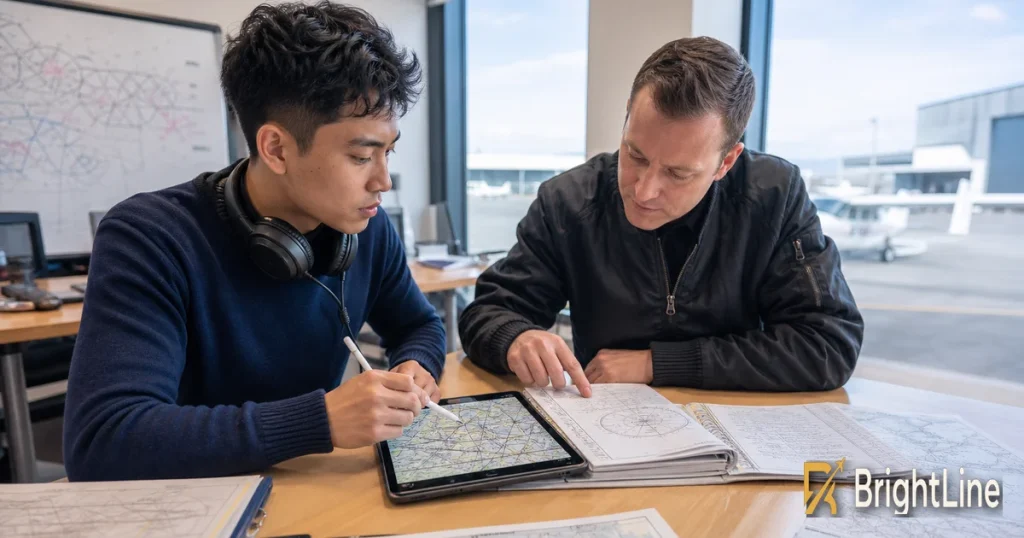
The M-1 exists for vocational training. Flight hours at a Part 61 school fit this category cleanly, and approval tends to move faster because the program is short and narrowly defined. What the M-1 does not give you is much room to stay and instruct once your ratings are finished, because M-1 practical training is limited to a few months.
The F-1 covers academic programs, and that distinction matters more than most applicants realize. A university or college flight program under F-1 status opens the door to working as a certified flight instructor after graduation, which is how the majority of international pilots build the hours an airline requires. The trade-off is a longer program, higher tuition, and a stricter academic structure.
Speed is the wrong reason to choose. Students who pick the M-1 because it starts sooner often find themselves at 250 hours with little time left to teach, watching classmates with F-1 status earn while they build time. The M-1 vs F-1 visa decision is a career decision disguised as a scheduling one.
Choose the F-1 if you intend to instruct, build hours, and pursue an airline career in the U.S. market. Choose the M-1 only if your training is genuinely short-term and your plan ends when the last checkride does. If you cannot answer what happens after your commercial certificate, you are not ready to choose a visa.
Pick the School First, Because the I-20 Comes From It
The school is the gatekeeper, and the I-20 it issues is the document every later step depends on. Skip that order and you’re paying deposits for a visa path that doesn’t exist.
A school applies for SEVP certification to enroll F and/or M students by completing Form I-17, the petition process for schools enrolling foreign students. Four things determine whether your application works at all.
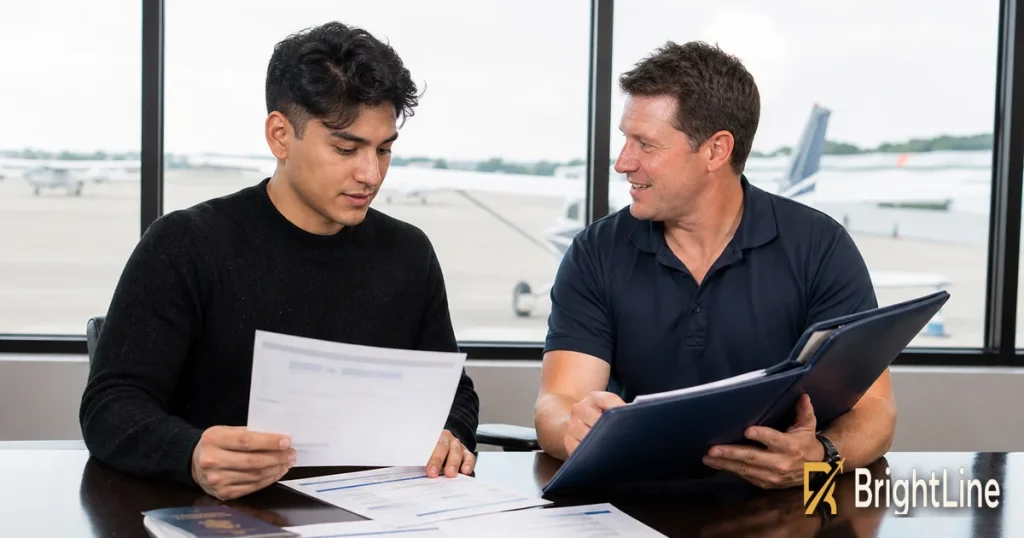
- SEVP certification. The school must be approved to enroll F or M students before it can issue anything. An uncertified school can teach you to fly, but it cannot hand you the document the embassy needs.
- The I-20 form. This is your proof of eligibility, and you cannot apply for the visa without it. The school compiles it from your acceptance, your funding proof, and your program dates.
- The TSA point of contact. Your school registers you in the flight training security system. A school with no designated contact leaves you handling that process alone, usually badly.
- Program type. Part 141 versus Part 61 changes your timeline and your visa fit. Part 141 structures training under an approved syllabus, which lines up more cleanly with F-1 academic status.
Every item is something the school controls, not you. Confirm SEVP certification and I-20 capability before you compare tuition, because a school that cannot issue the right I-20 wastes months and a non-refundable deposit.
BrightLine Digital works with international student pilots on admission packaging, getting you to real people at schools instead of guessing from a website. Check flight school admission requirements against what the school actually holds.
How to Get a Student Visa for Pilot Training Step by Step
Sequence decides outcomes here. Run these five steps out of order and you lose weeks you cannot get back before a cohort start date.
Step 1. Get accepted and receive your Form I-20. The SEVP-certified school issues this document after reviewing your application and proof of funds. Nothing else in the process moves until it lands in your inbox. Verify the name, program, and start date match your acceptance letter before you file anything.
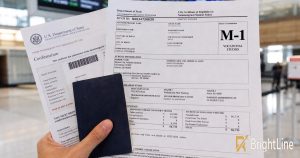
Step 2. Pay the SEVIS I-901 fee and keep the receipt. This payment activates your record in the Student and Exchange Visitor Information System. The receipt is one of two documents the consular officer asks for first. Pay it before you book an interview slot, not after.
Step 3. Complete the DS-160 online. Fill out the DS-160 visa application form on the official U.S. visa website and submit it electronically. Every answer must match your I-20 exactly. A mismatched school name or program code triggers a documentation refusal.
Step 4. Book your embassy or consulate interview. Schedule at the nearest U.S. embassy or consulate in your country once the DS-160 confirmation page is saved. Wait times vary by post, so book the moment the form is submitted. Many posts will not let you schedule until the SEVIS fee is paid.
Step 5. Attend the interview with your documents. Bring your passport, I-20, SEVIS receipt, DS-160 confirmation, and funding evidence. The officer will test whether your training plan is coherent and your intent to return is credible. Answer directly and keep it short.
Completing all five steps in order gets you a stamped visa and a legal start date. Students who want to become a pilot in the USA treat this sequence as the spine of the whole application, not a checklist to rush.
TSA Flight Training Approval Runs Alongside Your Visa
Waiting for the visa stamp before touching TSA paperwork is the most expensive scheduling mistake in this process. The two run on separate clocks, and the slower one decides when you sit in a cockpit.
All non-citizen flight trainees are subject to a Security Threat Assessment, a background check the TSA runs before training can begin. That check is governed by the Flight Training Security Program rules, and it exists independently of anything the embassy does.
Your flight school registers you in the system. They submit your fingerprints, your passport details, and your training request, which means the school controls the start of the clock. A school that drags its feet on registration delays you just as surely as a slow embassy.
Students who sequence this correctly file TSA paperwork while the visa is still processing. Clearance then lands around the same time as the visa, and the first lesson happens days after arrival. Students who wait sit on the ground for weeks, paying rent in a city they flew across the world to leave.
Ask your school one question before you pay anything: when do you submit my TSA registration? For anyone mapping flight training in the USA, that answer tells you more about your real start date than the visa interview slot ever will. Fingerprint collection is where timelines quietly slip. Applicants far from a TSA-approved collection site often wait weeks just to be printed, pushing everything downstream.
What the Visa Interview Officer Is Really Testing
The officer behind the glass is not grading your flying knowledge, and that surprises people who spent weeks memorizing aircraft systems instead. Four things get tested in a five-minute conversation, and each one fails for a different reason.
Intent to Return, Not Proof of Ambition
The officer assumes every applicant wants to stay. Your job is to show reasons you won’t. A signed job offer back home, family property, or an airline cadet contract in your country carries more weight than any statement about loving aviation.
Funding That Matches the I-20 Exactly
Your bank statements must line up with the figure your school certified on the I-20. A sponsor letter showing one amount while the school declared another reads as a documentation gap, not a rounding error.
A Training Plan You Can State in One Breath
Name the school, the program, and the certificate you’re chasing. Officers hear vague answers like “I want to fly” constantly, and vagueness reads as a plan that doesn’t exist. Know where your TSA flight training approval stands, and say so if asked.
Scripted Answers Collapse Under Follow-Up Questions
Memorized forum responses work until the officer asks something slightly different. Then the applicant pauses, contradicts their own I-20, and the interview ends early. Rehearsed answers sound rehearsed, and officers recognize the pattern within seconds.
BrightLine Digital’s aviation team watches the same refusals repeat across nationalities and school choices. The pattern is never about flying skill. It’s about walking in with a story that matches the paper.
Timelines, Costs, and the Mistakes That Cost Semesters
The money goes before the visa, and the calendar follows the slowest agency, not the fastest one. Budget the I-20 fee, the SEVIS fee, and the DS-160 cost as separate line items, because each one blocks the next stage until it clears. The stage that stalls most students is the one nobody warns them about.
- I-20 processing window. Schools compile your financial documents into the form, and this step often carries a non-refundable fee.
- SEVIS I-901 fee. Pay it before booking your interview slot, because the receipt is one of the first documents the officer requests.
- DS-160 and interview scheduling. Embassy appointment waits vary widely by country, and peak season pushes them out further.
- TSA assessment window. Your school registers you in the system, and clearance runs on its own clock while the visa processes.
- Length of stay. M-1 students are admitted for the length of their program, up to one year at a time, with extensions possible. F-1 students are admitted for the duration of their program.
- School verification. Confirm your program appears in the official SEVP school search before paying any deposit.
Every item runs on someone else’s schedule, and the longest wait decides your start date, not your ambition. Students who track all six in parallel land in a cockpit sooner than those who treat them as a queue.
Build a single calendar with every stage mapped backward from your intended cohort date. If the F-1 visa for flight training route is your plan, confirm your school can issue the right I-20 before anything else moves. Sequence discipline beats speed every time.
Build the Sequence Before You Book the Interview
The school comes first. Everything else in the process, from the SEVIS fee to the interview slot, hangs off a document only an SEVP-certified school can issue. Understanding how to get a student visa for pilot training in the USA means understanding that the visa is one link in a chain, not the chain itself.
Reverse the order and the cost is concrete. A deposit paid to a school that cannot issue an I-20 is money gone, and an interview booked before the I-20 exists is a slot you will forfeit. Sequence protects money and time.
Before any payment leaves your account, verify the school’s SEVP certification and confirm it can issue your I-20. Get that in writing. Then build the rest of the sequence around it.
FAQ
Student Visa for Pilot Training Questions Answered
Can I get an F-1 visa for flight training?
Yes, an F-1 visa covers flight training when the school is SEVP-certified and enrolls you in an academic degree program rather than a standalone vocational course. The F-1 route allows you to remain after graduation to work as a certified flight instructor, which is how most international pilots build the flight hours required for airline employment.
How to get a scholarship for pilot training in the USA?
Full scholarships for international flight students are rare and typically come from home country airlines, military cadet sponsorship programs, or civil aviation authorities rather than U.S. flight academies. Be cautious of any school claiming to offer a full tuition grant in exchange for an upfront registration fee.
Can an international student become a pilot in the USA?
An international student can complete every FAA certificate from private pilot through commercial and flight instructor at an SEVP-certified U.S. school after passing TSA background checks. FAA airman certificates are earned under the exact same testing standards as U.S. citizens.
How much does an F-1 or M-1 student visa cost?
The student visa process requires paying the standard consular DS-160 processing fee as well as the federal SEVIS I-901 fee prior to your embassy appointment. You must retain the SEVIS fee payment receipt, as consular officers require it before conducting the interview.
What happens if my student visa for pilot training is denied?
A refusal notice indicates whether the officer doubted your home country ties, identified financial document discrepancies, or found errors on your DS-160. You may reapply with corrected paperwork and updated financial proof, but you must resolve the specific issue cited in the refusal letter before booking a new interview slot.