Flight School in USA for Pakistani Students: Big vs Small Programs
TL;DR
- Finding the right flight school in USA for Pakistani students comes down to choosing between a large academy and a small club, which dictates your total cost, visa security, and finish date.
- Large academies provide guaranteed SEVP visa sponsorship, structured Part 141 ground school, and deep aircraft fleets that absorb maintenance downtime.
- Small flight clubs offer lower hourly rates and direct instructor focus, but many lack SEVP certification to sponsor visa paperwork for international applicants.
- Hidden training expenses such as extra flight hours, housing, checkride fees, and TSA security clearance mean quoted tuition numbers rarely reflect your true out-of-pocket budget.
- Verify SEVP certification directly through official databases and demand a written all-in cost breakdown before wiring any non-refundable seat deposit from Pakistan.
A Pakistani student searching for a flight school in USA for Pakistani students is usually comparing the wrong things. The real decision sits underneath the brochures: a large academy or a small club. That choice drives your total cost, how fast you finish, and how much visa risk you carry. Pick the wrong type and no amount of hard work fixes the mismatch.
Small clubs often cost less per hour but can stretch your timeline with shared aircraft and weather delays. Large academies run structured programs with dedicated aircraft scheduling, which shortens training but raises the upfront bill. Neither type is universally better. Your budget, timeline, and tolerance for visa scrutiny decide which one you should target.
The Criteria That Decide Big vs Small
Bigger is not safer. A large academy with a weak international office can leave a Pakistani applicant stranded, while a small school with sharp admissions paperwork gets students flying on schedule.
Six dimensions decide the comparison, and they pull against each other. Visa sponsorship capability comes first, because a school that cannot issue the Form I-20 your visa depends on ends the conversation before cost matters. Fleet size and aircraft availability come next, since a grounded plane stalls your progress no matter how good the instruction is.
Instructor turnover is the quiet one. A school that cycles through instructors every few months forces you to repeat lessons and rebuild rapport, stretching your timeline and budget. Weather and flying days follow, and a club in a favorable climate can beat a larger program fighting seasonal downtime.
Total all-in cost and zero-to-commercial speed complete the list. These two fight hardest: the cheapest hourly rate rarely produces the fastest certificate, and the fastest path rarely comes cheap. You can verify a school’s SEVP certification through the government’s SEVP-certified school search tool before trusting any brochure.
No school wins on all six. That tension is the point, and it’s why the rest of this article tests each program type against these criteria rather than crowning one winner. Anyone who tells you one size fits every applicant is selling something. The question is which trade-offs you can live with.
What a Large US Flight Academy Gives You
Large academies sell structure. For a Pakistani student arriving on a student visa, structure is often the difference between finishing the program and stalling out halfway. A fixed schedule removes a dozen small decisions that otherwise eat months.
- Visa sponsorship and SEVP certification. The school can issue the Form I-20 a consular officer expects to see with your M-1 or F-1 application. Without that certification, no amount of flight hours gets you through the embassy window.
- Part 141 curriculum with reduced hour minimums. The private pilot requirement is normally 40 hours, but drops to 35 under an approved Part 141 pilot school syllabus. That gap compounds across every rating you add.
- A deep fleet that absorbs downtime. When one aircraft goes into maintenance, a large academy has another tail number ready. A single-plane operation grounds you for the week.
- Standardized ground school. Every instructor teaches from the same syllabus, so a change in your assigned CFI does not reset your progress.
- Housing and admissions support. On-campus dorms and dedicated international advisors handle the logistics that sink self-arranged students. That support is why many Pakistani applicants target flight schools in Florida for international students specifically.
What the list hides is that each advantage is priced in. Structured programs charge structured rates, and the premium shows up in hourly costs, housing fees, and deposits.
What a Small Flight Club Actually Offers
A small flight club wins on price and attention, and often loses on the one thing a Pakistani applicant needs before boarding a plane. The hourly rate is lower because the overhead is lower.
Small clubs run lean. You pay less per hour, often fly the same airframe every lesson, and get an instructor who knows your weak turns without checking a logbook.
The fleet is the problem. One aircraft down for maintenance cancels your week, and a single instructor who leaves takes your progress with them. A club that has not gone through the SEVP school certification process cannot issue the paperwork an international student needs at all.
That certification gap is the whole story for most applicants from Pakistan. Without it, there is no I-20, no M-1 visa for flight school, and no legal path to train full-time in the US. A club can still be the right call for a student already living in the US on a status that allows flight training, training part-time and self-funding.
Choose the club if you are already in the US and paying your own way. Choose an academy if you are applying from Pakistan and need the visa to exist before the training does.
Cost Reality for Pakistani Students
Sticker tuition is the number a Pakistani family compares and the number that lies. The gap between a large academy and a small club rarely shows up in the headline rate. It hides in the lines nobody quotes until you ask.

A private pilot license starts around $10,000, while commercial training can reach $80,000 or more, and that spread widens once visa, security, and housing costs land on top. The TSA flight training security rule adds a processing step every applicant pays for, regardless of school size.
| Cost Line | Large Academy | Small Club |
|---|---|---|
| Aircraft hourly rate | Higher, bundled with overhead | Lower, billed dry |
| Instructor rate | Standardized, scheduled | Variable, instructor-dependent |
| Ground school | Structured, included in package | Self-study, paid separately |
| Checkride fees | Quoted upfront | Revealed at booking |
| Housing | Often bundled or arranged | Your problem to solve |
| Visa and TSA processing | Admissions team handles it | You handle it alone |
| Extra-hour buffer | Larger, but scheduled faster | Smaller, but stretches longer |
The academy wins on total cost for a Pakistani student who needs a fixed timeline, because the hidden lines are already priced in. A small club only beats it when you are already in the US, self-funding, and can absorb a slower finish. Ask for the commercial pilot license cost for international students in writing, line by line, before any deposit moves.
Visa Paths: F-1, M-1, and School Size
The school you pick decides your visa before you ever fill out a form. Getting it backwards costs a full intake year.
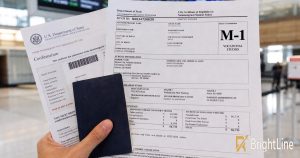
A school’s SEVP certification determines which Form I-20 it can issue you. Most standalone flight academies issue an M-1 I-20, because their programs are vocational training. Universities and colleges with aviation degrees issue an F-1 I-20, which covers degree-track and longer academic programs.
The M-1 route is tied to the length of your program and allows only a short period of practical training afterward, while F-1 students can apply for optional practical training once they finish. Comparing the M-1 visa vs F-1 visa is really comparing how long you’re allowed to stay and what you can do after.
A small club without SEVP certification cannot issue a Form I-20 at all. No I-20 means no M-1 or F-1 visa, and no legal pathway for a Pakistani applicant to train full-time in the US. The club can still teach a student who already lives in the US on a status that allows flight training, but it cannot bring you in from Pakistan.
Flight training providers must hold an FTSP Portal account and notify TSA of every non-US citizen candidate through it. That applies regardless of school size, so a club skipping SEVP certification is not skipping federal oversight. It is skipping the one piece of infrastructure that gets you into the country.
Verify SEVP status first, then match the visa category to your timeline, then commit. The deposit is the last step, never the first.
Training Speed and Completion Risk
Two schools can quote the same total hours and produce very different finish dates. The gap comes down to scheduling reliability, and it decides whether a Pakistani student completes the flight school process from zero hours or stalls halfway with a drained bank account.

A large academy absorbs interruption better than any club can. When one aircraft enters maintenance, the next tail is already on the ramp, and a substitute instructor picks up the syllabus without a break. That redundancy keeps a student flying through a bad weather week instead of waiting it out.
A small club runs lean, and lean means fragile. A single mechanic, instructor, or grounded airframe halts the entire schedule. The same club that gave personal attention in week one can leave a student idle for a month when the only instructor takes leave. Students stop when training breaks and funds run dry, not when talent runs out, and interruptions drive both.
Program design matters too. A structured syllabus tied to the private pilot certification hour requirements keeps a student on a defined track with measurable checkpoints. Loose scheduling invites drift, and drift is where completion rates collapse. Before you enroll, ask any school for a realistic timeline and a true all-in cost in writing.
For a Pakistani applicant funding the whole course from abroad, the academy wins on completion risk almost every time. A club only closes the gap when the student lives locally, self-funds, and can absorb a stalled month without losing their seat.
Which Program Fits Your Situation
The right program depends less on the school’s reputation and more on where you are standing when training begins. A student applying from Pakistan and a student already living in Houston face different constraints, and the same school can be correct for one and wrong for the other.
- Applying from Pakistan, fixed timeline. A Part 141 academy with SEVP certification is the safer default because it can issue the I-20 your visa depends on.
- Already in the US on a status that allows flight training. A small club works here, since you can train part-time without needing sponsorship or a fixed completion date. TSA approval still applies.
- Career-changer needing speed. The fastest zero-to-commercial path runs through structured academies with dedicated fleets and standardized ground school.
- Budget-constrained, flexible on time. A small club’s lower hourly rates stretch your money further if you can absorb slower scheduling.
- Needing admissions and visa support. Schools with SEVP certification and a dedicated international office give international applicants a clearer path from acceptance to arrival.
These profiles rarely stay fixed. A student who starts part-time at a club often needs academy structure once they commit to a commercial certificate, and switching mid-training costs both hours and money.
Before any deposit leaves Pakistan, verify the school’s SEVP certification and ask for a written all-in cost covering visa, TSA, housing, and checkride fees. That document separates schools selling flight training in the USA to international students from schools selling brochures.
Make the School Choice Before the Deposit
Program size is a fit question, not a quality ranking. A small club with a sharp instructor can outperform a sprawling academy for the right student, and a large academy can be the wrong fit for a student who needs flexibility. The search for a flight school in USA for Pakistani students ends when the fit is clear, not when the biggest name appears.
Money wired before that clarity is hard to get back. Deposits sent to a school that cannot issue an I-20 leave a family funding a seat their son or daughter cannot legally occupy. The same amount, held until certification is confirmed, keeps every option open. Verify SEVP certification directly. Confirm which visa the school can support. Request a written all-in cost covering visa fees, TSA processing, housing, and checkride charges. Then pay.
FAQ
Questions Pakistani Students Ask Before Choosing a School
Can an international student become a pilot in the USA?
Yes, and the pathway runs through a school certified by the Student and Exchange Visitor Program, which issues the paperwork that supports an F-1 or M-1 visa. A flight school in USA for Pakistani students only works when that school holds SEVP certification, because a club without it cannot generate the I-20 or M-1 form the embassy requires.
How much does flight school cost in the USA?
Total cost depends on the certificate you pursue, with private pilot training starting near $10,000 and commercial training climbing past $80,000. The figure families underestimate is the extra-hour buffer, since students who fly twice a week instead of daily often pay for additional aircraft time beyond the syllabus minimum.
How much does flying school cost in Pakistan?
Training in Pakistan costs a fraction of US pricing, but it produces a license that does not convert directly to FAA certification. A pilot holding a Pakistani commercial license still needs to complete FAA conversion requirements, including written and practical tests, before flying for a US operator.
Is it true that 80% of flight students quit?
The figure circulates widely and overstates the problem, because most students who stop do so for funding gaps and scheduling delays rather than inability. A student whose aircraft is grounded for weeks or whose instructor leaves mid-course loses momentum, and that interruption predicts dropout far better than skill.