
MRO Website Design Company: What Buyers Check Before Signing
TL;DR · The short answer5 key points
- An MRO buyer judges your site in seconds by one test: does it name their airframe, the capability, and the approval you hold?
- Build airframe-specific capability pages around the model, ATA chapter, component and Part 145 rating, not generic “airframe services”.
- Split the quote form into AOG, PPI, scheduled work and parts paths, each asking for the fields that triage the request.
- Expect roughly $5,000 to $15,000 for a template site and $25,000 to $75,000 for a custom build, with content migration priced separately.
- Before signing, ask to see a live airframe page and quote form the agency built, and get accessibility and ownership terms in writing.
Portfolio screenshots will not win you a single work order. The MRO website design company you sign with gets judged by the buyers you want: directors of maintenance, fleet managers, and parts buyers who search by airframe and part number and leave any site that cannot name their aircraft.
This article will not walk you through agency case studies and call the pretty ones winners. That framing gets shops signed to contracts that produce a launch and a gallery image but no quote requests.
Instead, you get the evaluation framework. You will learn what buyers check first, how quote forms should split AOG from scheduled work, what a build realistically costs, and which questions expose whether an MRO website design company has worked this market before you sign anything.
What an MRO Website Design Company Actually Builds
A specialized MRO website design company builds a site around how maintenance, repair, and overhaul buyers search, verify, and request quotes. It is not a generic B2B template with aviation stock photos. The distinction shows up the moment a director of maintenance starts looking for their airframe.
That means airframe-specific pages, capability statements tied to your Part 145 approvals, and quote paths split by AOG, PPI, and scheduled work. A generalist agency builds one services page and calls it done. The work is closer to documenting a maintenance program than designing a brochure.
Generalist shops miss this because they build for the buyer they understand, usually a marketing manager, not a fleet manager checking whether your shop holds the right rating. A capability page should mirror the ratings and capability list a repair station holds under 14 CFR Part 145, because that is exactly what the buyer checks it against.
The practical difference is a page that names the airframe, the capability, and the approval, versus a page that lists “quality service” and “experienced technicians.” One gets a quote request. The other gets a bounce.
Ask any shortlisted agency how they handle custom or template aviation website design before you sign. The answer tells you whether they build for your buyer or for their portfolio. That question separates the shops worth a second meeting from the ones you can cross off.
The First Thing Buyers Check: Airframe Pages
A director of maintenance does not scroll your homepage. They paste a part number or an airframe and component into Google and land wherever the results take them. If that landing page names a Boeing 737NG nacelle and a repair station approval, the visit continues. If it lists “quality maintenance solutions,” the tab closes. The buyer arrives mid-task, holding a work order and a deadline, and needs to confirm one thing fast: can this shop touch my airframe?

Strong airframe pages answer that before the buyer has to ask. They name the model, the ATA chapter, the component, and the approval held. A page for the Airbus A320 family that lists landing gear overhaul and names the Part 145 certificate is doing the work. A page that says “airframe services” is doing nothing.
Airframe models and part numbers are the buyer’s search terms, not brand names. A shop that builds pages around those terms catches the query. A shop that builds around service categories misses it, and the buyer lands on a competitor. This is what separates SEO for MRO companies from generic B2B optimization.
A buyer who found their exact airframe and part on your site arrives at the form already half-convinced. A buyer who had to squint to confirm you work on their fleet arrives skeptical, and skepticism slows every deal. Ask any shortlisted MRO website design company to show you one airframe page they built. The ones who hesitate have never built one.
Quote Forms That Separate AOG From Scheduled Work
One contact form with a message box is the clearest sign an MRO website design company has never watched a buyer use its own site. The form is where intent gets sorted, and a single “how can we help” field sorts nothing.
Buyers arrive with different clocks. A grounded aircraft and a planned heavy check should never share the same intake path.


- AOG urgency path. The form asks for tail number, airport location, and ground status up front, so the shop sees the emergency before reading a sentence of prose.
- PPI request path. Pre-purchase inspection requests need airframe type, logbook status, and a target date, because the buyer is comparing three shops against a closing deadline.
- Scheduled work package path. Check type, due date, and fleet size let the planner route the request to the right estimator instead of a shared inbox.
- Parts traceability fields. Part number, serial number, and condition code tell the shop whether the request is a stocked item or a sourcing job.
- Approval context fields. Asking which ratings the work falls under signals the shop reads capability before it quotes.
These fields reveal whether the shop can triage a request before anyone picks up the phone. A single catch-all form is also one of the signs your MRO marketing agency is wasting your budget, so check it before you sign.
Why Generalist Agencies Miss the MRO Buyer
A full-service web shop and an aviation-only MRO website design company both quote the same project. The gap shows up in the questions each asks before writing code.
A generalist agency builds clean, responsive sites for dentists, law firms, and SaaS startups. What it cannot do is arrive already knowing the vocabulary. You will spend the first month teaching it what AOG means, why a Part 145 certificate belongs on a capability page, and how a fleet manager reads a shop’s approval scope before requesting a quote. That education is billed to you.
An aviation-only agency starts from approved capability and AOG urgency because those are the inputs it works with every week. BrightLine Digital is aviation-only, and its MRO company marketing work is built around how maintenance buyers actually evaluate a shop.
The generalist wins on one condition: your site is a brochure with no quote logic and no airframe-specific pages. Specialization pays for itself the moment a buyer searches by airframe or part number.
The counter-argument arrives fast: a generalist charges less and ships faster. That holds only until the first revision round, when the copy misreads an approval scope. Request the last three aviation sites the agency launched and the airframe pages inside them.
What an MRO Website Design Project Costs
Budget tiers split along one line: how much of the buyer’s search behavior the site has to answer. A template build gets a homepage and contact page. A custom build gets airframe pages and quote logic. That gap is where most shops underbudget. The ranges below are typical agency quotes, not fixed prices.
| Cost Factor | Template-Based Site | Custom Site | E-Commerce-Enabled Site |
|---|---|---|---|
| Typical price range | $5,000 to $15,000 | $25,000 to $75,000 | $60,000 to $150,000 |
| Airframe-specific page count | Generic service pages only | Per-airframe pages drive cost up | Per-airframe plus per-part pages |
| Quote-form logic | Single message box | AOG, PPI, and scheduled paths | Quote paths tied to inventory |
| Parts catalog integration | Not included | Optional add-on | Core cost driver |
| Accessibility work | Theme default only | WCAG 2.2 remediation adds cost | Catalog and checkout both remediated |
| What drives it down | Reusing existing copy | Phased rollout, existing content | Phased catalog migration |
Custom wins for any shop with real quote logic and airframe-specific pages. Template only survives if you sell one service line and never field AOG calls. If pricing feels off, that is one of the signs you need an MRO marketing consultant before you sign.
The line item buyers miss is content migration. Every spec sheet and capability statement must be rewritten for the new structure. Ask any MRO website design company to price migration separately in writing. A quote that bundles it hides the real cost until week six.
The Misconception: A Pretty Site Wins Work
A polished homepage has never cleared a single AOG. The buyer you want is standing in a hangar with a grounded aircraft, and design is the last thing on their mind. Capability, traceability, and response speed get checked before anyone judges the layout.
A fleet manager needs a landing gear actuator overhauled and lands on a site with a hero video and no airframe list. They cannot confirm the shop holds the right approval, so they close the tab and call the next result.
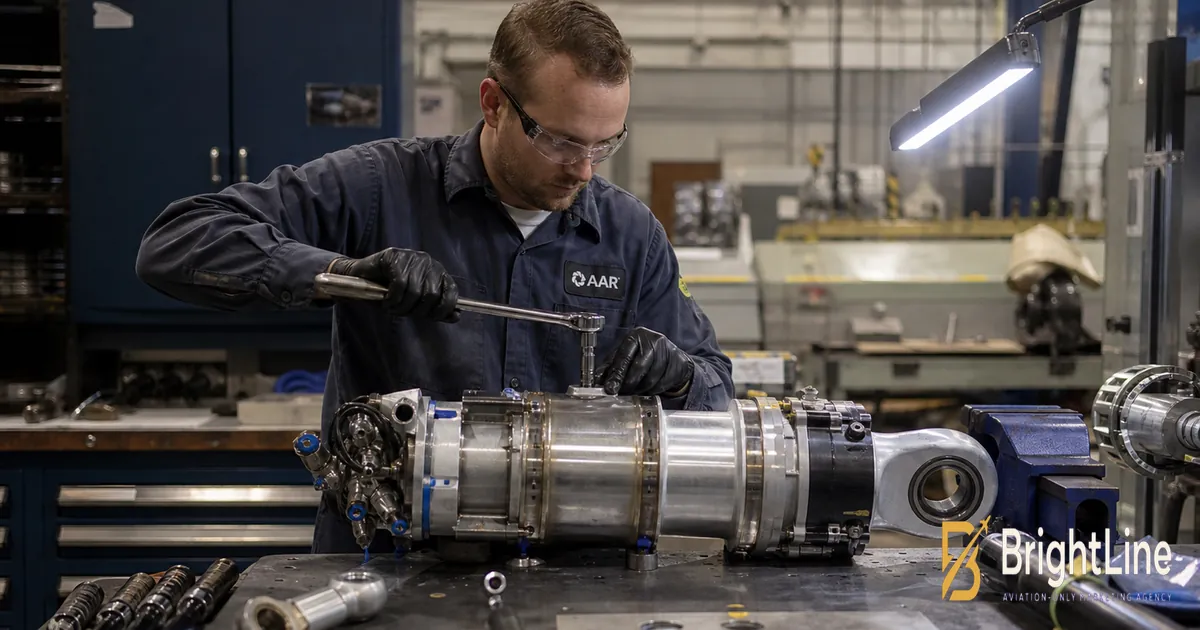
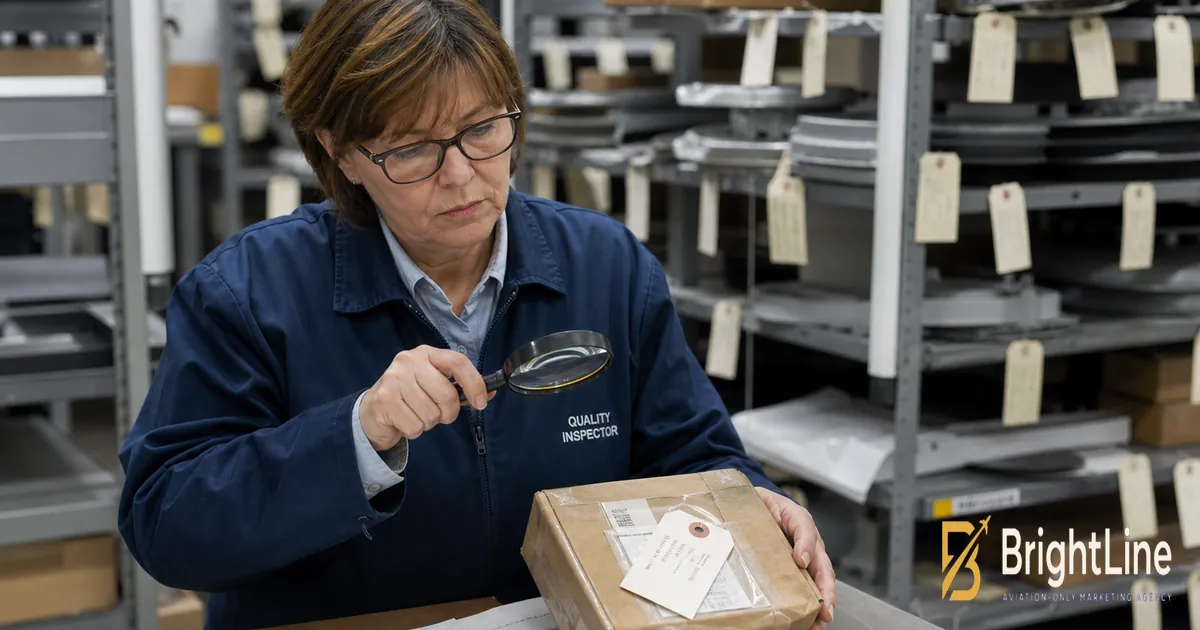

An MRO website design company that leads with aesthetics over airframe-specific content builds exactly this trap. The homepage wins a design award while the capability pages stay thin and the quote path stays buried.
Traceability is the quieter test. A parts buyer wants to know where a component came from and what paperwork follows it. If the site cannot answer that in plain language, the buyer assumes the shop cannot either.
BrightLine Digital’s aviation web design and conversion work starts from how buyers search, not how the site looks. That order matters, and it pairs naturally with paid search through Google Ads for MRO companies.
Design still earns its place. It just arrives after the buyer has already decided you are credible.
Accessibility and Compliance Checks Before You Sign
A proposal that never mentions accessibility or ownership is telling you where its attention went. These checks belong in the contract conversation, not the handoff call.
- WCAG 2.2 conformance stated in writing. The release of WCAG 2.2 sets the current benchmark, so ask which conformance level the agency targets and who tests it.
- Keyboard navigation tested, not assumed. A buyer who cannot tab through your quote form never submits it, and procurement teams flag this in vendor reviews.
- Content findable without a mouse. Capability statements and approval details must be reachable by screen reader and search, not buried behind hover menus.
- Claims substantiated before publishing. Turnaround promises and capability statements are advertising claims, and they need evidence behind them before they go live.
- Ownership spelled out in the contract. Confirm who holds the domain, hosting account, design files, and content after launch, and get it in writing.
- Handover access documented. Ask for admin credentials and a written record of every plugin, license, and third-party account tied to the site.
The pattern is who carries risk after the invoice clears. Hesitation on ownership is the loudest warning sign in the room. Put these questions in the RFP, not the kickoff. Any MRO website design company that pushes back on accessibility testing or ownership terms is telling you how the relationship ends.
Sign With the Agency That Speaks MRO
Every question in this article collapses into one test you can run in a single meeting. Hand each shortlisted MRO website design company the same request: show an airframe-specific page and a live quote form you built. Watch which agencies answer in minutes and which ones send a deck about brand storytelling.
Sign with the wrong one and the cost shows up slowly. Your shop ranks for nothing a buyer types, quote requests arrive with no urgency signal, and you spend the next year paying someone to learn what AOG means. Sign with the right one and the site starts sorting real work before the contract is even warm.
Run that test this week, before the shortlist narrows on price alone. Compare the pages side by side. The agency that already knows your buyers will make the choice obvious.
BrightLine Digital builds aviation web design that turns MRO site visitors into quote requests from maintenance directors and parts buyers. Book a call to get a quote form and site plan built around how your buyers actually search.
FAQ
Questions Buyers Ask Before Hiring an MRO Website Design Company
How much does an MRO website design project cost?
Plan on roughly $5,000 to $15,000 for a template-based site and $25,000 to $75,000 for a custom build with airframe-specific pages and segmented quote logic. E-commerce for parts typically runs $60,000 or more once catalog integration and inventory syncing enter the scope, so budget for the catalog work separately.
What should an MRO website include that a general B2B site does not?
An MRO site needs airframe-specific capability pages, Part 145 approval statements, and separate quote paths for AOG, PPI, and scheduled work. A general B2B site sells a service; an MRO site has to prove a repair station rating before a maintenance buyer will pick up the phone.
How long does a build take?
A focused MRO website design company typically delivers a custom site in three to five months, with template builds landing closer to six to ten weeks. Airframe page count and parts catalog integration are the two variables that stretch a timeline past the estimate.
Do I need e-commerce for parts?
Only if you sell catalog parts to buyers who expect to check stock and price without calling. Shops that handle rotables, exchange units, and AOG sourcing usually get more from a structured quote request than from a shopping cart.
How do I check an agency’s MRO experience?
Ask for a live airframe-specific page and a quote form they built, then submit a test request through it yourself. Watch how fast the form routes and whether the confirmation email names your airframe, because that response reveals more than any case study.
Turn More RFQs Into Signed Work
Tell us your capabilities and the buyers you want in two minutes. We'll show you how operators find you today and what is keeping quotes from coming in. A real person replies within 24 hours.
Get Your RFQ Review →