Discovery Flight Marketing: How Flight Schools Turn One-Hour Joyrides Into Enrolled Students
TL;DR · The short answer5 key points
- Discovery flight marketing should be judged by students who enroll, not flights sold.
- Target career changers and serious hobbyists first; keep gift-certificate offers on their own budget.
- Let prospects book a real slot and pay a deposit online in under two minutes, even on a Saturday night.
- Train instructors to run a short debrief that names the next lesson and its cost.
- Follow up five times in seven days, then track cost per enrolled student.
A prospect books a discovery flight on a Saturday, flies, posts a photo, and never hears from the school again. That gap is where discovery flight marketing quietly fails, and it has nothing to do with the ad that produced the booking.
The flight is not a product to sell. It is the first step of enrollment, and schools that treat it as a one-hour joyride optimize for a full weekend schedule while wondering why the roster stays flat.
This article breaks down the full system: targeting career changers instead of gift buyers, making booking instant, selling gift certificates without clogging peak slots, scripting the debrief, and running a follow-up sequence that turns a joyride into a training start.
The Discovery Flight Is Your First Enrollment Step

Discovery flight marketing is the system that moves a curious prospect from a first paid flight into a training start. It is not the act of selling a one-hour ride. Schools that confuse the two optimize for a full weekend schedule and never ask how many of those flyers came back.
The flight is the first sales conversation. Everything before it and everything after it either supports that conversation or throws it away. Here is the operating system for that enrollment step, in order.
Step 1. Write down what a booked discovery flight is worth to you. Not the price of the flight, the value of the student it should become. Schools that never do this math can’t tell a good campaign from a busy one.
Step 2. Define the student you want before you touch an ad account. Career changer, serious hobbyist, or gift recipient. Each needs different copy, a different offer, and a different follow-up.
Step 3. Map the path from first click to first lesson. Name every handoff: ad, landing page, booking, flight, debrief, follow-up. Any handoff without an owner is where prospects disappear.
Step 4. Train the instructor to close, not just to fly. The debrief is where the sale happens. A great flight with a vague ending produces an enthusiastic passenger who never calls.
Step 5. Put a follow-up sequence behind every flight. A prospect who hears nothing after the flight assumes the school has moved on.
Get these right and the flight stops being a joyride you sold. It becomes the first lesson of a training path, which is what flight school enrollment marketing actually measures.
Before a prospect books, they also want to know what stands between them and the left seat. The student pilot eligibility rules and the medical are often the first things a serious prospect asks about, so answer them on the booking page.
Target Career Changers, Not Just Gift Buyers
Two people can book the same discovery flight and only one of them is a student. The gift buyer is purchasing a memory for someone else. The career changer is pricing a future.
Discovery flight marketing aimed only at gift buyers fills the weekend schedule and starves the enrollment pipeline. Ads targeting the person who will actually sit in the left seat may book fewer flights but convert far more of them.
The gift-certificate buyer is easy to reach. They respond to birthday framing, holiday deadlines, and a clean checkout. They also hand the flight to a recipient who never asked for a training path, and the school spends a slot on someone with no plan to enroll.
The career changer arrives with different questions. They want to know what a private certificate costs, how long training takes, and whether financing exists. Pay for airline and commercial pilots is high enough to justify the investment, and that math is exactly what this buyer is running in their head.
Write ad copy that answers those questions before the click. Lead with total cost and a realistic timeline, not with “experience the thrill of flight.” Landing pages built for career changers should show a financing option and a first-lesson date, which is where flight school Google Ads campaigns usually leak the most qualified prospects.
A gift offer should run beside the enrollment offer, never in front of it. Keep the gift campaign on its own budget and landing page so it cannot pull spend from the buyer ready to train. Keep it as a secondary channel for reach and word of mouth, capped so it never crowds the schedule serious prospects need.
Make Discovery Flight Booking Instant and Online
Every prospect lost at the booking page is a lead the ad budget already paid for. Fix the flow in four moves this week.
Step 1. Replace the contact form with real availability. Show actual open slots pulled from the instructor schedule, not a “we’ll call you” box. A form asks the prospect to wait; a calendar lets them act while the impulse is hot.
Step 2. Let them pick a slot and pay a deposit in the same session. A deposit filters the curious from the committed and cuts no-shows. Splitting payment into a second step is where many bookings evaporate.
Step 3. Send an immediate confirmation with what to bring, where to park, and who to ask for. The prospect who knows the gate code and the dress code arrives calm instead of canceling.
Step 4. Route the booking straight into the flight school CRM system so a named person owns the lead. A booking that lands in a shared inbox belongs to nobody, and nobody follows up.
Weekend demand dies when a prospect has to wait for a callback during business hours, and by Monday the impulse is gone. The common objection is that a live calendar invites no-shows from people who book on impulse. A deposit attached to the slot does the filtering, and the prospect who pays is the one who shows. Check the flow on a phone at 9pm on a Saturday. If a prospect cannot book in under two minutes at that hour, the ad spend is leaking.
Sell Gift Certificates Without Wasting Slots



Gift certificates look like easy revenue and behave like a different business. The buyer, the flyer, and the student are often different people, and each needs a different move from your school. Treat the gift flight as a lead with a handoff problem. Get the handoff wrong and you fill the calendar without filling a single training slot.
Capture the Recipient, Not Just the Buyer
The person who redeems the certificate is your prospect, yet most purchase forms collect only the buyer’s email. Add a required recipient name, phone, and email field at checkout, then send the recipient a welcome message the same day. That single field is the difference between a lead you own and a stranger who shows up once and never returns.
Price the Gift So It Doesn’t Undercut Training
A gift certificate priced like a bargain trains the buyer to expect cheap flight time. Package it as a fixed experience with clear value, and keep the certificate amount separate from your lesson rates. When the recipient calls to book, the instructor quotes training costs fresh, not against the gift price.
Convert the Recipient After the Flight
Recipients rarely see themselves as future students, so the instructor has to ask. Build one question into the debrief: what would you want to do with this if you kept going? A recipient who names a goal is a lead, and should be routed into the same follow-up as any self-booked prospect, the approach behind getting more flight students from a quiet season.
Keep Gift Inventory Off Peak Weekend Slots
Gift redemptions cluster on Saturdays, and a full weekend of certificates can crowd out the career changer who wants an evaluation flight. Hold a share of weekend slots for self-booked prospects and steer gift redemptions to weekday or off-peak times. The certificate still gets flown, but it stops competing with enrollment.
A gift flight is a lead with a different owner than a self-booked prospect. The buyer gets the thank-you, the recipient gets the follow-up, and your CRM has to track both or neither converts.
Script the Debrief So the Flight Sells Training
The instructor who hands a headset back and says “that was great, let us know if you want to come back” has just wasted one of the most valuable leads the school will get. The flight is the sales conversation, and few flight schools train anyone to have it.
Flight instructors learn to teach stalls, steep turns, and radio calls. They are rarely taught how to ask a stranger what they want to do with flying, or how to price a private pilot certificate without flinching. That gap sits directly between a full schedule and an empty one.
A structured debrief runs on a few simple moves. The instructor asks what drew the prospect to flying and what they picture themselves doing with it. Then comes the bridge: the steep turn they just flew is part of the private pilot syllabus, not a party trick. Name the next step and its cost out loud, in the same conversation.
Then the handoff. A printed one-pager or an emailed enrollment path with the first lesson date, the hourly rate, the medical requirement, and the financing option the prospect mentioned. Something the prospect can hold while the adrenaline fades.
Leave this to chance and you get enthusiastic passengers. They shake hands, they mean it, and they never call. The instructor assumed the front desk would follow up, and the front desk assumed the instructor closed it.
Flight school marketing budgets get argued over in ad platforms. The real conversion event happens in a briefing room with a whiteboard and a syllabus. Fix the debrief and every ad dollar works harder.
Run a Seven-Day Discovery Flight Follow Up


A prospect who flies and hears nothing back is a lead you paid for and abandoned. The sequence below fixes that with five touches over one week.
Step 1. Send a same-day thank-you with a photo from the flight. Get the message out within hours, while the cockpit is still fresh. Attach the photo the instructor took on the ramp and keep the note short. Speed matters more than polish, because a prospect who flies Saturday and hears nothing by Monday assumes the school has moved on.
Step 2. Check in on day two and ask about their goals. Ask one direct question: what do you want to do with flying? The answer tells you whether this is a career changer chasing an airline path or a hobbyist who wants to fly locally on weekends. That single reply routes the rest of the sequence.
Step 3. Send the cost and financing path on day four. Match the message to the certificate they mentioned, whether private pilot or commercial. Name the total cost range, the financing options your school works with, and the monthly figure a payment plan produces. Vague reassurances about affordability lose the prospect quietly doing math.
Step 4. Invite them to a ground school session or a first lesson slot on day six. Offer a specific date and time, not an open invitation to call whenever. A named slot converts because it removes the decision of when to start. This is the step where flight school lead generation either produces a student or a memory.
Step 5. Close on day seven with a reply that takes ten seconds. Ask a single yes-or-no question, such as whether they want the Saturday slot held. A prospect who has gone quiet for a week will not write a paragraph, but they will answer one word.
BrightLine Digital builds this sequence into flight school admissions automation, so it fires whether or not an admissions officer remembers. Many discovery flyers are never contacted again after the flight, which is why schools running a sequence like this enroll more from the same ad spend.
Measure Enrolled Students, Not Flights Sold
A full weekend schedule can hide a failing campaign. Most schools judge discovery flight marketing by bookings, and bookings are the one number that flatters a school while telling it little about revenue.
Track the prospect, not the flight. Every booking needs a record that follows one person from ad click to scheduled slot, to flown flight, to follow-up touch, to enrollment or a clean dead end. If your CRM cannot show which ad produced an enrolled student, you are guessing at your best-performing channel.
Run the funnel stage by stage. Cost per booking, show rate on the day, follow-up contact rate, and enrollment rate each expose a different leak. A school selling cheap flights to gift buyers will show a healthy top line and a near-zero bottom line, because the person who flew was never the buyer.
Demand the same reporting from any agency. Cost per enrolled student ties spend to tuition, while cost per lead on its own is a vanity metric dressed as accountability.
Zoom out before you blame the campaign. The FAA civil airmen statistics show new student pilots arriving every year, which means the prospects exist. Your funnel is what loses them.
The obvious objection is that enrollment tracking is slow. A student can take months to commit, and owners want a number they can read by Friday. Fair. So read both: bookings for the weekly pulse, enrolled students for the quarterly verdict. Start this week by tagging every booking with its source and buyer type, then compare the two lists after thirty days. The gap tells you where to spend next month’s budget.
Turn the Next Discovery Flight Into a Training Start
Treating the flight as the opening move of enrollment changes what you build next. Targeting, instant booking, a trained debrief, and a follow-up sequence all point at the same outcome: a student in the left seat.
Schools that get this right stop counting joyrides and start counting starts. The risk of waiting is quiet. Prospects who fly and hear nothing back enroll somewhere else, and the ad budget that found them is gone.
Audit last month’s discovery flights this week. Count how many prospects were contacted again within seven days. That number tells you where the leak is, and it is the first thing worth fixing.
BrightLine Digital builds aviation business automation and CRM workflows that turn discovery flight bookings into enrolled students, with a follow-up sequence that never drops a lead. Book a call to map your enrollment follow-up system.
FAQ
Discovery Flight Questions Flight School Owners Ask
How much does it cost to do a discovery flight?
In the US, discovery flights commonly cost somewhere around $100 to $250, depending on the aircraft, the length of the flight and the local market. Schools should state exactly what the price includes, such as the ground briefing and a logbook entry, so the prospect sees it as a first lesson rather than a joyride.
What are the requirements for a discovery flight?
Prospects need no pilot certificate, medical or prior experience to fly with a flight instructor on board, which is why the flight works as a first step rather than a test. Many schools ask for a government-issued photo ID and may have age or weight limits for the aircraft, so tell prospects before they arrive.
What do you do in a discovery flight?
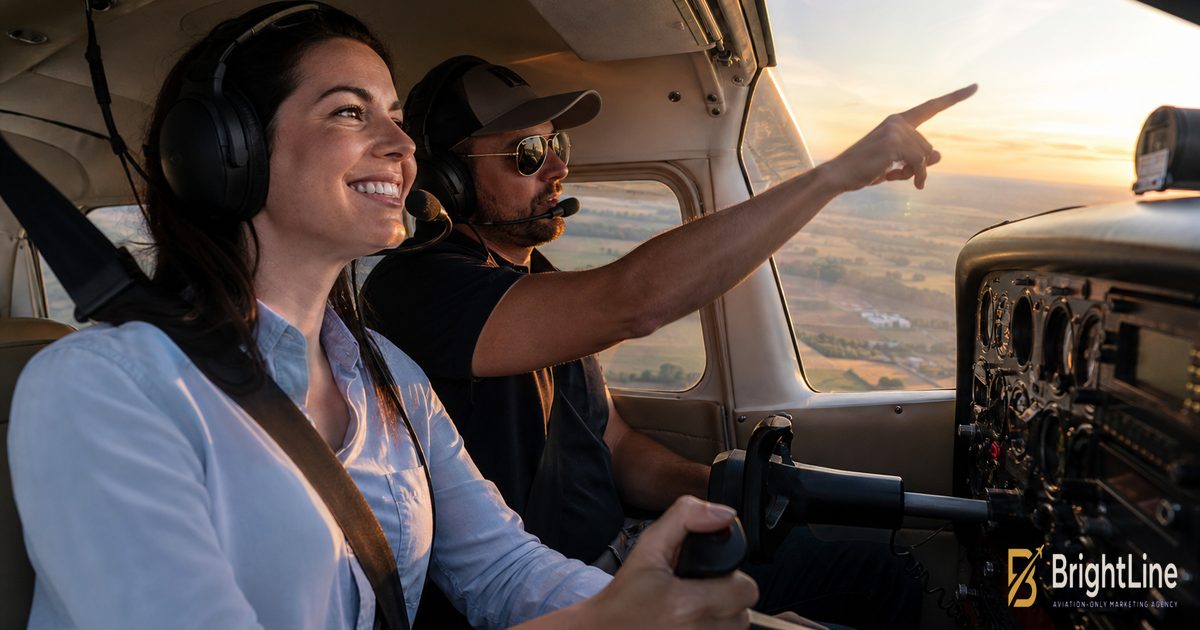
The instructor handles the preflight walkaround, taxi, and radio calls, then hands over the controls once airborne so the prospect feels the aircraft respond. What separates a flight that converts from one that does not is the debrief afterward, where the instructor ties the hour to the training path and names the next lesson.