Pilot Training in USA for Saudi Students: Step-by-Step Guide
TL;DR
- Pilot training in USA for Saudi students works best in a fixed order: school acceptance and I-20, SEVIS fee, DS-160 and visa interview, TSA approval, then flight training.
- Confirm in writing whether the school will issue your I-20 for an M-1 or an F-1 visa before you pay, because the category decides how long you can stay and whether you can work after training.
- Before the visa is approved, pay only the deposit the school needs to issue your I-20, and get its refund policy for a visa refusal in writing.
- Budget well beyond the advertised hourly rate: extra flight hours, simulator time, checkride fees and living costs move the total most.
- Start your FAA to GACA conversion paperwork before you leave the United States, because an FAA certificate alone does not let you fly in Saudi Arabia.
A Saudi student pays a full year of tuition before the visa interview, then watches the money sit with the school while the visa is still pending. The sequence was wrong. Pilot training in USA for Saudi students fails on ordering far more often than it fails on ability.
The mistake repeats because most guides stop at “pick a school.” Few walk the full pipeline: prerequisites, visa category, training sequence, real costs, and the GACA conversion waiting at home. Skip the conversion planning and your US commercial certificate cannot be used to fly in the Kingdom until it is converted.
This guide lays out that pipeline in order: the documents to gather first, the M-1 versus F-1 decision, the step-by-step path through your ratings, the real costs, schools with Saudi experience, and the FAA to GACA conversion most guides never mention.
What Saudi Students Need Before Booking a Flight School
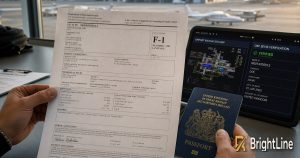
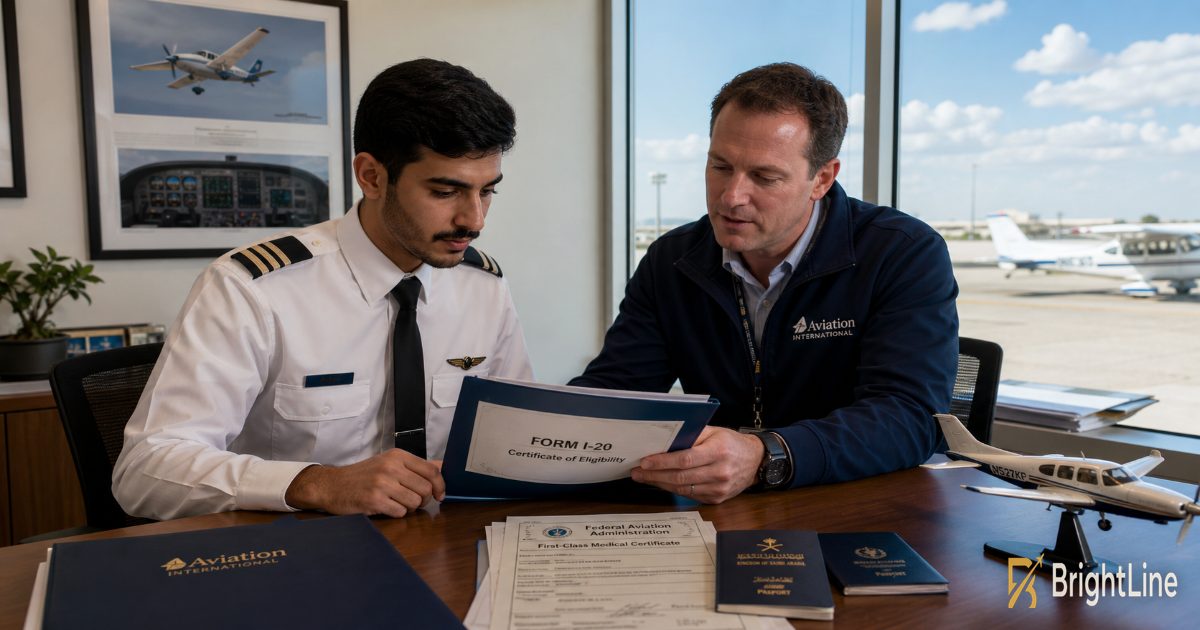
Every document a Saudi applicant needs before a US flight school will issue an I-20 falls into two buckets: what proves you can enter, and what proves you can stay. Miss one and the school stalls your file while your cohort start date drifts.
- A valid passport. It should cover your whole training period plus at least six months, so renew it before you apply if it expires soon.
- Proof of funds. Schools want evidence that tuition and living costs are covered for the full program. If you are sponsored, the sponsor’s financial guarantee letter usually does this job. For government scholarship students, that letter typically comes through the Saudi Arabian Cultural Mission (SACM).
- English proficiency. A TOEFL or IELTS score, or the school’s own placement test. The FAA also requires every pilot to read, speak and understand English, and all radio work happens in English.
- An FAA medical certificate. You need at least a third-class medical to fly solo. Career students usually take a first-class exam at the start to confirm they can meet airline medical standards before spending heavily on training.
- The right program for your visa. Schools are certified for M-1, F-1, or both, and the program you choose decides which visa you apply for. Settle this before the school issues your paperwork.
- A school acceptance and I-20. The I-20 only exists after a school admits you, so the application comes first and the visa second.
- SEVIS fee receipt. Pay the $350 I-901 fee after the I-20 arrives and keep the receipt for your interview. Our SEVIS I-901 fee guide walks through the payment.
These items are not parallel. The visa category sits upstream of everything else, because it decides which schools can enroll you and how long you can stay after certification. Choosing M-1 when you needed F-1, or the reverse, forces a reapplication that costs months.
Build the checklist in order, starting with the visa fork. Before you pay any deposit, confirm in writing which visa category the school will issue your I-20 under, because that one answer reshapes everything above it.
These documents are part of seven admission gates between you and your first training flight. Check all seven with the free BrightLine 7-Gate Admission Tracker.
Choosing a Visa Path for US Pilot Training
One decision shapes everything that follows: the visa category. Get it wrong and the training itself may be fine while the timeline, work rules, and options after certification fall apart.
Step 1. Confirm whether the school issues an I-20 for an M-1 or an F-1. A Part 141 vocational program typically runs on the M-1, while a college or university aviation degree runs on the F-1. Ask before you pay anything.
Step 2. Match the visa to your goal, not the school’s default. The M-1 visa for flight school suits a focused track that ends at a commercial or instructor certificate. The F-1 fits a degree alongside your ratings. Our M-1 vs F-1 visa comparison covers the trade-offs in detail.
Step 3. Understand what each category allows after training. An M-1 student can apply for limited practical training after finishing the program: one month for every four months of study, up to six months. An F-1 student in a degree program can usually apply for up to 12 months of Optional Practical Training. That difference decides whether you can build paid hours in the US, for example as a flight instructor, before converting your license at home.
Step 4. Answer the question every Saudi applicant asks: yes, an international student can train and fly in the USA. The visa category does not block flight training. It shapes how long you can stay and what you can do once the checkride is passed.
Step 5. Follow the order: I-20, SEVIS fee, DS-160, then the visa interview. The steps below cover each one. Getting the category right gives you a clean path from your first lesson to your certificate. Getting it wrong means repeating paperwork you already paid for.
The Step-by-Step Path Through US Flight Training
US flight training runs on a fixed sequence. Get the order right and the process moves without friction. Get it wrong and money sits waiting while paperwork stalls.
Step 1. Shortlist SEVP-certified schools and choose one. Only schools certified by the Student and Exchange Visitor Program can issue an I-20, and you can check any school in the official SEVP school search. Look for a track record with international and Saudi students, and take a discovery flight or a virtual tour if you can.
Step 2. Secure your I-20 and pay the SEVIS fee. The school issues the I-20 after you prove funds and meet its admission requirements. Pay the $350 SEVIS fee as soon as it arrives, and no later than three business days before your visa interview.
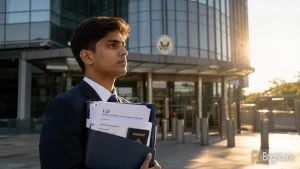
Step 3. Complete the DS-160 and book your visa interview. Fill in the DS-160 form against your I-20 field by field, then pay the visa fee and book your interview at the U.S. Embassy in Riyadh or the U.S. Consulate in Jeddah or Dhahran. A single error on this form can push your start date past the school’s next intake.
Step 4. Get TSA approval before your first lesson. Every non-US student must be approved through the TSA Flight Training Security Program before flight training begins. Start your TSA flight training request as soon as the school accepts you. The application can be submitted before you travel, and fingerprints are usually completed after you arrive. No flying lessons start until TSA approves.
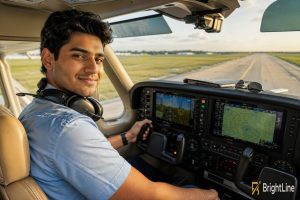
Step 5. Earn your private pilot certificate. This is your foundation, covering solo flight, cross-country navigation, and the checkride. Every later rating builds on it, so a weak foundation shows up in your instrument work.
Step 6. Add your instrument rating. Instrument training teaches you to fly by reference to your instruments in cloud and low visibility. Commercial and airline flying depend on it, so do not rush it.
Step 7. Complete your commercial certificate and multi-engine rating. The commercial certificate lets you fly for compensation, and airline careers need multi-engine experience. Many students also add a flight instructor (CFI) rating, which lets them build hours by teaching where their visa allows practical training.
Schools such as US Aviation Academy publish dedicated Saudi programs that follow this sequence, which helps when you are coordinating from overseas. One habit protects your money: before the visa is approved, pay only the deposit the school needs to issue your I-20, and get the refund policy for a visa refusal in writing. Full tuition paid early sits with the school while your interview date slips. Learn how to get your I-20 before you commit funds.
Finishing this sequence leaves you with an FAA commercial certificate, and often an instructor rating, that is respected across the Gulf. It still needs converting before you can fly in Saudi Arabia, which is covered below.
What US Pilot Training Really Costs Saudi Students
Budgets break on line items nobody quotes. A school advertising a flight-hour rate is selling a fraction of the bill. The comparison below separates what you are told from what you actually pay.
| Line Item | What Students Budget | What It Actually Runs | Why It Moves |
|---|---|---|---|
| Flight hours | Quoted minimum block | Above minimum, often by a wide margin | Your progress pace, aircraft type and fuel prices |
| Simulator time | Assumed included | Often billed hourly on top of flight time | Syllabus requirements and school pricing |
| Ground school | Overlooked entirely | Often a separate course fee | Instructor-led vs. self-study format |
| Checkride fees | Forgotten until scheduled | Examiner fee per certificate | Retakes add another full fee |
| Medical exams | One exam | An FAA exam for training, plus a GACA medical at home | Your Saudi license needs its own medical |
| Visa and SEVIS | One application fee | $350 SEVIS fee plus the visa fee | A refusal means paying the visa fee again |
| Housing | Monthly rent estimate | Deposits, utilities, furniture | Distance to the airport drives rent |
| Living expenses | Food and transport | Health insurance, phone, car or rideshare | Length of stay, not lifestyle |
Your own pace moves the total more than any other variable. Every hour you fly above the FAA minimum is billed at the full rate, and students who train irregularly need more hours. Aircraft type comes next: newer glass-cockpit trainers cost more per hour than older aircraft, so ask which airframe your quote assumes.
Bundled programs hide the same risk. A fixed block of flight and simulator hours looks predictable until you exceed it. Ask what the hourly rate becomes once the bundle runs out. That answer decides your real commercial pilot license cost.
Financing can change the total more than the hourly rate does. A low block rate paired with an interest-bearing payment plan can erase the savings. Ask for the all-in figure before you sign anything.
One thing works in your favor: the riyal is pegged to the US dollar at 3.75, so a dollar quote converts predictably and your budget will not swing with exchange rates.
US Flight Schools With Saudi Student Pipelines
Training succeeds or fails on the school’s pipeline, not its brochure. A campus with an established Saudi track knows which documents GACA wants, which instructors have taught Saudi cadets, and which housing works for a student arriving alone. A school without that history will learn on your file.
- AeroGuard Flight Training Center runs AeroGuardArabia, a Saudi program at its Phoenix campus, and states that graduates can convert their FAA licenses to GACA licenses on their return. That conversion focus matters more than fleet size, because it shows the school has mapped the paperwork you will face at home.
- Florida Flyers Flight Academy has training ties to Saudia, so its instructors have taught sponsored cadets before. A school with airline cadet experience understands sponsor reporting requirements that a general aviation operation may not.
- US Aviation Academy publishes a dedicated Saudi Arabia program built around a structured 270-hour track completed in about 8 to 10 months. A defined program usually means someone on staff owns your enrollment timeline.
- Established Saudi cohorts at a campus create informal support no brochure advertises. Students who arrived a year earlier explain the medical exam, the TSA process, and the GACA file before you reach each one.
- Regional concentration matters when comparing programs. The cluster of flight schools in Florida draws a steady stream of Gulf applicants, which keeps admissions staff fluent in Saudi documentation and sponsor letters.
- GACA alignment separates schools that track home-country requirements from those that do not. A program built around FAA standards alone leaves you to work out the conversion path after graduation.
The pattern is that pipeline beats prestige. Ask any school how many Saudi graduates completed the GACA conversion. The answer tells you whether the pipeline is real or aspirational. If you want help comparing schools, BrightLine admissions can shortlist programs that fit your goals, budget and visa.
Converting Your FAA License to a GACA License
Your FAA commercial certificate proves your skills to the American regulator. GACA, the General Authority of Civil Aviation, issues the license you fly on in Saudi Arabia, and converting is a separate process with its own paperwork, exams and hour requirements.
Applicants who treat the FAA certificate as the finish line discover the gap after they land in Riyadh. The students who move cleanly into a job start the GACA file before they leave the United States.
Step 1. Collect every FAA certificate, medical record, and logbook before departure. A logbook signed by your instructors carries more weight than a digital export nobody can verify. Missing endorsements get flagged later, and fixing them from Riyadh takes time.
Step 2. Request official copies of your FAA airman records before you leave. GACA needs confirmation that your certificate is genuine and current, and ordering certified copies while you are still in the US saves time. The FAA’s airmen certification page lists the request options.
Step 3. Submit your conversion application to GACA with complete, verified documents. An incomplete file slows everything down, so check the current requirements on the GACA website before you apply. Schools with Saudi graduates often know this sequence and can help you assemble the packet.
Step 4. Pass the exams GACA requires for your license category. These typically cover Saudi air law, local procedures, and differences from the FAA system. A strong US checkride record does not exempt you from them.
Step 5. Confirm your logged hours meet GACA minimums for the license you are converting, and complete your GACA medical. Hours flown in US training count, but the totals must be documented in a format GACA accepts. Shortfalls mean more flying before the license is issued.
Finishing the conversion puts you in the cockpit seat you trained for. A stalled file can cost you a hiring window that does not reopen on your schedule. Plan the GACA paperwork before you book the flight home.
Sponsorships, Scholarships, and Paying for Training
Funding for US pilot training rarely arrives as a scholarship. It arrives as a contract. Families who understand that early stop chasing free tuition and start positioning their son or daughter for a sponsored seat tied to a return commitment.
Government and airline sponsorship is the main funded path. Saudi carriers, led by Saudia, have long sent cadets abroad through structured training agreements, and schools such as Florida Flyers work with exactly that kind of pipeline. A sponsorship typically covers tuition and living costs in exchange for a service commitment back home.
Partial scholarships exist, but they shrink the bill rather than erase it. A school might waive part of the ground school fees or cover a block of simulator hours for a strong candidate. Treat any award as a discount on a number you still have to fund. Families typically bridge the gap with a documented sponsor letter, which also strengthens the visa file.
Self-financing remains the most common route, and timing is the hidden cost. Paying full tuition before the visa is approved leaves your money with the school while your interview is still pending. Knowing how much flight school costs is half the calculation. Knowing when each payment leaves your account is the other half.
The sponsorship question is really a sequencing question. A cadet who secures a carrier commitment before choosing a school negotiates from strength. One who trains first and looks for a sponsor afterward competes for whatever seats remain.
Your Next Move Toward a US Pilot Certificate
Pilot training in the USA rewards the Saudi applicant who treats the pipeline as one connected sequence, not a series of separate errands. You now have the full map: prerequisites, visa fork, training steps, real costs, school pipelines, and the GACA conversion waiting at the end.
Acting on that map early changes the outcome. A student who confirms the school’s I-20 type before paying a deposit avoids a reapplication cycle that costs months. A student who starts the GACA paperwork before leaving the United States walks into a home-country license instead of a stalled career start.
Start with the school. Ask about prior Saudi graduates and their conversion experience. Verify the I-20 type in writing. Then build your funding plan around a sponsor, not a hope.
FAQ
Common Questions From Saudi Pilot Training Applicants
Can an international student become a pilot in the USA?
Yes. The route runs through an SEVP-certified flight school that can issue the Form I-20 your M-1 or F-1 visa depends on, followed by TSA approval before your first lesson. A school that cannot issue an I-20 cannot enroll you as a visa student.
Can Muslims become pilots in the USA?
Yes. Religion is not a barrier to flight training or certification in the United States. Every non-US student goes through the same TSA security check before flight instruction begins, which involves fingerprints and a background check, not any question about faith.
How much does pilot training cost for international students in the USA?
Budgets typically run well past the flight-hour rate a school advertises, because extra hours, simulator time, checkride fees, medical exams, and housing sit outside that quote. Ask each school what happens when you exceed the bundled hours, because that overage is where most budgets break.
How can I get a scholarship for pilot training?
Full scholarships are rare. The funded paths that do exist usually run through airline or government sponsorship tied to a service commitment at home. Pursue a sponsor before choosing a school, because that order decides whether your training is financed or self-funded.