
Flight School in USA for Indian Students: 2026 Visa to Cockpit
TL;DR
- Enrolling in a flight school in USA for Indian students requires securing your M-1 or F-1 visa category before submitting tuition deposits.
- Verify that your target flight school holds active SEVP certification and TSA FTSP security clearance for your specific rating sequence.
- Calculate your total landed cost by adding living expenses, medical exams, checkrides, and the 250-hour DGCA requirement to the base flight quote.
- Select Part 141 structured flight programs to lower minimum hour thresholds and ensure continuous visa compliance.
- Audit and assemble all official training records and logbook endorsements before leaving the US to guarantee a smooth DGCA conversion back in India.
Booking a discovery flight before choosing a visa category is how an Indian applicant loses an intake year. The deposit clears, the school sends a welcome email, and then the timeline collapses because the wrong visa route cannot support the training plan. Choosing a flight school in USA for Indian students starts with the visa, not the brochure.
Guides rank schools on fleet size and pass rates, then mention the visa in a footnote. That order is backwards. The category you enter on decides how long you can stay, whether you can work as an instructor, and which schools will issue you an I-20.
This article walks the full sequence: M-1 against F-1, TSA clearance, the real landed cost, how to screen a school, and the DGCA conversion that decides whether your FAA certificate is worth anything back home.
M-1 or F-1: The Visa Choice That Sets Your Timeline
The visa category decides how long you can stay, whether you can work, and which schools will even issue you an I-20. Applicants who pick a school first and a visa second usually discover the mismatch after paying a deposit.
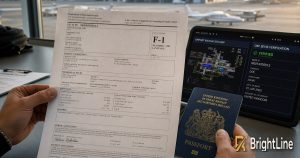
Step 1. Confirm the school holds SEVP certification before you discuss anything else. A school without it cannot issue an I-20, which means neither visa is possible. Every step in the international student process runs through that certification, and the DHS guide to the M-1 process documents the sequence from program research to departure.
Step 2. Decide whether your goal is a standalone flight program or a degree pathway. The M-1 visa route fits a vocational Part 141 course and moves faster from acceptance to first flight. F-1 fits a college degree with flight training attached, and it gives you a longer runway to finish ratings.
Step 3. Match the visa to the school’s authorization, not your preference. A school certified only for vocational students cannot issue an F-1 I-20, no matter how good the brochure looks. Choosing F-1 for a school that lacks academic authorization forces you back to the application stage.
Step 4. Understand what each category permits while you train. M-1 students cannot take on-campus employment, and off-campus work is tightly restricted. F-1 students have limited on-campus work options and a defined grace period after completion.
Step 5. Request the I-20 from the school, never from the embassy. The school issues the document after you prove admission and funding. The consulate only reviews what the school has already certified.
Getting the category right unlocks a clean path from acceptance to checkride. Getting it wrong means restarting the school application, not just refiling a visa form. That restart costs an intake cycle, and the next cohort may be months away.
TSA Clearance: The Step That Stops Applicants Cold
The Flight Training Security Program is where a flight school in USA for Indian students stops being an admissions question and becomes a federal one. Every applicant clears the same four gates, and the sequence is fixed. Reorder them and the clock restarts.
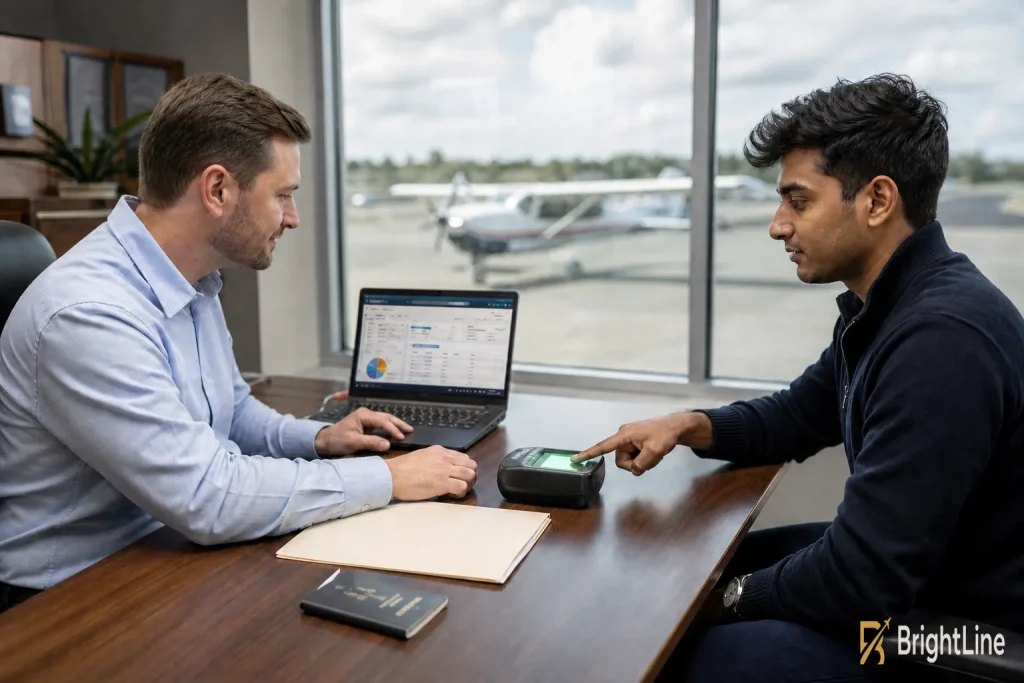
Confirm TSA Approval Before You Pay a Deposit
Not every flight school holds approval for every training category. A school cleared to teach private pilot applicants may hold no authorization for instrument or multi-engine work. Ask for the approval in writing, tied to the specific rating you intend to pursue.
The AFSP Application Comes Before Any Scheduling
Nothing flies until the school has your AFSP submission on file. Fingerprints go to an approved collection site, and the school cannot book your first lesson until that record exists. Students expecting to start flying in week one lose that week to paperwork.
The Security Determination Runs on Its Own Clock
Weeks can pass between submission and determination. Calling the school does not accelerate it, and neither does a follow-up email. Build the wait into your arrival date rather than your training start date.
Approval Binds to One Training Category
Clearance for private pilot training does not carry into instrument or commercial work. A new submission may be required when you switch categories, which resets the wait. Plan the whole rating sequence before you file the first application.
A Prior Visa Denial Belongs on the Form
Any history of denial of a United States visa may be a factor in determining whether a candidate is eligible to participate in flight training, so the Flight Training Security Program regulation treats that history as relevant. Concealing it creates a worse problem than disclosing it. A denial two years ago, explained plainly, is survivable. A denial discovered later is not.
Read the flight school admission requirements page for any school you shortlist and check whether TSA approval is stated per rating. Schools that list it clearly have processed international students before. Ambiguity on that page is the first warning sign.
What Flight Training Actually Costs an Indian Student
The quote a flight school in USA for Indian students emails you covers aircraft hours and instruction, and almost nothing else. The gap between that number and the money you actually spend is where budgets collapse mid-rating. Compare the two columns below before you wire a deposit. The right-hand column is the one nobody puts in the brochure.
| Training Stage | Typical US School Quote | Extras Indian Students Forget |
|---|---|---|
| Private Pilot License | Aircraft and instructor hours only | Headset, charts, knowledge test fees, checkride examiner fee |
| Instrument Rating | Simulator and flight block rate | Written exam, IPC if you fail a checkride, extra sim hours |
| Commercial Single-Engine | Hourly rate times logged hours | Complex aircraft premium, cross-country fuel, retake fees |
| Multi-Engine Add-On | Twin block time | Higher insurance surcharge, shorter airframe availability |
| CFI Add-On | Right-seat instruction rate | Spin training, FOI exam, checkride on a rented aircraft |
| Living and Visa Overhead | Not quoted at all | SEVIS fee, TSA fingerprint fee, rent, food, transport, medical |
A commercial pathway from zero experience lands in the tens of thousands of dollars, and the school quote is the floor, not the ceiling. The FAA sets the baseline hour requirements for each certificate, and those approved pilot school hour rules are the minimums your invoice will exceed.
DGCA requires 200 hours of total flight time for an Indian commercial pilot license, which pushes total cost well above what a US-only private pilot budget suggests. Students who plan around the FAA commercial minimum discover the shortfall only after they land back in India.
Budget for the landed figure, not the quote. Ask the school for a written breakdown of every fee outside the hourly rate, and compare that against real flight school costs other Indian graduates have published. A school that will not itemize its extras is telling you something about how it will handle your transfer records later.
Financing changes the math more than the school choice does. Indian banks rarely fund a Part 61 program without a co-signer or collateral, and that gap decides who flies.
Part 141 vs Part 61: Which Path Fits Your Goal
The regulation a school operates under decides your hour requirement, your visa eligibility, and how fast you reach a checkride. Students hunting for a flight school in USA for Indian students skip this check because the brochure never mentions it. Then they discover the hours do not transfer the way they assumed.
Step 1. Confirm the school holds an actual Part 141 certificate, not a marketing claim. The FAA audits an approved curriculum, so the certificate is a real credential with a paper trail. A school that cannot produce it is operating under Part 61 whether it admits that or not.
Step 2. Understand what the certificate buys you on hours. The flight hour requirement for a private pilot certificate is normally 40 hours, but may be reduced to 35 hours when training with an approved Part 141 pilot school syllabus. That gap compounds across every rating you add afterward.
Step 3. Match the regulation to your visa plan. Part 141 programs sit inside SEVP-certified schools that issue I-20s, which is what makes an M-1 possible. Part 61 flight training rarely qualifies, so a student who wants to become a pilot in the USA on a vocational visa needs the structured route.
Step 4. Weigh flexibility against total cost honestly. Part 61 lets you train around a job or a slow funding cycle, paying per lesson with no fixed syllabus. That freedom costs extra hours, and extra hours cost money at every stage.
Step 5. Verify the certificate against the FAA database before any deposit leaves your account. Ask the school for its certificate number, then confirm it independently rather than trusting a PDF. A brochure claim is not a certificate, and a deposit sent to the wrong school is the hardest money to recover.
Getting this sequence right compresses your timeline and protects your visa status. A student on the Part 141 track reaches a commercial certificate with fewer logged hours than a Part 61 peer. That difference shows up in your total spend and in how quickly you can start converting the license back into value in India.
Choosing a Flight School in USA for Indian Students
Ranking lists for a flight school in USA for Indian students are paid placements dressed as journalism. The schools that top those lists bought the position, and the schools that actually finish Indian students often sit on page three. Screen on five factors instead, and verify each one before money moves.
- SEVP certification and I-20 history. A school must hold SEVP approval before it can issue the I-20 that anchors your visa application. Ask how many I-20s the school issued to Indian applicants last year, and ask for the number in writing. The SEVP governing regulations spell out what schools must maintain to keep that certification active.
- TSA approval for your category. A school cleared for private pilot training is not automatically cleared for instrument or multi-engine. Confirm the specific course you’re paying for sits inside the school’s approved scope. A mismatch here means a fresh security submission and a delayed start.
- Part 141 certificate with a syllabus. Ask for the certificate number and the published syllabus, not a brochure. A school operating under Part 61 can train you, but the hour minimums run higher and the M-1 route usually closes.
- Indian conversion track record. Ask for names of Indian students who converted FAA licenses to DGCA ones after graduating. A school that cannot produce them has never walked the paperwork, and you’ll be the test case.
- Pricing that separates hours from fees. Demand a line-item breakdown: aircraft hours, instructor hours, ground school, checkride fees, and administrative charges listed apart. Bundled quotes hide the retake costs that surface mid-training.
- Records access after departure. Training records stay with the school, and DGCA conversion needs them. Confirm in writing how the school releases transcripts once you’ve left the country.
A school failing any one of these costs you a semester or a license conversion. The pattern across flight schools in Florida and every other training hub is identical: the marketing is polished, the paperwork is thin. BrightLine Digital works with flight schools on international admissions and SEO, which is why the schools ranking well are not always the schools performing well for Indian applicants. Verify the certificate before the deposit clears.
Converting Your FAA License to a DGCA One
The FAA certificate only works when the DGCA accepts it. An Indian student can pay the full commercial pilot license cost, keep a clean logbook, and pass the checkride on the first attempt, then discover the license is inert back home because the conversion file was never opened. The conversion is not a formality. It is the second half of the training.
Verification starts with the FAA. The agency confirms the certificate is genuine and current before the DGCA will look at anything else. Skip this and the entire application stalls at the intake desk. The private pilot certification hours that define a US license mean nothing to an Indian reviewer until the FAA has signed off on the record itself.
Then the flying hours get audited against the DGCA minimum, and this is where students who trained to the FAA commercial floor get caught. The FAA commercial certificate can be earned with fewer hours than India requires. A student who finished lean arrives home short of the threshold and has to rent hours in India at Indian rates. The cheapest US training path can become the most expensive one after conversion.
Medical clearance and the written exams follow. The DGCA requires an Indian Class 1 medical, separate from the FAA medical, which can surface conditions the US examiner never flagged. The Air Regulations exam and the radio telephony exam come next, both specific to Indian airspace law. Gap training closes whatever the DGCA decides the US syllabus did not cover.
None of this paperwork is easier from India. The flight school in the US holds the training records, endorsement signatures, and hour certifications the DGCA wants to see. Requesting those documents from overseas means email threads, time zones, and a school that has already moved on to its current cohort. Students who complete the conversion file before leaving the US avoid that entire delay.
What happens when a student returns home, discovers the hour gap, and needs records from a school that no longer answers? That scenario decides more Indian aviation careers than any checkride does.
Why So Many Flight Students Never Finish Training
The claim that most flight students quit gets repeated as a warning. It should be read as a question about causes. Attrition in flight training for international students is a planning failure, not a talent failure, and the four drivers below explain almost every abandoned logbook.
Funding Runs Out Mid-Rating
Budgets get built from the school quote, which covers aircraft and instruction hours only. Living costs, checkride retakes, and the gap between ratings drain the same account. A student who planned for the commercial license but not the months of waiting between stages runs dry before the checkride.
Weather and Aircraft Availability Stretch the Calendar
Midwest winters ground training for weeks. A school with three aircraft and forty students has a queue, and every cancelled lesson pushes the checkride later. Visa duration is fixed while the training calendar is not, so delays quietly consume the runway.
Switching Schools Destroys Transferable Hours
Students leave a school over scheduling frustration and assume their logbook travels with them. Part 141 programs often refuse to credit hours flown under another syllabus, and the FAA requires verification of foreign and prior training records. The hours exist on paper but not on the new school’s curriculum sheet.
Medical Issues Surface After the Deposit
An FAA medical certificate is not a formality for applicants with a history of vision correction, asthma, or prior prescriptions. Screening happens after payment at many schools, not before. A deferral at that stage freezes training while the student waits on documentation.
The students who finish map visa duration against realistic training hours before they fly, and they verify medical eligibility before the deposit clears. Schools that set accurate expectations in their admissions funnel see fewer dropouts, which is the work the TSA final rule and its clearance sequence already force onto every program. BrightLine Digital builds those admissions funnels for flight schools, because marketing that overpromises creates the attrition the school then has to absorb.
Book the Visa Category Before You Book the Flight
Picking a flight school in USA for Indian students is the second decision, never the first. The visa category you select decides how long you can stay, whether you can work as a CFI, and which schools will issue you an I-20 at all.
Get this wrong and the deposit is the cheap part of the loss. You lose the intake date, the seat, and the training hours you cannot transfer to a school that will sponsor the right visa. Every other decision gets easier once the category is locked.
Verify two things before any money moves. Confirm the school holds SEVP certification and TSA approval for your exact training category. Then choose M-1 or F-1, in writing, before the deposit clears.
FAQ
Indian Students and US Flight Training: Straight Answers
Can an Indian student become a pilot in the USA?
Yes, provided you hold an M-1 or F-1 visa issued against a SEVP-certified school, and you clear TSA screening before your first lesson. The part that surprises applicants is that the school issues your I-20, not the embassy, so a school without SEVP certification cannot start the process at all.
How much does pilot training cost for Indian students in the USA?
Budget for the tens of thousands of dollars once you add visa fees, TSA processing, housing, and checkride retakes on top of the flight school quote. The quote itself covers aircraft and instructor time only, which is why students who plan against that number run out of money mid-rating.
Which flight school in the USA is best for Indian students?
The best school is the one that passes five screens: SEVP certification, TSA approval for your exact training category, a Part 141 certificate with a published syllabus, a documented history of DGCA conversions, and pricing that separates hours from fees. A school that ranks first on a blog list can still fail every one of those checks.
Is it true that 80% of flight students quit?
That figure circulates widely, but the useful question is why students stop, not how many do. Attrition tracks four causes: funding that runs out mid-rating, weather and aircraft delays that push training past the visa window, hours lost after a school switch, and medical conditions discovered too late.