Proof of Funds for Flight School Visa: How Officers Read Bank Records
TL;DR
- Consular officers review financial records to verify that funds are genuine, accessible, and consistent with the Form I-20 cost breakdown.
- Strong proof of funds for flight school visa applications requires seasoned bank balances, documented deposit sources, and official bank letters.
- A sudden large deposit right before the interview flags suspicion of borrowed money unless supported by sale deeds, payroll slips, or tax filings.
- Parental sponsorship requires proof of relationship, steady income records, and a signed affidavit matching the certified program total.
- Reconcile all financial figures across the DS-160, Form I-20, and bank statements before attending the visa interview.
The statement slides across the counter and the officer reads it the way a claims adjuster reads a damage report. Not for the total at the bottom. For the gaps, the timing, the deposits that don’t match the story you just told. Getting proof of funds for flight school visa cases wrong is rarely about having too little money. It’s about presenting money that looks borrowed, rushed, or unexplained.
Guides hand you a document checklist and stop there. The officer isn’t checking boxes. They’re testing whether your funds are real, available, and consistent with the I-20 and your DS-160. A large balance with no history reads worse than a modest one with a clean trail. This article shows how officers read bank records and how to present funds that survive the read.
The Officer Is Reading for Doubt, Not for Balance
A six-figure balance can sink an application faster than a modest one. The officer behind the glass is not grading the total. They are hunting for the reason to doubt it.
The Foreign Affairs Manual requires you to establish, through credible documentary evidence, that funds are readily available for every expense. A locked certificate of deposit or a balance with no transaction history fails that test even when the number clears the I-20 cost.
The officer cross-checks three documents. The DS-160 states who is paying. The I-20 states the program length and certified cost. The bank records show whether the money behaves the way those two forms claim. When the three disagree, the balance stops mattering.
Picture a statement showing one large credit three weeks before the interview, with no prior activity. The officer reads borrowed money, moved for show. Now picture a smaller account with steady deposits over several months, each traceable to a salary or a sale. That second file answers the doubt before it forms. Your job is not to look wealthy. Your job is to look predictable.
One objection surfaces here. A student with a genuine lump-sum gift from a grandparent worries the deposit looks staged. The fix is paper, not cash. A signed gift letter, the donor’s bank record, and the transfer receipt turn an unexplained credit into a documented one.
Pull six months of statements before the interview and trace every deposit back to its source. If a line item has no explanation, the officer will invent one, and it will not favor you.
What Counts as Proof of Funds for Flight School Visa
Proof of funds is documentary evidence that tuition and living expenses are covered for the full length of a flight program, not just the first semester. It excludes anything the officer cannot trace: verbal assurances, screenshots, and balances with no transaction history. A prospective student must show sufficient funds to cover tuition and living expenses, the standard DHS financial ability guidance sets for the SEVIS record.
Applicants misread this as a number-matching exercise. They total the I-20 figure, find an account that clears it, and assume the work is done. The officer is checking whether the money is real and reachable, a different question entirely.
Four document types carry weight. A bank statement with a running transaction history shows the money exists and moves. A sponsor letter with relationship proof shows who is committing it. A loan approval letter shows a lender has already underwritten the expense. A scholarship letter shows an institution has done the same. Flight school loans for international students often arrive as a conditional approval, and that condition matters.
An ATM balance printout or mobile banking screenshot carries almost none. It proves a number existed on a screen at one moment, not that the account is yours, the funds are seasoned, or they will still be there at the interview. If a document shows a total but no trail, it is decoration, and the interview will expose it.
Why a Sudden Deposit Weakens Your Case
A balance that appeared last week is not proof of funds. It is a question the officer now has to ask, and the answer usually decides the case.
Families treat the bank statement as a snapshot of capability. Officers treat it as a timeline. The reasoning breaks when a single large credit sits at the top of a page with nothing before it.
Before: A relative wires the full tuition figure into the account two weeks before the interview. The statement shows one credit, no prior savings pattern, and no letter explaining the source. The officer reads borrowed money, assumes it returns to the lender after arrival, and refuses under the intent-to-return clause. The applicant loses the interview fee and the intake date.
After: The same funds sit in the account for several months before the interview. Each large deposit carries a matching document: a sale deed, a matured deposit slip, a salary record. The statement now reads as a stable household that planned this expense. The officer has nothing left to doubt.
Seasoning and source documentation do the work a large number cannot. Original evidence showing proof of necessary funds to cover tuition and living expenses is what the SEVIS travel document rules expect, and a fresh transfer rarely qualifies as original. This same logic carries into the M-1 visa interview questions, where officers probe how long funds have existed, not how much arrived.
Using a Parent’s Bank Statement Without Raising Doubt
A parent’s statement is the most common funding document in flight training files. It is also the one officers scrutinize hardest, because a sponsor turns a balance check into a test of commitment. Each angle below covers a separate failure point.
The Sponsor Letter Carries the Relationship
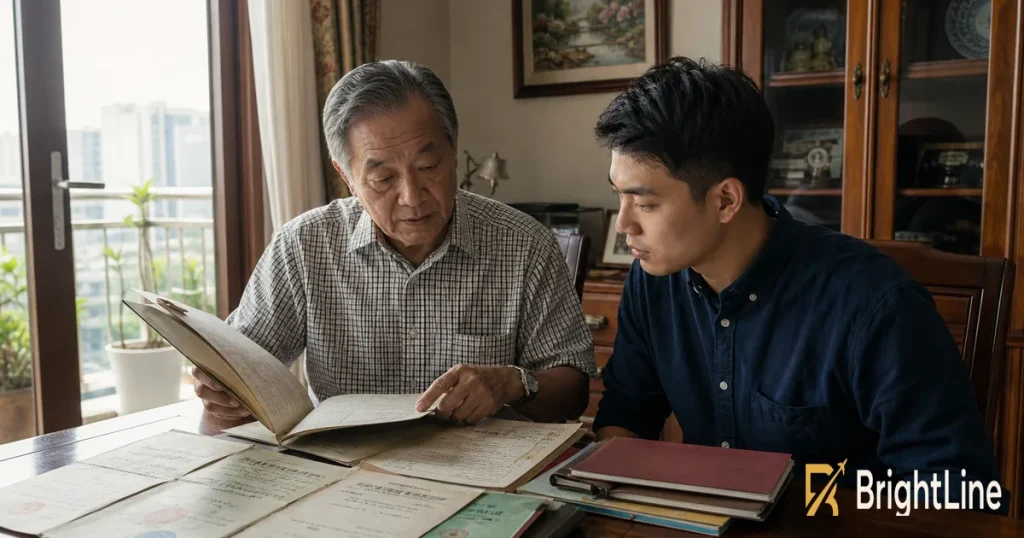
A signed letter means nothing without proof of who the sponsor is to you. Attach a birth certificate or household registration that names the parent, then state the exact dollar amount they commit. Officers cross-check the letter against the I-20 sponsor field, so a mismatch stalls the file.
The Sponsor’s Income Tells the Sustainability Story
Your parent’s salary deposits and tax returns matter more than the closing balance. A sponsor earning steadily for years reads as reliable. A sponsor with one lump sum and no income history reads as a pass-through account, and the officer will treat the funds as borrowed.
Parents and Third-Party Sponsors Are Not the Same File
Parental support assumes a legal obligation that officers accept quickly. An uncle or family friend needs a notarized affidavit and a written explanation of why they are funding you. Skip that and the officer has no reason to believe the money stays available.
Foreign Currency and Foreign Banks Need a Conversion Trail
A statement from a bank outside the US needs a stamped letter showing the balance in dollars at a stated exchange rate. F-1 students must provide documentary evidence of sufficient funds for the full program, and an officer cannot verify a balance they cannot convert. An unconverted foreign balance reads as an unverified one. Get the bank letter translated and stamped before the F-1 visa for flight training interview.
How Flight Schools Package Funds for the I-20
Your international admissions officer reads your funds before any consular officer does. A weak package stalls the I-20 at the school’s own desk, and the embassy never gets the chance to weigh in. The school is protecting its SEVIS certification, and it has seen which files survive.
- Certified cost breakdown. The school issues a figure covering tuition, flight hours, and living expenses for the full program. Officers match this number against your bank records, so a vague estimate invites a question you cannot answer.
- Sponsor affidavit of support. A signed statement committing specific funds to your training, tied to the sponsor’s name and relationship. An unsigned letter of intent carries almost no weight at the window.
- Stamped bank letter. A branch-issued document on bank letterhead, signed and dated, stating the balance and account holder. A printed balance from an app is not the same document.
- Loan or scholarship confirmation. An approval letter naming you, the amount, and the disbursement schedule. Conditional approvals need the conditions spelled out, not summarized.
Read together, these items tell one story: the money exists, it is committed, and it matches the program the school certified. A clean package moves the student visa for pilot training file from acceptance to interview without a second round of document requests. Schools that standardize this package cut weeks of back-and-forth before the interview even happens, so ask yours whether they issue one.
Where Strong Applications Still Get Refused
Two applicants walk in with nearly identical balances. One leaves with a visa. The other gets a refusal slip and never understands why. The difference is rarely the money. It is whether the money matches every other document in the file.
Applicant A has a clean bank statement, a stamped letter, and a sponsor affidavit. The funds are seasoned and sourced. Then the officer compares the I-20 program length against the DS-160 and finds a mismatch. The stated course runs longer than the certified costs cover, or the living expense figure doesn’t reconcile with the school’s breakdown. The balance was never the problem. The story was.
Applicant B has a smaller total but every figure lines up. Program length on the I-20 matches the DS-160. The bank letter covers the certified cost plus living expenses for that exact period. The sponsor’s income supports the commitment across the full course. Nothing contradicts anything else, so the officer has no gap to probe.
Most guides on flight training in USA for international students treat proof of funds as a standalone document. That framing is the trap. The officer reads the bank records against the DS-160 and the I-20 simultaneously, cross-checking every figure. A strong statement inside an inconsistent file reads as manufactured. Applicant B wins every time the documents agree. Applicant A only wins when the numbers reconcile across all three records before the interview.
Building a Funds File That Survives the Interview
A funds file assembled in the order the officer reads it removes the guesswork from the interview. Skip the sequencing and you end up explaining why a document exists instead of what it proves.
Step 1. Pull the exact cost figure printed on the I-20, including tuition, flight hours, and living expenses. A rough estimate leaves a gap the officer spots before you do. The I-20 total is the number every other document has to match.
Step 2. Let the funds sit in the account long enough to show a stable balance. Money that lands close to the interview date reads as borrowed, even when it is not.
Step 3. Collect a source document for every large deposit: a sale deed, a payroll slip, a transfer receipt. An unexplained credit invites the question you least want asked.
Step 4. Request a stamped bank letter on official letterhead, not a printed balance screen. The stamp is what separates a bank’s word from your own.
Step 5. Rehearse one sentence that explains where the money came from. The officer can ask that question directly, and an answer that matches the paperwork closes the gap. An M-1 visa for flight school case gets the same treatment as an F-1 file here.
Ask your school for a clear, certified cost breakdown upfront, since a vague figure is what produces mismatched files in the first place. Finish the sequence and the interview becomes a confirmation, not a defense.
Present Funds the Way the Officer Reads Them
A proof of funds for flight school visa case is won on the trail, not the total. The officer behind the glass is matching a story across documents, and a file that lines up reads as credible before the balance is even considered. That is the shift worth carrying out of this article.
Act on it now and the interview becomes a confirmation. Skip it and the same documents that looked complete at home turn into a list of questions at the window, with a refusal slip and a seat date that will not wait. The cost of a weak trail is a second interview fee and a delayed start.
Start with the I-20 cost figure. Build outward from there: seasoned funds, sourced deposits, a stamped bank letter, then the one-sentence answer about where the money came from. Assemble the file in that order and hand it over already answered.
FAQ
Proof of Funds Questions Flight School Applicants Ask
What documents can I use as proof of funds for my student visa application?
Bank statements, sponsor letters, loan approvals, and scholarship award letters all count as proof of funds for flight school visa files when they show a transaction history rather than a single balance. A stamped bank letter carries more weight than a printout because the officer can verify the issuing branch and the account holder’s name against the sponsor affidavit.
Can I use my father’s bank statement for a student visa?
A father’s bank statement works when it arrives with a signed sponsor letter, proof of the relationship, and a record of his income that explains where the balance came from. The officer is testing whether his support is committed for the full program, so a statement alone without the affidavit reads as an offer rather than a guarantee.
Is a 3 month bank statement enough for a US visa?
Three months of statements can satisfy the officer if the balance has been stable across that window and every large credit has a paper trail. A shorter history with one unexplained deposit raises more doubt than a longer one showing steady, ordinary activity.
What is acceptable proof of funds for a US student visa?
Acceptable evidence shows funds that are real, available, and consistent with the cost figure on the I-20, which is the standard the consular officer applies at the window. Liquid savings and documented sponsor commitments qualify; property valuations and unsigned promises do not.
Why do officers check the paper trail in proof of funds for flight school visa reviews?
Consular officers analyze paper trails to ensure the money is genuine, accessible, and not temporary or borrowed solely for the interview. A documented deposit history demonstrates long-term financial stability and authentic intent to fund the full training program.