
Aviation Parts Supplier SEO: The Queries That Convert
TL;DR · The short answer5 key points
- Parts buyers search to verify, not to browse. They type a part number, an approval term or an airframe model and decide in seconds whether your site can confirm it.
- Part-number queries are the highest-intent traffic a distributor can win. Put the number, condition, approval status and a quote action in the first screen.
- Show traceability in the page itself: say which release paperwork ships with the part, such as an FAA Form 8130-3, instead of hiding it in a PDF.
- Build a lean AOG page and a deep catalog page as two separate paths, because they serve buyers in different states.
- Supersession numbers, repair and overhaul queries, airframe capability and parts marketplaces are low-volume but close to a purchase order.
A procurement lead has a part number on a sticky note, a grounded aircraft, and a browser tab open to your homepage. Your site ranks for “aircraft parts distributor.” It does not rank for the number on that note. That gap is where aviation parts supplier SEO either produces quote requests or produces nothing at all.
The mistake is treating parts search like retail search. Buyers here are verifying, not browsing. They type a part number, an approval status or an airframe model, and decide in seconds whether your site can confirm what they need.
This article maps the query classes that end in an RFQ: part numbers, approval language, AOG availability, and the long-tail queries competitors skip. You’ll get a page-by-page framework for turning those searches into quote requests instead of vanity traffic.
The Query That Starts With a Part Number


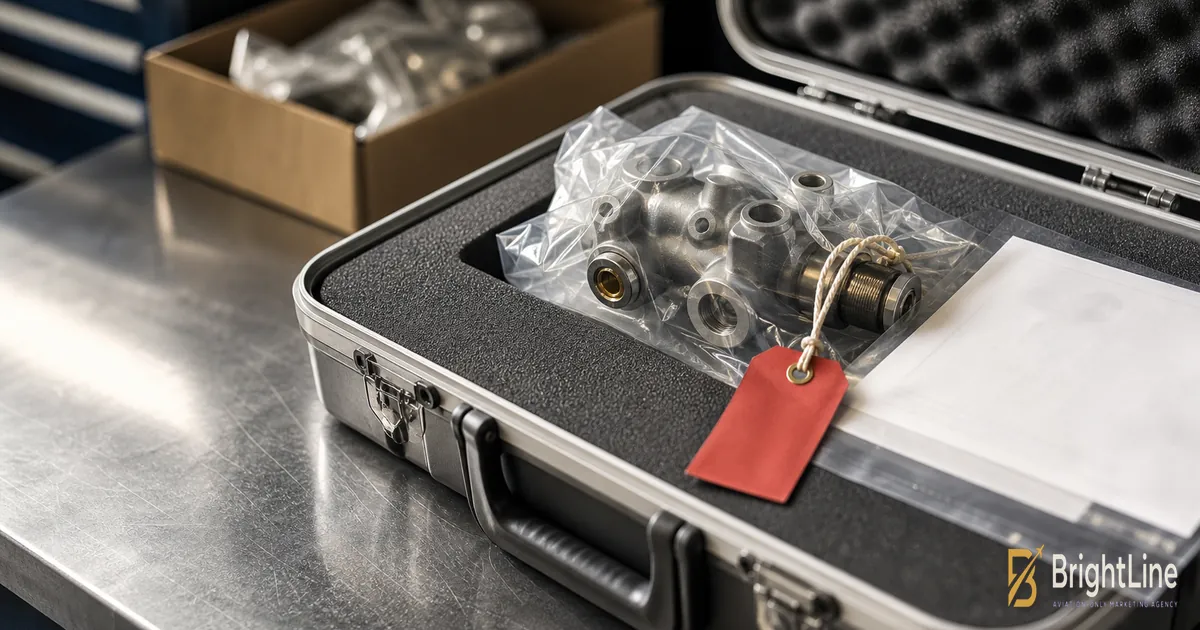
A part-number query is a search where the buyer already knows the exact item and is testing whether your site can confirm stock, condition and traceability. The searcher has a number in hand and one question: can you prove this part is real, available and approved?
Suppliers misread this traffic as low volume and skip it. That is backwards. A part-number query is the highest-intent traffic a distributor can capture, because the buyer has already decided what they need.
A page that answers the query carries the part number in the title tag, the meta description and the H1. Approval status and condition sit in the first screen, not in a spec table three clicks down. A quote or availability action belongs above the fold, next to the number the buyer just typed.
A generic keyword page about “aircraft components” never satisfies a buyer holding a part number. The page either confirms the item or loses the RFQ.
Pull your ten most-quoted part numbers and search each one. If your site does not surface a page that confirms the item, that traffic is going to a competitor who does. Our guide to marketing for aviation parts suppliers covers what buyers check before they send a quote request.
How Aviation SEO Works When the Buyer Is Technical
General SEO optimizes for a person deciding what to buy. Parts SEO optimizes for a person who has already decided and is now checking whether you can prove it.
Engineers and procurement teams don’t search in marketing phrases. They type part numbers, airframe models and approval language. A buyer hunting a fuel control unit for a specific turboprop doesn’t search “reliable aircraft components.” They search the part number and the airframe, then scan results for a supplier who confirms both.
ATA chapter structure is the clearest example. The ATA 100 chapter system, now carried forward in ATA iSpec 2200, organizes aircraft by system, and technical buyers use it as a mental index. A site that mirrors that logic in its navigation speaks the buyer’s language.
Taxonomy is the real ranking asset. Every part family, every airframe variant and every approval status needs its own crawlable page. A supplier who collapses forty part families into one catalog page has handed the long tail to a competitor who built forty.
Repair stations already see this: in SEO for MRO companies, pages that list each airframe by model and variant outperform a single “our capabilities” page. The buyer searching a specific variant lands on a page that names it back to them.
A homepage ranking for a broad term is worth less than a spec page ranking for a query typed with a part number in hand. The broad term brings browsers. The spec page brings a purchase order.
Approval Status Is the Query Behind the Query

A buyer who types “approved distributor” into a search bar is not asking whether you sell the part. They are asking whether your paperwork survives an audit. Each layer below answers a different fear, and each needs its own page element.
What “Approved Distributor” Actually Means to a Buyer
The searcher wants a chain of custody they can hand to a quality inspector. Ship a part with release paperwork that traces back to the manufacturer and you answer the query. Ship one with a photocopied tag and you lose the account.
Where AC 00-56B Fits the Query
The FAA’s AC 00-56B describes a voluntary program for accrediting civil aircraft parts distributors through industry oversight. Quality teams look for that accreditation when they vet a new supplier. A page that states your status plainly is also the page that gets cited when buyers ask AI tools the same question.
Traceability Belongs in the HTML, Not a PDF
A traceability statement locked inside a downloadable certificate is invisible to crawlers and to a buyer scanning on a phone. State on the part page which paperwork ships with the item, such as an FAA Form 8130-3, and how the part traces back to its source. That separates you from competitors who hide proof behind a click.
Approval Context Changes the Quote Form
A buyer sourcing an approved part needs a field for the approval requirement before they submit. Add it. A form that only asks for quantity tells that buyer you have never handled an audited purchase.
AOG Queries Reward Response Speed, Not Word Count
Two pages compete for the same buyer and only one is built to win. The catalog page serves a planner comparing options across a week. The AOG page serves a mechanic whose aircraft is on the ground right now.


A catalog page earns its keep through depth. Part families, airframe variants and supersession notes belong there, because the buyer is still deciding. That same density works against you when the visitor has no time to read it.
An AOG page wins on the opposite logic. Availability, a phone number and a stated response promise above the fold beat any spec sheet. A buyer with a grounded aircraft is calling whoever answers first, and a page that buries the contact path loses that call.
Treat these as two conversion tracks, not one. BrightLine Digital’s aviation web design work separates the AOG path from the catalog path for exactly this reason: a lean AOG page ranks for action queries while a rich spec page ranks for research queries.
When the search carries a part number and a grounded aircraft, the lean AOG page with a visible phone line and a quote form that separates AOG from scheduled work wins. When the buyer is still mapping options, the deep catalog page does the work. Build both, and route each query to the page that answers it.
The Queries Most Parts Suppliers Never Target
The biggest gap in parts search is not technical. It is the queries suppliers assume are too small to chase. A supersession search looks like noise until you count how often it ends in a purchase order.
- Alternate and supersession numbers. A buyer holding an obsolete number needs the current replacement. A page that maps old to new captures the search and the order.
- Repair and overhaul queries. Operators searching for a shop that can service a specific component are past the research stage. They want turnaround time and capability, not a brochure.
- Airframe-specific capability. A query tying your shop to a named airframe model reaches a buyer who has already matched the aircraft to the work. That page answers the fit question before the RFQ.
- Parts marketplaces. Many buyers start their part-number search on marketplaces such as ILS, PartsBase or StockMarket.aero. Keep your company name, address and contact details identical there and on your site, so the buyer who finds you on a marketplace recognizes you on Google.
Each query is narrow, low-volume and close to a transaction. Volume metrics punish these queries while revenue metrics reward them. A supplier who owns the long tail owns the buyer before the RFQ is sent. Pick one supersession family this week and build the page that answers it.
What Most Aviation Parts SEO Pitches Get Wrong
Many agency pitches to parts suppliers lead with a monthly fee and a list of activities. A monthly fee tells you nothing about whether the agency can name the queries your buyers actually type.
Demand a written scope tied to query classes instead: part-number queries, approval-status queries, AOG queries and supersession queries. Each class needs its own page structure, conversion path and reporting line.
A line-item scope hides the gap. “On-page optimization, content and link building” describes activity, not coverage. Ask which part families and approval terms the agency will build pages for in the first quarter. Three questions expose the difference between a real aviation SEO plan and a generic retainer.
First: which part-number, approval and AOG queries will you target, and show the list. Second: how will each page be structured to answer them. Third: how will qualified leads be reported, and what counts as qualified. An agency that can’t answer all three is selling hours. One that can is selling coverage, and coverage is what choosing an aviation supplier marketing agency actually comes down to.
The uncomfortable part: a scope that names query classes will reveal gaps in your own site faster than any audit report. You want the agency’s first deliverable to be a list of pages you don’t have.
Build the Page Before You Buy the Retainer
A written scope means nothing if the pages it describes do not exist. Run this sequence first and you will know exactly what an agency should be building, and you can judge which aviation SEO services actually earn their retainer.
Step 1. Pull the part numbers and approval terms your buyers actually type. Export search terms from Google Search Console, ask the sales desk which part numbers came up this month, and read the RFQ inbox. Skip this and you will brief an agency on marketing phrases instead of the strings your buyers use.
Step 2. Map every query to a page that can answer it. One part family, one airframe variant, one approval status, one page. A query with no destination page is a query you are handing to a competitor.
Step 3. Write the page with the part number, approval status and quote action above the fold. Condition, traceability and lead time follow. A page that buries the part number loses the buyer holding a sticky note.
Step 4. Connect the quote form to a CRM that records the query source. Without it, every lead looks identical and you cannot tell a part-number search from a browsing session.
Step 5. Review that report monthly against the written scope. If the scope promised approval-query pages and the report shows traffic to a generic landing page, the retainer is buying sessions, not orders. Catch it in month one, not month nine.
Finish the sequence and you hold a documented map of the queries your buyers type, the pages that answer them and the leads each page produced. That map is the brief.
Own the Query Before the RFQ Lands
The buyer holding a part number is not waiting for your sales team to call. That buyer is deciding, right now, whether your site proves you can supply the item. Aviation parts supplier SEO is the work of answering that decision before the RFQ is ever drafted.
Skip it and the RFQ goes to the supplier whose page confirmed stock, condition and approval first. A grounded aircraft does not wait for a follow-up email. Pull your ten highest-value part-number and approval queries, check each one against a live page today, and treat every missing page as your next build.
BrightLine Digital builds aviation SEO around the part-number, approval and AOG queries buyers actually search. Book a call to map the query classes your site is missing.
FAQ
Aviation Parts Supplier SEO Questions Buyers Ask
Which queries convert best for a parts supplier?
Part-number queries convert best because the searcher already knows the exact item and is only checking whether you can supply it. A page that shows the number, condition, approval status and a quote action in the first screen captures that buyer before a competitor’s catalog page does.
How does approval status affect ranking and trust?
Approval language changes both what you rank for and whether a procurement team will contact you at all. A buyer vetting a distributor looks for a clear accreditation statement and traceable release paperwork, and treats their absence as a reason to move on.
Should an AOG page be separate from a catalog page?
Keep them separate, because the two pages serve buyers in completely different states of mind. An AOG page needs a phone number and an availability signal above the fold, while a catalog page needs depth and cross-references that would bury the urgent buyer.
How do you measure whether aviation parts supplier SEO is working?
Measure qualified quote requests and the query that produced each one, not session counts or average position. A drop in traffic paired with a rise in part-number quote submissions is a win, and a reporting setup that cannot show that split is measuring the wrong thing.
Turn More RFQs Into Signed Work
Tell us your capabilities and the buyers you want in two minutes. We'll show you how operators find you today and what is keeping quotes from coming in. A real person replies within 24 hours.
Get Your RFQ Review →