Part 141 vs Part 61 for International Students: Which Visa Path Costs Less?
TL;DR · The short answer4 key points
- Evaluating Part 141 vs Part 61 for international students begins with visa eligibility and SEVP certification rather than syllabus structure.
- Part 141 pilot schools hold federal approvals required to issue I-20 documents for F-1 or M-1 student visas.
- Independent Part 61 flight instructors lack SEVP authorization and usually require students to hold existing legal residency status.
- Lower flight-hour minimums and structured stage checks make Part 141 programs cheaper once visa delay costs are calculated.
The acceptance letter is framed and the deposit has cleared. Then admissions calls back: your visa category does not fit the program, and the school cannot legally enroll you. The Part 141 vs Part 61 for international students question lands hardest at that exact moment.
Guides rank the two paths on syllabus structure, instructor consistency, and checkride pass rates. None of that matters if the school lacks SEVP certification or your M-1 status rules out the collegiate program you applied to. Training quality is the wrong first filter for a foreign applicant.
This article gives you a decision framework built in the right order: visa category, SEVP status, TSA clearance, then total cost. You’ll learn which Part 141 vs Part 61 path your visa actually permits, and what the cheaper-looking option really costs once delays are priced in.
The Criteria That Actually Decide Your Path
Curriculum quality ranks last on the list of things that decide a foreign student’s training path. It gets ranked first anyway, because that is the only variable a domestic applicant ever has to weigh. Run these checks in order. The first one that fails ends the comparison.
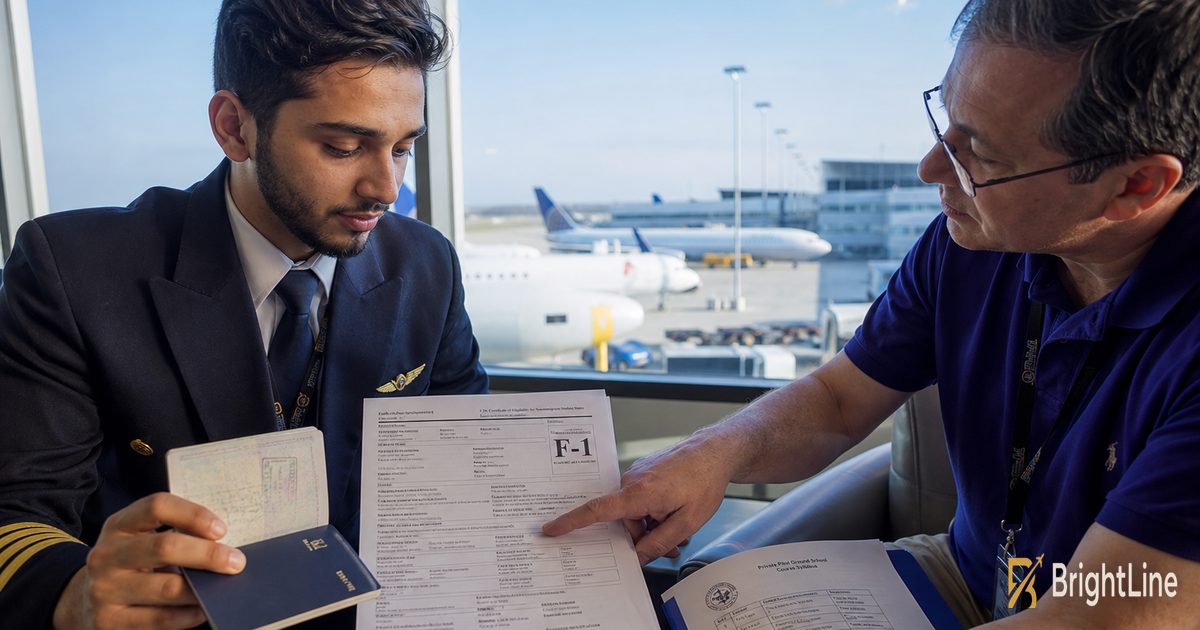
Step 1. Identify your visa category before you look at a single school. An F-1 academic visa and an M-1 vocational visa cover different programs, and a school cannot enroll you outside the category you hold. Get this wrong and every later comparison is wasted.
Step 2. Confirm the school holds SEVP certification. Only certified institutions can issue the paperwork a student visa requires. A school without it can teach you nothing legally, no matter how good its aircraft fleet looks.
Step 3. Verify the specific program is approved, not just the institution. Use the SEVP-certified school search tool to confirm what the school is cleared to offer foreign students.
Step 4. Confirm how the school handles its side of your TSA Flight Training Security Program clearance. You file the request yourself and the school has to confirm your training, so it should explain the sequence without guessing.
Step 5. Compare flight-hour minimums and total cost last. Those figures only matter once the first four gates are open. A cheaper program you cannot legally enter is not cheaper.
Finish all five and you have a shortlist that survives a visa interview. Skip one and you risk a deposit wired to a school that cannot enroll you.
Why Part 141 Owns the International Lane
The Part 141 vs Part 61 comparison looks like a training debate until you reach the enrollment desk. Then it becomes a paperwork question, and only one side is built to answer.

Part 141 schools hold FAA approval for their curriculum, the structural reason they can also hold SEVP certification and issue an I-20. FAA Part 141 pilot school certification means the syllabus, stage checks, and hour requirements are documented and auditable before a student arrives.
A visa officer reads that documentation and sees a defined program with a start, a sequence, and an end. That is what makes the I-20 defensible. It is also why Part 141 enrollment requirements line up so cleanly with the SEVP file a school submits on a foreign student’s behalf.
Part 61 training runs through independent instructors and small flight operations, and those businesses rarely carry SEVP certification. The model is built for flexibility: pay as you go, schedule around a job, switch instructors when life changes. None of that survives contact with a visa gate that requires a certified institution first.
Even a certified school can lose your file to paperwork, so ask to see its SEVP and TSA documentation in writing before you commit. Choose Part 141 when a student visa is the entry requirement. Part 61 only wins for someone already legally present.
F-1 or M-1: The Choice That Locks Your School
The visa category on your I-20 decides which schools can legally enroll you. It also decides how long you can stay, how your program is structured, and whether a Part 141 program will accept your file.
F-1 Pairs With Collegiate Part 141 Programs
An F-1 academic student visa fits degree-granting and collegiate flight programs, usually a college or university running Part 141 training inside a degree. A stand-alone flight school running Part 141 training without that academic structure usually issues the M-1 instead.
M-1 Ties You to a Fixed Program Length
An M-1 vocational visa covers flight training as a non-academic program, with tighter limits. Like F-1 students, you must train full time, and your stay is tied to the approved length of your course, so the program has to finish within that fixed window.
Your Current Visa Can Rule Out a School First
A student holding a B-2 visitor visa cannot simply enroll in flight training in the USA and start flying. The SEVP governing regulations set the enrollment rules a school must follow. The visa category is the first decision, not the training path. A school that looks ideal on paper can be legally off-limits the moment your status is checked.
Why the Category Outranks Training Quality
Applicants who compare Part 141 versus Part 61 syllabi before confirming their visa category are solving the wrong problem. A mismatch here ends the enrollment, not the comparison. Confirm your category against the school’s approved programs first, then let training quality decide between the options that remain.
Verify SEVP and TSA Before You Wire a Deposit
A school that cannot answer five specific questions in writing is a school you should not pay. The whole decision falls apart if your deposit lands with a school that cannot legally enroll you.
- Search the official database. Ask admissions for the school’s SEVP certification status, then verify it yourself in the government school search tool.
- Program approval, not just the institution. A certified school can still hold approval for some courses and not others, so ask which specific program carries it.
- I-20 issuance in writing. Get confirmation the school will issue your I-20, and ask who signs it and when.
- TSA clearance roles. Under the TSA final rule, you apply for Flight Training Security Program clearance yourself and the school confirms your training. Ask who on staff handles the school’s side and how quickly they respond.
- Refund policy if clearance stalls. A deposit with no written exit clause is a deposit you may never recover.
The questions look bureaucratic until you notice what they share. Each one tests whether the school has done this before with a foreign student, and a hesitant answer tells you more than a polished brochure. Run the TSA background check process question past admissions first. If the reply is vague, stop and look elsewhere before you pay anything.
What Each Path Really Costs a Foreign Student
The cost question gets answered wrong when tuition is the only column. Price the visa constraint in, and the cheap-looking path stops being cheap. The gap between the two paths is not the hourly rate. It is what the visa gate lets you buy.
Part 141 schools run approved curricula under the federal Part 141 pilot school rules, which is why their programs line up with SEVP certification and I-20 issuance. Part 61 training happens through independent instructors and small operators, and that structure rarely carries the same enrollment machinery.
Part 141 wins for nearly every foreign applicant, and the margin is not the tuition line. It is the enrollment machinery that keeps a deposit from becoming a stranded payment. Compare against real flight school costs before assuming the lower sticker price is the better deal.
The Hidden Costs That Hit Foreign Students
Tuition is only one line item in an international student’s real budget. The bills that decide whether flight training is affordable never appear on the school’s price sheet, and they land hardest on applicants who compared hourly rates first.

- TSA processing and the wait. Security clearance runs on its own clock, and every week of delay is a week of housing, food, and lost earning time in the US.
- I-20 and SEVP delays. A paperwork slip can push your start into a busy season, when aircraft and instructor slots are harder to book, and every extra week adds living costs.
- Deposit risk. Schools that cannot clear a student still hold deposits under refund terms written for domestic applicants. Read the refund clause before wiring anything.
- Currency and transfer fees. International wires and conversion spreads quietly add a percentage to every payment. Families paying in installments absorb that spread multiple times.
- Restarting at a second school. A visa mismatch forces a transfer, and transfer means new deposits, new paperwork, and flight hours that may not carry over. Part 61 certification rules decide which of those logged hours still count toward your certificate.
These costs punish the path that looked cheaper on paper. A student comparing flight school loans for international students should price the delay risk, not just the hourly rate.
Which Path Fits Your Visa and Your Budget
The recommendation starts with a document rather than a syllabus. Work through these steps in order, because most applicants reverse them and pay for it.
Step 1. Confirm your visa category first. An F-1 academic visa pairs with collegiate Part 141 programs, while an M-1 vocational visa carries enrollment limits that can rule a school out entirely. Skip this and you’ll compare tuition for a program you cannot legally enter.
Step 2. Check whether you need SEVP certification. Foreign students requiring an I-20 belong on the Part 141 side, because independent instructors and small Part 61 operations rarely hold that certification. Choosing Part 61 first means discovering the gate after you’ve committed.
Step 3. Match the school’s flight school admission requirements to your documentation. A Part 141 syllabus gives a visa officer a structured record to evaluate, which matters when your file is scrutinized. Part 61 flexibility helps nobody when the constraint is immigration status.
Step 4. Reserve Part 61 for applicants already legally present. Green card holders, work-authorized residents, and students on non-student visas that permit training can use it freely. Everyone else should treat Part 141 as the default, and the FAA regulations index lists both rule sets if you want to read them in full.
Getting the sequence right turns a confusing comparison into a short checklist. Your visa path decides which training option costs less.
Confirm Your Visa Category Before You Compare Tuition
Seen in the right order, the question gets simple. Visa category and SEVP status are the gate. Tuition is the scenery behind it. Applicants who flip that order spend months comparing hourly rates for a program they were never eligible to enter.
Act on the sequence now and your deposit lands on a school that can actually enroll you. Skip it and you discover the mismatch after the money clears.
A wired deposit is the hardest money in aviation to recover. Schools move slowly on refunds when a visa clearance stalls, and a program that cannot issue your I-20 has nothing to refund against. Run the check before the transfer.
Open the official SEVP-certified school search and find the institution by name. Then ask admissions, in writing, how it handles its side of your TSA Flight Training Security Program clearance and what happens to your deposit if it stalls. Two answers, both in writing, before any money moves.
FAQ
Part 141 vs Part 61 Questions International Students Ask
Which is better, Part 141 or 61?
Neither is better in the abstract, but for a foreign applicant the comparison usually resolves toward Part 141, because only that side is built to issue an I-20. A Part 61 instructor can teach you to fly beautifully and still have no legal mechanism to enroll you.
Do airlines prefer Part 61 or 141?
Airlines hire based on certificates, hours, and checkride history, not on which regulation your school operated under. The distinction that actually follows you is a structured syllabus with stage checks, which makes your training record easier to defend in an interview.
Is Part 61 or 141 cheaper?
Hourly rates land close enough that the cheaper option is decided by what surrounds the training, not the rate itself. A Part 61 path that strands a deposit or leaves you chasing your own security clearance costs more than the syllabus ever saves.
What is the hardest pilot certificate to get?
The airline transport pilot (ATP) certificate is the hardest to earn, because it normally requires 1,500 flight hours and the toughest knowledge and practical tests. The private pilot certificate has the steepest learning curve, because it asks you to build every foundational skill at once, from radio work to emergency handling.