Flight Schools in Texas for International Students: Visa Rules That Decide Your Start Date
TL;DR · The short answer4 key points
- Selecting flight schools in Texas for international students requires verifying SEVP certification and visa issuance scope upfront.
- Standalone vocational flight academies issue M-1 visas while university-linked programs offer academic F-1 visa pathways.
- TSA Flight Training Security Program clearance runs on a separate schedule and must clear before cockpit training begins.
- Calculate full program costs by adding housing, living expenses, SEVIS fees, and security checks to advertised flight hour quotes.
A deposit wired to a Texas flight school can sit untouched while your intake date passes, and the visa category you picked is usually why. Choosing among flight schools in Texas for international students starts with a question the brochures never answer: which student visa can this school actually issue you?
Applicants compare fleet size, hourly rates, and Houston or Dallas weather. Then they discover their school is certified for one visa type and they applied under the other. The class date was never the gate.
This article maps how F-1, M-1, and TSA timing decide when you actually sit in a cockpit. You’ll learn which route fits your training goal and how to sequence the paperwork so a start date holds.
What a Texas Flight School Actually Is
Flight schools in Texas for international students are FAA-certificated training providers that also hold SEVP certification, the federal approval that lets them issue the I-20 or M-1 paperwork your student visa depends on. One credential teaches flying. The other lets you legally enroll. Applicants who want to become a pilot in the USA tend to research the first and assume the second.
That assumption is where enrollment quietly dies. A school can run a spotless fleet of Cessnas out of Denton or San Antonio and still be unable to issue you a single document, because SEVP certification is a separate federal gate from FAA certification.
SEVP requires that flight schools hold Federal Aviation Administration Part 141 or Part 142 certification, per the ICE SEVP school guidance. A Part 61 operation can train American students all day and never qualify to enroll you.
Fleet size tells you nothing about whether a school can enroll you. The certification type does. Two Texas schools with identical websites and hourly rates can sit on opposite sides of that line, and the brochure will not mention it.
Check the school’s SEVP status and approved certification type before you request anything else. That lookup tells you whether the program is a real option or a page of photography, and it costs you one search instead of one semester.
F-1 or M-1: The Choice That Sets Your Date
Two visa routes exist for flight training, and they produce different calendars even when the school is identical. The comparison that matters isn’t prestige or cost. It’s which route your school is certified to issue.
F-1 is the academic route. It fits degree-linked and collegiate flight programs, where flight hours sit inside a broader academic course load. The catch: a standalone flight school with no academic program can’t issue it, no matter how good its fleet looks.
M-1 is the vocational route, built for standalone flight training at a dedicated school. It’s the more direct path for someone whose only goal is a commercial certificate. The trade-off: M-1 carries tighter rules on program changes and extensions than F-1 does.
The school’s SEVP certification decides which visa you can even apply for. Schools are approved to enroll only F students, only M students, or both, depending on their certification scope. That’s why the visa question and the school question collapse into one.
This is where applicants lose time. Two Texas schools with near-identical websites can sit on opposite sides of that certification line. One issues your I-20 in weeks. The other can’t issue it at all, and you find out after the deposit clears.
Start by mapping your SEVP certification requirements against each school’s approved visa types. If you want a standalone commercial path, M-1 usually wins. If you want a degree attached to the hours, F-1 does.
The TSA Step That Sits Before Day One
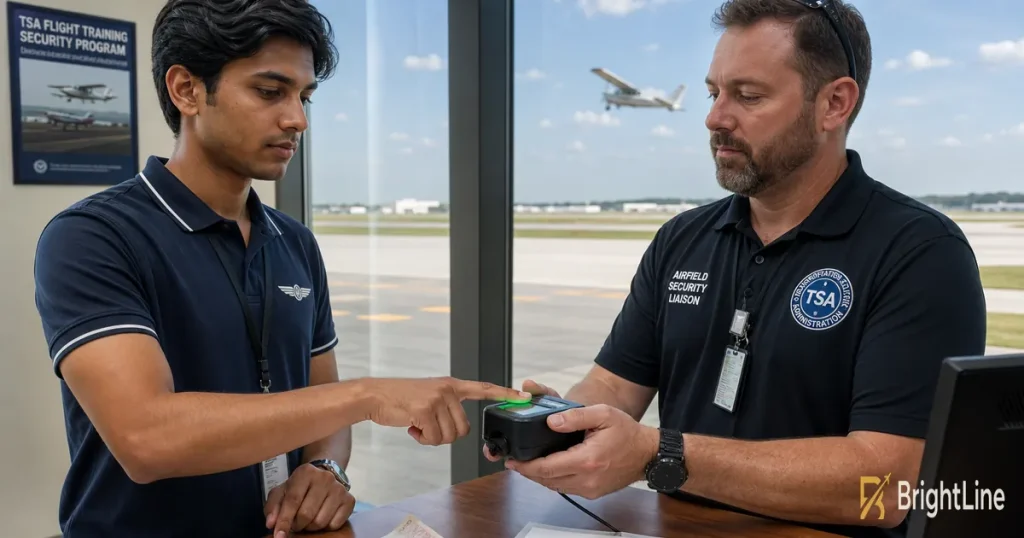
Flight training clearance runs on a clock the visa interview never touches; treating it as an afterthought costs applicants a full intake cycle. All non-citizen flight trainees are subject to a Security Threat Assessment before training, and that assessment is not the same process as your student visa.
Step 1. Confirm your school is an approved provider under the Flight Training Security Program before you pay anything. A school outside the program cannot submit your candidate application, so the deposit buys you nothing.
Step 2. Register as a candidate with TSA and pay the processing fee. This creates your record and starts the clock; delaying it delays everything downstream.
Step 3. Submit your fingerprints and biographical details through the school or an approved collection site. TSA runs the Security Threat Assessment against multiple databases, and incomplete submissions stall the file.
Step 4. Run this in parallel with your visa application, not after it. Applicants who sequence visa first and TSA second lose weeks they never get back.
Step 5. Wait for the clearance determination before booking any aircraft time. Training before clearance is training that should not have happened.
Clearance unlocks the cockpit. Once the assessment completes, your Texas school can schedule your first lesson, and your visa interview date stops being the only gate on your calendar. Check the flight school admission requirements early so the TSA file and the visa file move together.
Why the School’s Start Date Is Not Your Start Date
A Texas school’s published class date is a marketing date. Your real start date is the last of several gates to open, and the school controls only some of them.
The Flight Training Security Program sits among those gates, and its timeline runs independent of enrollment. AOPA’s program overview lays out how that clearance interacts with the rest of the flight school process.
- SEVP certification status. A school without it cannot issue your paperwork at all, no matter what its website promises about international enrollment.
- I-20 or M-1 issuance. The school generates this document after accepting you, and its accuracy determines whether your visa interview goes smoothly.
- The visa interview slot. Consulate appointment availability in your home country can stretch well past the school’s advertised start, and you cannot book around it.
- TSA clearance. The Security Threat Assessment must finish before you touch an aircraft, and it runs on a clock the visa interview never touches.
Read that list in order and you see the trap: each gate waits for the one before it, so a single delay cascades through every later step. Run them in parallel and you compress months into weeks. Run them in series and you miss an intake entirely. BrightLine Digital’s international flight school admissions packaging exists for exactly this problem, sequencing these gates so an applicant’s calendar stops slipping.
What Flight Schools in Texas for International Students Cost
Flight schools in Texas for international students quote a number that covers roughly half the bill. The rest arrives as separate charges, and the gap between the quote and the real total is where budgets break.
Costs also scale with the certificate you chase. A private pilot license starts around $10,000, while commercial training can reach $80,000 or more. Those are not comparable line items, so compare programs at the same certificate level.
The commercial pilot license cost should anchor your planning, because it bundles the most flight hours and the longest housing stretch. Budget the visa, TSA, and living buckets on top of whatever the school quotes you. A quote that lists only flight hours is not a program cost. Ask each school which buckets its number excludes before you compare two offers side by side.
Ask every school for a written cost breakdown before you wire a deposit. Schools that hesitate to itemize are telling you something. A transparent invoice protects your budget and your visa interview, where officers expect proof you can cover the full amount.
The Misconception That Costs You a Semester
Wiring a deposit before the visa clears feels like commitment. It is a bet that the calendar will wait for you, and the calendar never does. The visa category comes first, and every other choice flows from it.
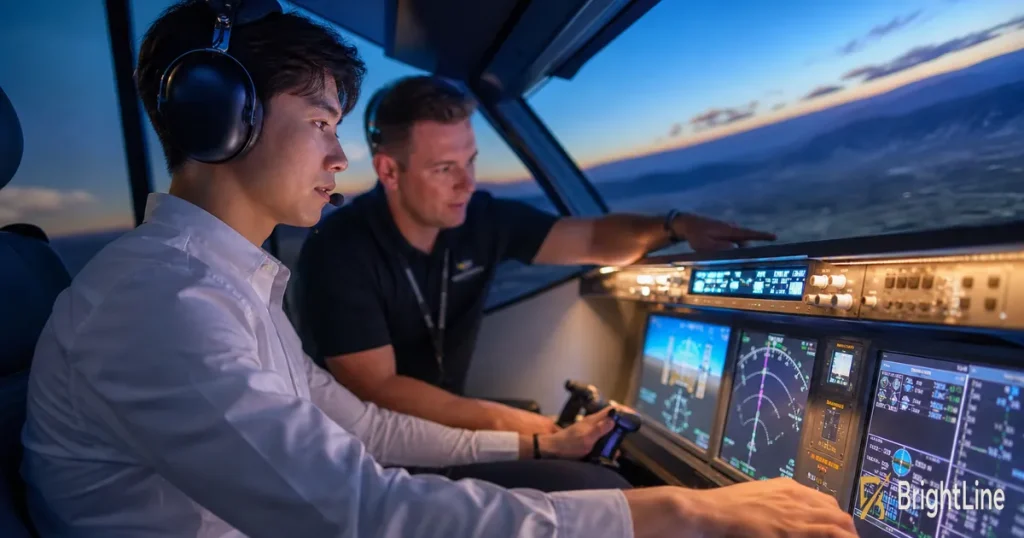
A deposit sent to a Texas school before visa approval sits in the school’s account while your interview slot drifts. The school holds the money and the seat, but neither moves you closer to a cockpit. Meanwhile the intake you were targeting closes and reopens on a schedule you no longer control.
Discovery flights carry a sharper trap. A non-citizen trainee cannot legally touch an aircraft before the Security Threat Assessment clears, and a discovery flight taken before that clearance is training that should not have happened. The FAA letter for foreign pilots spells out the verification steps between you and the left seat.
These mistakes share one root: treating paperwork as cleanup instead of sequence. The deposit is not the decision. The visa category is. A school that markets hard on class dates will take your money before anyone checks whether your route matches its certification. Ask a different question before you pay. Get that answer wrong and the semester you lose is the one you already paid for.
How to Compare Texas Schools on Visa Readiness
Four checks separate a school that can enroll you from one that photographs well. Skip them and you discover the gap after the deposit clears.
Step 1. Pull the school’s SEVP certification record and confirm which visa types it covers. A school approved only for academic students cannot issue the vocational paperwork a standalone flight program requires. SEVP policy guidance summaries explain how those approval categories are scoped.
Step 2. Ask for a named international student advisor, not a general admissions inbox. A school without one routes your I-20 questions to whoever answers the phone. That is where start dates quietly slip.
Step 3. Ask how the school sequences TSA clearance against visa issuance. The strong answer describes running both tracks at once. A school that waits for the visa before mentioning the security assessment has never guided an international student through the calendar.
Step 4. Request the full cost sheet and check whether TSA processing, SEVIS fees, and housing appear on it. A quote listing only flight hours is a partial number, and comparing two partial numbers tells you nothing.
BrightLine Digital builds admissions packaging for international student pilots around exactly these gates, which is why its aviation-only focus matters here. A generalist agency learns your enrollment calendar from scratch. Completing all four checks turns a brochure into a defensible answer for your deposit conversation.
Pick the Visa First, Then the School
The category stamped in your passport decides when you sit in a cockpit, and the school you choose is downstream of that stamp. Flight schools in Texas for international students can look identical on a website and still hand you different calendars.
Reverse the order and the cost is real. You wire a deposit, the school’s SEVP scope turns out to cover only one visa type, and your intake slides to the next cohort while your money sits idle.
Confirm the school’s SEVP certification and the visa types it can issue before you pay anything or book a flight. That single check takes minutes to complete. It protects a semester.
FAQ
International Student Pilot Questions, Answered
Can an international student become a pilot in the USA?
Yes, and the route runs through a school that holds SEVP certification, which is what makes flight schools in Texas for international students able to enroll you legally. The catch most people miss is that the school’s certification scope, not its fleet or its reputation, decides which visa type it can issue you.
How much does it cost to attend flight school in Texas?
A private pilot path starts around $10,000, while commercial training can reach $80,000 or more, and the gap between those figures reflects hours flown rather than school quality. The quote a Texas school advertises covers flight instruction only, so visa fees, TSA processing, housing, and living costs sit on top of it.
How much does pilot training cost for international students in the USA?
International students pay the same flight hour rates as domestic students, then absorb additional visa, SEVIS, and security clearance costs that domestic trainees never see. Budgeting for housing and living expenses across the full training period matters more than the headline tuition figure, since those costs run for every month you stay.
Can I get an F-1 visa for flight training?
You can get an F-1 for flight training only if the school you enroll in is SEVP-certified to issue F-1 paperwork, which typically means a collegiate or degree-linked program. A standalone flight school certified only for M-1 students cannot issue you an F-1 no matter how strong your application is.