Flight School in USA for South Korean Students: 3 Steps to Pick a School That Fits
TL;DR · The short answer5 key points
- Selecting a flight school in USA for South Korean students requires filtering by legal visa authority, true total cost, and carrier hiring fit.
- Verify SEVP certification to ensure Form I-20 visa sponsorship and confirmed staff support for TSA Flight Training Security Program clearance.
- Price the complete path by adding checkrides, ground materials, visa fees, and regional living expenses to advertised flight hour rates.
- Validate graduate placement records with Korean airlines and multi-engine time structures before wiring any enrollment deposit.
- Compare Florida, Texas, and Arizona training locations based on weather continuity, airspace exposure, and living costs.
The deposit is the easy part. Wiring money takes one afternoon, but the decision that precedes it determines whether a South Korean student spends the next year flying or waiting. Choosing a flight school in USA for South Korean students is a filtering problem, not a browsing problem.
Search results hand you a list of schools with glossy fleets and smiling cadets. None tell you whether the school can legally enroll you, what the full path costs, or whether its graduates get hired by Korean carriers.
This article gives you three steps to run before any deposit leaves your account. You’ll filter every US flight school by visa fit, true cost, and Korean airline pathway. Schools that fail step one never deserve your application fee.
What South Korean Students Need Before Comparing Schools
Comparing flight schools before you’ve settled four personal variables wastes the comparison. The schools look different once your budget, English level, airline target, and passport window are fixed, because half drop out on fit alone.
- English proficiency baseline. You need a score high enough for the school’s admissions threshold and the visa interview, so test before you shop.
- Budget that includes living costs. Tuition quotes ignore rent, food, transport, and health coverage, and those costs run for the entire training window.
- A named airline goal. Korean carrier cadet pathway and US regional hour-building demand different training profiles, so pick one before you compare programs.
- Passport valid across the training window. A passport expiring mid-program forces a renewal abroad and can interrupt your status.
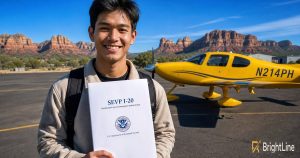
- Written confirmation of SEVP certification. Only schools certified by SEVP can issue the Form I-20 you need to become a pilot in the USA.
- A straight answer on TSA clearance. You apply for Flight Training Security Program clearance yourself, and the school confirms your training. Ask who on staff handles the school’s side, and treat hesitation as a warning.
The list is a filter, not a decoration. A school that stumbles on visa and TSA questions during the first call has already told you how the enrollment will go. Sort your four variables into writing before you open a single school website. Then call the schools that survive.
Step 1: Confirm the School Can Legally Enroll You
Legal enrollment is a sequence, and skipping the first link costs a semester. A flight school in USA for South Korean students can look perfect on a brochure and still be unable to issue the paperwork that gets you into the country. Run these four checks before you discuss tuition.
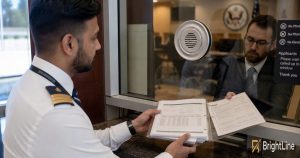
Check 1. Verify the school holds SEVP certification and can issue a Form I-20 for F-1 or M-1 status. Only schools certified by the Student and Exchange Visitor Program can enroll F or M nonimmigrant students, per SEVP school certification requirements. A school without it cannot sponsor your visa.
Check 2. Confirm how the school supports your TSA Flight Training Security Program clearance. All non-citizen flight trainees are subject to a Security Threat Assessment, a TSA background check run across relevant databases. You submit the request, but the school has to register as a provider and confirm your training, so a school that cannot explain its side is telling you how it handles problems.
Check 3. Match the visa category to your program length and your plan to instruct afterward. An M-1 covers vocational training, but its practical training after the course is capped at one month for every four months of study, and six months at most, which limits the instructor work many Korean students rely on to build hours. Get the category wrong and your hour-building plan collapses.
Check 4. Check Part 141 status if you want a structured, FAA-approved curriculum. The FAA Part 141 certification process sets stricter syllabus and stage-check standards than Part 61. Skipping this check leaves you guessing at your training quality.
Finish all four and you have a school that can legally take you, support your TSA background check process, and keep your instructor pathway open. That is the floor, not the finish line.
Step 2: Price the Whole Path, Not the Headline Tuition
A school that quotes flight hours alone is quoting the cheapest slice of an expensive pie. The full stack includes ground school, checkride fees, visa and SEVIS costs, TSA processing, living expenses, and the instructor rating if you plan to build hours by teaching. Compare totals, not brochures.
Flight hours and checkride fees sit in separate columns
Hourly rates cover aircraft and instructor time, but examiner fees for each checkride are billed separately. A commercial candidate sitting three checkrides pays three examiner fees the brochure never mentions. Ask for the checkride line item in writing.
Ground school and materials are not bundled by default
Some schools fold ground school into tuition; others charge per course or sell a self-study package. A Part 141 program usually bundles it, while Part 61 training often doesn’t. Confirm which model applies before comparing two schools on price.
Visa, SEVIS, and TSA costs land before you ever fly
The I-901 SEVIS fee, visa interview fee, and TSA security threat assessment processing all hit your budget in the first month. These are fixed costs no school discounts. Budget them separately from flight training.
Living costs and the instructor rating reshape the total
Rent and daily costs vary a lot between flight training cities, so price twelve months of living in each location you are considering. Add the CFI, CFII, and MEI ratings if you intend to teach, and the commercial pilot license cost climbs well past the flight-hour quote. A private license starts around $10,000, while commercial training can reach $80,000 or more, according to this breakdown of how much flight school costs.
Ask for a line-item estimate, not a brochure
Request every school’s written estimate broken into the same categories, then compare totals side by side. Schools used to enrolling Korean students tend to produce these breakdowns. A school that can’t itemize is hiding a number.
Step 3: Match the School to Korean Airline Hiring
Picking a flight school in USA for South Korean students is a career decision disguised as an enrollment decision. Training hours are the same on paper. What changes is whether the school has a real bridge to a Korean carrier.
Check 1. Ask which Korean airlines, cadet programs, or student agencies have placed graduates from that campus in the past two years. A school with a genuine pipeline answers with names and dates. A school that answers with a brochure photo is selling hours.
Check 2. Request contact details for two graduates now flying for a Korean carrier or its affiliate. Call them without the admissions office on the line. Their description of the school’s multi-engine time and type exposure will confirm the pitch or quietly dismantle it.
Check 3. Ask how the school structures multi-engine and instructor time, because Korean carriers and their affiliates weigh both heavily. A program that funnels students into single-engine hours and stops has no pathway, only a certificate.
Check 4. Confirm whether the school runs a formal cadet or partner arrangement with a Korean airline or agency. Informal goodwill fades when hiring tightens. A written arrangement survives the cycle.
Check 5. Check that the school’s admissions team can explain the pathway in plain terms, including how accelerated pilot training programs feed into it.
Finish this step and you’re comparing routes, not brochures.
Where South Korean Students Train: Florida, Texas, Arizona
Location changes your training timeline more than your Instagram feed does. The three US clusters that draw South Korean students each solve a different problem, and picking the wrong one costs you flying days.
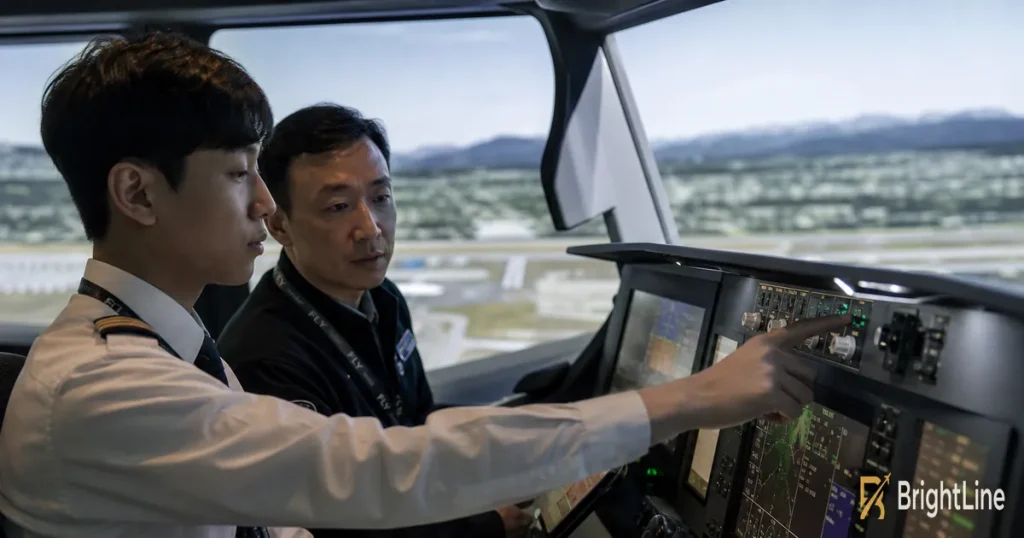
- Florida, year-round flying. Warm weather keeps aircraft airborne through winter, so your hours build without seasonal stalls. A larger international student community can also mean easier housing and more instructors used to working with Korean students.
- Texas, airspace variety. Dense Class B and Class C exposure around major metros builds radio confidence fast. Living costs in many Texas training towns run lower than coastal clusters, which stretches a fixed training budget further.
- Arizona, stable weather. Clear skies most days mean high daily flight availability and fewer weather cancellations. That consistency shortens calendar time even when hourly rates look similar.
- Korean community density. A visible Korean student population gives you housing leads, study groups, and instructors who understand your goals. Isolation slows progress more than bad weather does.
Florida buys you continuity, Texas buys you airspace and savings, Arizona buys you schedule reliability.
Climate and community keep you flying when motivation dips. Choose the cluster that protects your daily flight count, not the one that photographs best. Students comparing flight schools in Florida against Arizona should weigh cancellation rates over brochure scenery.
Red Flags in a Flight School Contract for Korean Families
A contract protects the school first. Korean families read it as a formality, sign at the kitchen table, and discover the protections run one direction only. The clauses below are where that asymmetry hides.
- Deposit forfeited on visa denial. A refundable-until-refusal clause protects your family if the embassy says no; silence hides that the school keeps the money.
- Quote without checkride fees. Examiner and checkride costs belong in the written estimate, not in a verbal aside that vanishes on arrival.
- No written aircraft-to-student ratio. A stated ratio protects your daily flight count; its absence hides that you may share a plane with a queue.
- No named instructor before arrival. A named instructor with a start date protects your training continuity; a promise of “an instructor” hides that assignments shift.
- SEVP number refused on request. The certification number proves legal enrollment; a school that stalls on it is telling you something.
- Part 141 status left vague. The federal Part 141 regulations define a structured curriculum, and schools that dodge the question usually run Part 61.
Each gap is small alone. Stacked, they mean the school absorbs nothing.
Get every promise into the enrollment agreement before any deposit moves. An email thread from an admissions officer will not survive a dispute, and flight training for international students depends on paperwork that holds.
How to Verify a School Before You Wire a Deposit
Verification is a week of work most families compress into a single email reply. The gap between a school that answers these four questions cleanly and one that stalls is the gap between a seat and a refund dispute.
Step 1. Search the school by name on the DHS tool to find SEVP-certified schools and confirm status reads active, not withdrawn. A lapsed certification means the school cannot issue your I-20. Screenshot the result and date.
Step 2. Request two current South Korean students and call them with the school off the line. Their answers on instructor availability and aircraft downtime will contradict the sales version. A school that won’t share contacts is protecting its numbers, not you.
Step 3. Request the written line-item cost estimate and set it beside a second school’s estimate, row by row. Checkride fees, examiner charges, and living costs are where quotes quietly diverge. Compare the total path cost, not the deposit size.
Step 4. Get written confirmation of how the school handles its side of your TSA clearance and what happens to your deposit if the visa is refused. An email thread is not a policy. If the refund clause isn’t in the enrollment agreement, it doesn’t exist.
Finish all four and you hold a verified school, a real cost, and a refund term in writing. That file makes the deposit a decision instead of a gamble.
Run the Three Steps Before the Deposit Leaves Your Account
Three filters decide the flight school in USA for South Korean students better than any brochure: legal enrollment, full-path cost, and the Korean airline pathway. Each one is a question you can answer in writing before money moves. A school that survives all three is a school worth flying for.
Skip the sequence and the failure is slow and expensive. A deposit wired to a school that cannot issue a Form I-20 strands you at home for a semester. A quote that hides checkride fees surfaces as a second invoice after arrival. A pathway answer that never comes means you graduate with hours that no Korean carrier recognizes.
Open the DHS school search tool and the school’s written cost estimate side by side this week. Call one current South Korean student without the school listening. Then wire the deposit, or walk away with your budget intact.
FAQ
Questions South Korean Students Ask About US Flight Schools
Where can international students get pilot training in the USA?
Only at schools certified by the Student and Exchange Visitor Program, which can issue the Form I-20 that supports an F-1 or M-1 visa. You also need TSA Flight Training Security Program clearance before your first lesson: you apply, and the school confirms your training, so a program that cannot support either step cannot legally start you.
How much does flying school cost in the USA?
Budget for the full path, not the advertised flight-hour rate, because ground school, checkride fees, examiner charges, visa costs, and living expenses sit outside most quotes. A private certificate starts near $10,000, while commercial training can climb past $80,000 once instructor ratings and hour-building are included.
Do I need a TSA background check before starting flight training?
Yes, every non-citizen trainee undergoes a Security Threat Assessment before flight instruction begins. You submit the request through the Flight Training Security Program, the school confirms your training, and instruction cannot start until the clearance returns, so a late application delays your first lesson.
Can I work as a flight instructor in the US after training?
Yes, if your visa category and school support the instructor pathway, which is how many graduates build hours toward airline minimums. Confirm the arrangement in writing before enrolling, because M-1 practical training after the course is capped at six months, which limits how long you can teach.